

More news on this day
Hundreds of travellers across Australia are facing long queues, rolling delays and sudden cancellations as services operated by Virgin Australia, Qantas and Qatar Airways are disrupted at Melbourne, Sydney and Brisbane airports, with more than 70 flights affected in the latest wave of knock-on chaos from the Middle East airspace crisis.
Get the latest news straight to your inbox!
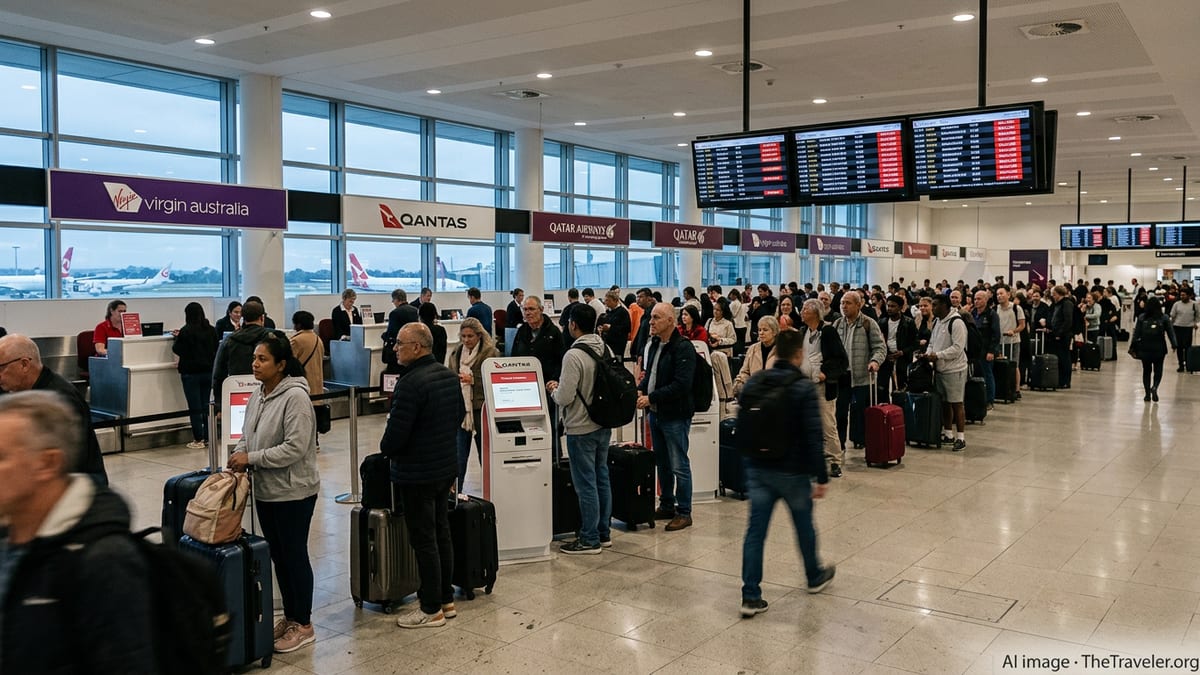
Wave of Cancellations Hits Melbourne, Sydney and Brisbane
Australian aviation is reeling from a new burst of disruption, with more than 70 cancellations and scores of delays reported across Melbourne Tullamarine, Sydney and Brisbane over the past 24 hours. Airport data and industry reports point to a sharp spike in operational pressures on Qantas, Virgin Australia and partner services operated by Qatar Airways, leaving many travellers stranded in terminals or forced to abandon their plans at short notice.
At Melbourne and Sydney, early morning cancellations quickly cascaded through mid‑day and evening schedules, as aircraft and crew struggled to remain in position after days of disruption on long‑haul networks. In Brisbane, knock‑on effects from weather and tight resourcing added to the bottlenecks, with domestic and international services experiencing extended delays and missed connections.
Airport departure boards showed waves of “cancelled” and “delayed” notices for flights serving key domestic trunk routes, along with international services linking to hubs such as Doha, Dubai and Auckland. While total cancellation numbers have fluctuated during the day, airline sources and tracking data indicate that more than 70 services touching Australia’s three busiest east‑coast gateways have been withdrawn or heavily rescheduled in the current disruption cycle.
The immediate impact has been felt most acutely by leisure travellers returning from holidays, as well as business passengers with tight itineraries. Many reported learning of cancellations only after arriving at the airport, while others received multiple schedule changes within hours, complicating plans for ground transport, accommodation and connecting flights.
Middle East Airspace Crisis Spills Into Australian Schedules
The latest turmoil in Australian skies is closely linked to the ongoing airspace crisis in the Gulf, where the closure of Qatari and neighbouring airspace since late February has triggered tens of thousands of flight cancellations worldwide and left more than 100,000 Australians stranded across the wider Middle East region. Qatar Airways, a major long‑haul carrier for Australian travellers, has been forced to operate only a skeleton schedule to and from Doha, with many services suspended or re‑routed.
Virgin Australia’s close partnership with Qatar Airways has amplified the impact, as code‑share flights carrying Virgin flight numbers are in many cases operated by Qatar aircraft and crews. With Doha services heavily curtailed, these flights have been among the first to disappear from departure screens, eroding long‑haul capacity from the east‑coast capitals and reducing options for travellers trying to reconnect to Europe and Africa.
Qantas has avoided direct exposure to the Gulf closures because it does not operate its own flights into Doha, yet the national carrier is still contending with indirect fallout. Passengers whose trips on Qatar and other Gulf carriers have been cancelled are flooding Qantas’ remaining Europe‑bound services via Singapore and other Asian hubs, pushing loads to the limit and leaving little slack in the system when weather or crew shortages strike along domestic routes.
Industry analysts say the combination of constrained long‑haul options, volatile oil prices and already‑tight staffing is creating a fragile operating environment. With airlines forced to rewrite timetables on a rolling basis and redeploy aircraft at short notice, the ripple effect can reach Australian domestic schedules within days, particularly on high‑frequency corridors such as Melbourne to Sydney and Sydney to Brisbane.
Passengers Face Long Queues, Patchy Communication and Tough Choices
For travellers on the ground, the crisis is playing out in crowded check‑in halls, long lines at service desks and, at times, limited information about what will happen next. Social media posts from passengers in Melbourne, Sydney and Brisbane describe early‑morning queues snaking through terminals as travellers wait to be rebooked after overnight cancellations or missed connections.
Some customers on Virgin Australia and Qantas report being re‑accommodated on later same‑day services or rerouted via alternative cities, while others have been told that the next available seats are several days away. For passengers whose itineraries involve Qatar Airways connections, especially those attempting to transit via Doha, options are even more constrained, with limited repatriation flights and strict priority being given to families, elderly passengers and those with urgent medical needs.
Consumer advocates warn that many travellers are still unclear about their rights in such large‑scale disruptions. While airlines are generally offering refunds, credits or complimentary date changes for flights directly affected by the airspace closures, policies vary for downstream segments within Australia, particularly when weather or crew availability is cited as the cause of cancellation.
Travel insurers are also scrutinising claims in light of government travel advisories that now cover parts of the Middle East. Passengers who booked before the latest advisories may have broader coverage than those who purchased policies more recently, and advisers are urging travellers to retain all documentation, including rebooking confirmations, hotel receipts and ground transport invoices, as they attempt to recover costs.
Airlines and Government Scramble to Add Capacity and Repatriation Options
Airlines and government agencies are racing to open up additional pathways for stranded Australians, both overseas and within the country’s borders. In the Middle East, the federal government has worked with carriers to mount special repatriation services and limited shuttle arrangements that allow travellers to exit conflict‑affected zones and reach alternative hubs such as Riyadh or major European capitals.
Within Australia, Qantas and Virgin Australia are attempting to bolster domestic frequencies where possible, using spare aircraft overnight and on off‑peak rotations to clear backlogs. Charter operators have also reported a spike in inquiries from corporate clients and travel management companies seeking guaranteed capacity in case scheduled services are disrupted at short notice.
However, aviation experts caution that there is only so much additional capacity that can be injected in the short term. Aircraft and crew rosters are already stretched after years of pandemic retrenchment, and many carriers are still in the process of recruiting and training staff to return to pre‑crisis levels. Any further escalation in the Middle East conflict or additional airspace closures could quickly erase the gains made by temporary measures.
Government officials have urged Australians currently planning trips via the Gulf to consider rerouting through alternative hubs where possible, even if that means longer journey times or higher fares. They also recommend that travellers heading to or from Melbourne, Sydney and Brisbane build extra time into itineraries to accommodate potential last‑minute changes, particularly when connecting from regional centres onto international flights.
What Travellers Should Do Right Now
Travel experts say the most important step for anyone booked on Virgin Australia, Qantas or Qatar Airways in the coming days is to monitor their reservation closely and ensure contact details in the booking are up to date. With airlines adjusting schedules on a rolling 48 to 72 hour basis, many changes are being pushed through by text message or app notification rather than by email alone.
Passengers whose journeys involve Doha or other Gulf hubs are being advised to check whether their flight still appears as confirmed before heading to the airport, and to make contingency plans such as alternative routings through Asian or European gateways. Where airlines are offering voluntary change or refund options for affected dates, acting early can increase the chances of securing a workable alternative.
At Australian airports, travellers facing same‑day cancellations are encouraged to approach airline staff promptly to discuss rebooking options and, where applicable, to ask about meal vouchers or overnight accommodation. While entitlements differ by airline and ticket type, particularly between domestic and international sectors, staff at the airport are often best placed to provide immediate practical assistance.
For now, the situation remains fluid. With the Gulf airspace crisis unresolved and domestic carriers juggling tight fleets and surging demand, further waves of disruption across Melbourne, Sydney and Brisbane are possible in the days ahead. Travellers heading through these key hubs are being urged to stay flexible, keep documentation organised and be prepared for last‑minute changes as airlines work to stabilise their networks.