


More news on this day
A recent commercial flight delay attributed in part to an unruly toddler has set off a storm of debate among travelers, with many arguing they would willingly pay extra for adult-only flights, while others warn such proposals risk stigmatizing families and children who rely on air travel.
Get the latest news straight to your inbox!
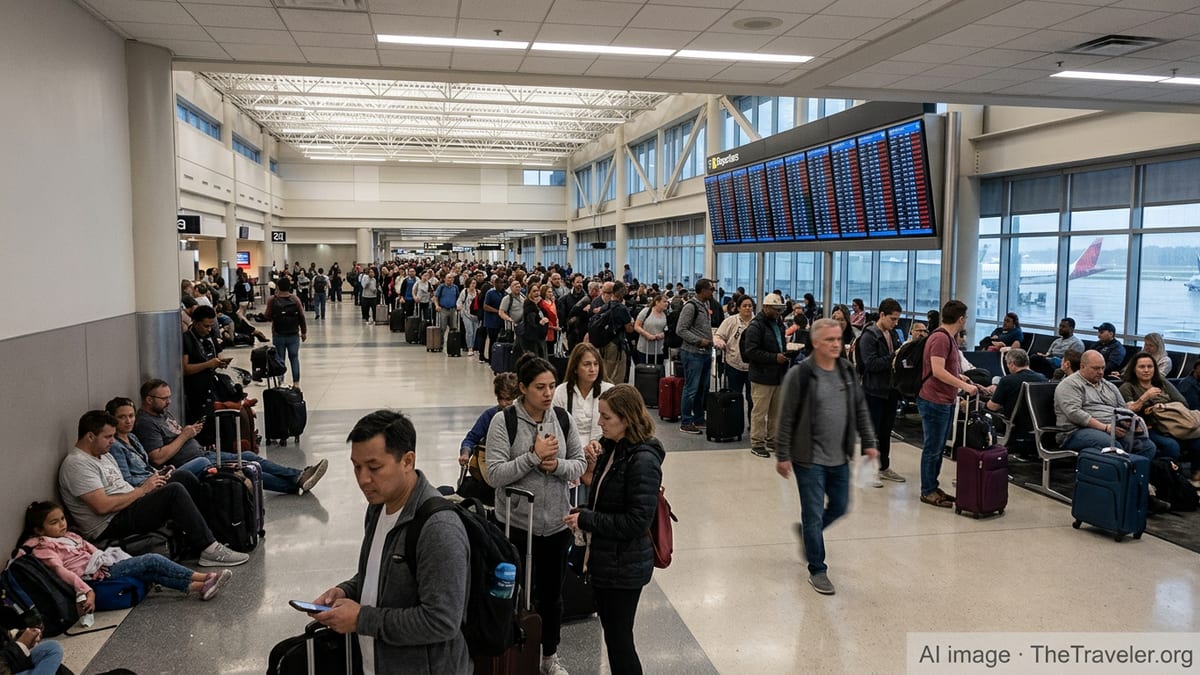
Viral delay incident puts family travel under the spotlight
Initial reports describe a routine departure that escalated into a prolonged delay after cabin crew struggled to seat and safely restrain a distressed toddler who resisted sitting down during taxi and early takeoff procedures. Passengers recounted raised voices, repeated attempts to calm the child, and multiple interventions to ensure everyone was strapped in according to safety requirements.
Because aircraft cannot legally take off until all passengers are seated with belts fastened, the disruption contributed to the departure being held at the gate and then in the taxi queue. Publicly available information indicates that the situation eventually required the aircraft to return to the stand so crew could reset and complete additional checks before departure, extending the delay.
As details of the incident circulated on social platforms, a short clip from inside the cabin, paired with a caption stating “I’d pay extra to go on adult-only flights,” spread quickly across travel and lifestyle feeds. Comments poured in from weary frequent flyers, parents, and airline employees, transforming one delayed departure into a broader referendum on how the industry handles young children on board.
The episode has resonated in part because it highlights a knot of overlapping pressures: airlines under scrutiny for service issues, parents anxious about being judged when their children struggle in confined spaces, and passengers facing ever-tighter seats and fuller cabins that magnify every disturbance.
Calls grow louder for adults-only or child-free cabins
The phrase “I’d pay extra to go on adult-only flights” has become a rallying cry that recurs whenever footage of crying babies or seat-kicking toddlers appears online. In response to the latest disruption, online discussions show many travelers reiterating that they would accept higher fares or fees to guarantee a cabin free of young children.
This sentiment is not new. Over recent years, discussion threads and opinion pieces have repeatedly called for either entirely child-free flights or designated adults-only sections, particularly on overnight or long-haul routes where passengers hope to sleep or work. Some frequent travelers argue that, with cabins as dense as they are, even a single inconsolable toddler can define the experience for dozens of people within earshot.
Passenger frustration is amplified when disruptions appear to be linked to behavior rather than unavoidable issues. In comment sections reacting to the latest delay, some travelers argue that other passengers should not bear the cost, missed connections, or stress associated with a single family’s struggle to manage a child, especially if there were earlier opportunities to de-escalate or adjust seating.
Yet others note that aviation remains one of the only practical ways for far-flung families to remain connected, and that expecting complete silence from babies and toddlers on multi-hour journeys is unrealistic. For them, the debate should focus less on segregating families and more on how airlines can design cabins, schedules, and services that make it easier to travel with young children without overwhelming nearby passengers.
Airlines test new approaches to family and quiet zones
In parallel with these debates, some carriers have begun experimenting with ways to separate travelers who actively seek a quieter environment from those flying with children. A handful of airlines have trialed or introduced extra-fee seating blocks where children under a certain age cannot be assigned, effectively creating a de facto “adults-only” mini-cabin within the main cabin.
Other carriers have taken a more family-focused approach, designating sections where adults traveling with young children are clustered together near bulkheads, bassinets, and lavatories. This can make it easier for caregivers to move around without repeatedly passing large numbers of passengers and can concentrate noise and activity away from those who prefer a calmer space.
Industry analysts note that these models are still in early stages and often limited to specific routes or aircraft types. They also highlight operational challenges. Last-minute bookings, aircraft swaps, and irregular operations can upend carefully planned seating maps, forcing airlines to choose between maintaining the integrity of a quiet zone and accommodating families who must sit together for safety reasons.
Even so, the swift reaction to the recent delay suggests there may be commercial potential in more clearly labeled quiet or child-free zones. Some consumer surveys have found that a segment of travelers is willing to pay a supplement to be seated in areas where the likelihood of prolonged disturbance is lower, especially on red-eye or business-heavy flights.
Parents push back against stigma and unrealistic expectations
The same viral posts that elevate calls for adult-only flights also attract strong responses from parents who argue that they are already under intense scrutiny whenever they board with a stroller or car seat. Many describe elaborate preparations, from packing activity kits and snacks to carefully timing flights around nap schedules, only to be met with visible annoyance before a child has even made a sound.
Public commentary following the latest incident shows a recurring theme among caregivers: frustration that all unruly or distressed behavior is portrayed as parental failure, even when children are overtired, unwell, or reacting to unfamiliar environments. Some note that in cramped cabins, with limited ability to walk or move freely during taxi and turbulence, there are only so many tools available to soothe a frightened toddler.
Advocates for family travel caution that proposals for adult-only flights risk turning children into unwelcome intruders in a space that is, in practice, an essential part of modern life. They point out that families must fly for reasons that go beyond vacations, including medical appointments, relocations, and urgent family events, and that excluding them from certain flights or times could deepen inequalities.
While many parents say they empathize with fellow passengers delayed by disruptive behavior, they also ask for greater understanding of the challenges involved in keeping very young children calm and compliant with strict safety rules, particularly when delays extend far beyond scheduled departure times.
What the latest debate reveals about changing travel norms
The uproar surrounding the toddler-related delay underscores broader tensions shaping post-pandemic air travel. Cabin loads have returned or surpassed pre-2020 levels on many routes, but staffing, scheduling, and ground operations remain under pressure. When anything goes wrong, from weather to behavioral incidents, passengers increasingly turn to social media to vent in real time, often framing individual frustrations as evidence of systemic failure.
In this environment, proposals like adult-only flights gain traction not only because of noisy children, but also because travelers feel they have lost control over the in-flight experience in general. Calls for quieter cabins sit alongside demands for stricter rules on intoxicated passengers, limits on loud phone conversations during boarding, and more consistent enforcement of carry-on policies.
Industry observers suggest that airlines monitoring the latest controversy will likely weigh the reputational risks of being seen as unfriendly to families against the potential revenue from premium quiet zones or specific child-free rows. Any shift could unfold unevenly, with some carriers targeting business travelers and others emphasizing inclusive policies that welcome passengers of all ages.
For now, the toddler whose distress contributed to a delayed departure has become an unlikely symbol of a larger question facing airlines and travelers alike: in cabins where every inch and every minute are contested, how should the industry balance the needs of parents, children, and passengers who say they would pay extra to leave the disruption behind?