

More news on this day
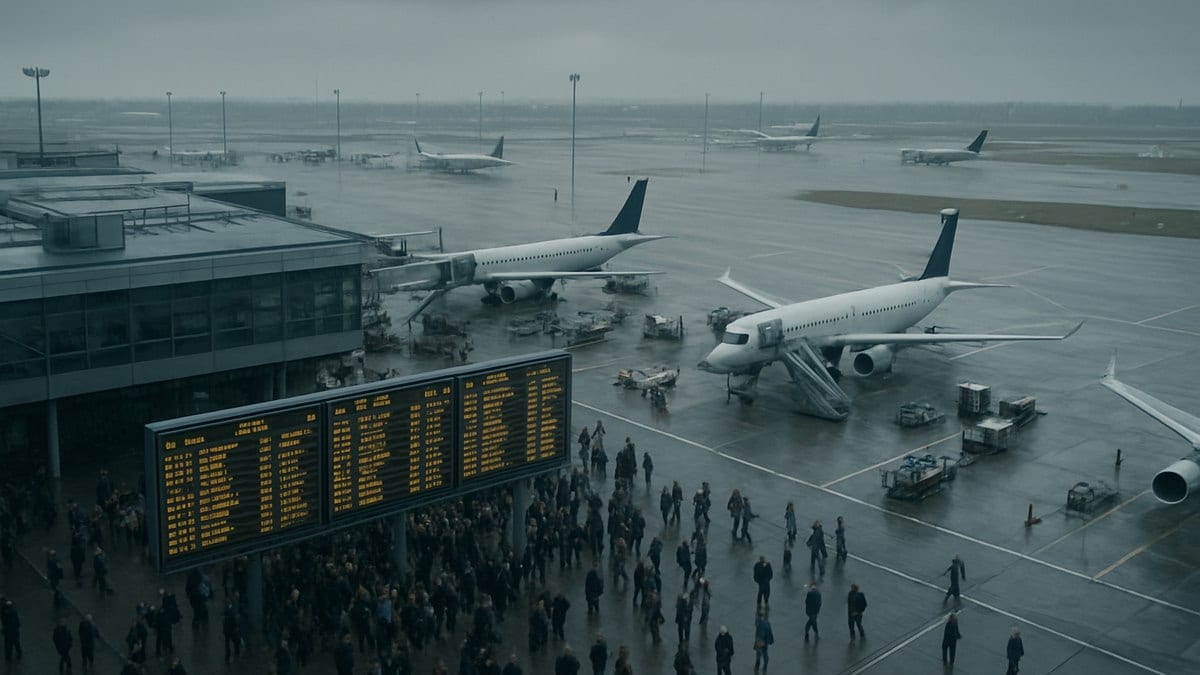
Spring storms sweeping across northern Europe have collided with persistent staffing strains at London’s Heathrow and Gatwick airports, triggering fresh waves of flight delays and cancellations that are rippling through airline schedules across the continent.
Get the latest news straight to your inbox!
Storm Dave Triggers a New Wave of Disruption
The latest round of disruption has been closely tied to Storm Dave, an Atlantic weather system that brought strong winds, heavy rain and turbulence to large parts of the United Kingdom and northern Europe in the first week of April 2026. Publicly available tracking data and industry reports indicate hundreds of flights were delayed or cancelled at major hubs including Heathrow and Gatwick as the storm moved across the region.
Coverage from aviation data providers suggests that, on peak days, more than a thousand flights across Europe were affected by Storm Dave and associated weather fronts, with London’s airports among the hardest hit. Travel industry analysis points to cancellations and multi hour delays stretching from Reykjavík and Oslo to Paris and Rome, as airlines struggled to keep aircraft and crew in the right place once the weather began to clear.
Reports on UK conditions describe high winds, crosswinds and low cloud affecting approaches into London, prompting go arounds, diversions and temporary reductions in landing rates. While many flights eventually departed, knock on effects have continued into subsequent days, particularly for short haul European services that rely on tight turnarounds.
The early April pattern follows a winter already marked by disruptive storms and snow across parts of the continent, including severe weather events in January that hit the UK, France and central Europe. Industry observers note that each successive system adds further strain to airline and airport operations that are already running close to capacity.
Heathrow and Gatwick Under Mounting Operational Pressure
Heathrow, Europe’s busiest international hub, has long operated near the limits of its available runway capacity, leaving little margin when sudden weather or air traffic restrictions reduce the number of aircraft that can land or depart each hour. Eurocontrol performance data from recent years shows that Heathrow has been particularly exposed to weather related arrival flow restrictions, with delays increasing as traffic has grown back toward and in some cases beyond pre pandemic levels.
Gatwick, the UK’s second busiest airport, has faced a different but related set of challenges. Eurocontrol assessments and previous performance review reports have highlighted persistent air traffic control staffing constraints associated with the airspace sector serving Gatwick, which have contributed to elevated delay levels, especially during the peak summer months. Those structural issues have not disappeared, and observers suggest they are now interacting with bouts of unsettled weather to produce prolonged queues both on the ground and in the air.
Recent travel industry coverage describes scenes of long lines at check in and security in London, with passengers at both airports reporting rolling delay estimates, missed connections and difficulty rebooking onto later services. Because Heathrow functions as a primary European hub for long haul connections, disruptions there can cascade quickly to satellite airports around the region as aircraft and crews arrive late or out of sequence.
Gatwick’s role as a major base for low cost and leisure carriers means that schedule upsets are particularly visible on high demand holiday routes to Spain, Italy and Greece. Reports from Mediterranean destinations this week have linked late arrivals and aircraft rotations directly to knock on delays originating in London, even when local weather has remained relatively calm.
Staffing Gaps and Air Traffic Constraints Deepen Delays
While Storm Dave has been the most visible trigger for the current disruption, analysts point out that weather alone does not fully explain the scale of delays facing travelers. Over the past decade, data from European aviation organizations shows air traffic management and staffing related delays more than doubling, even though the number of flights has increased only modestly. Those figures suggest a system that has grown structurally more fragile when operating under stress.
At the airport level, publicly available documents and industry commentary indicate that ground handling, security screening and engineering teams remain under pressure following the rapid post pandemic rebound in travel demand. Training new staff for specialist roles can take months, and absences caused by illness or seasonal peaks in leave can quickly translate into slower turnarounds, particularly at congested hubs such as Heathrow and Gatwick.
Air traffic control capacity has also become a critical pinch point. Across Europe, staffing rosters are closely tied to safety regulations that limit controller working hours. When adverse weather forces wider spacing between aircraft or prompts more complex routing, the number of flights that can be handled safely in a given period falls, and backlog builds rapidly. London’s environs are among the world’s most complex pieces of controlled airspace, amplifying the impact of even relatively short lived constraints.
Industry reports suggest that the combination of weather, staff shortages and tight capacity can produce a self reinforcing cycle of disruption. As delays lengthen, crew members reach legal duty limits and aircraft miss their scheduled slots, triggering further cancellations even after the worst of the storm has passed. For passengers, this often means that the most severe knock on effects are felt a day or two after the headline weather event.
Ripple Effects Across Europe’s Spring Travel Season
The latest problems at Heathrow and Gatwick have not been contained within the UK. Airlines operating multi leg networks routinely rotate aircraft across several European cities within a single day, so a delayed departure from London can easily translate into late arrivals in Amsterdam, Frankfurt, Dublin, Athens or Rome. Publicly available tracking data for early April shows elevated delay levels at many of these hubs on the same days London has struggled with storms and staffing constraints.
Reports from southern Europe highlight how vulnerable popular leisure destinations are to disruption upstream in the network. Coverage from Greece and Italy, for example, points to late night arrivals, missed onward ferry connections and crowded airport terminals as aircraft from northern Europe land behind schedule. These challenges are particularly acute during the busy Easter and spring holiday period, when load factors are high and spare seats on alternative flights are limited.
Aviation analysts note that the current turbulence in European air travel is unfolding against a backdrop of robust passenger demand and renewed pressure on airlines to maintain punctuality and service quality. With summer schedules due to ramp up in the coming weeks, the difficulties at Heathrow and Gatwick are being watched closely by other hubs that fear similar bottlenecks if storms, heatwaves or further staffing shortages materialize.
For now, industry data suggests that disruptions linked to Storm Dave are beginning to ease as weather systems move east and winds in the UK moderate. However, the pattern observed this year and in previous seasons points to a broader structural challenge: Europe’s busiest airports are operating with limited slack, meaning that any significant disturbance in weather or staffing can quickly snarl flight operations not only in London but across the continent.
What Travelers Can Expect in the Weeks Ahead
Travel industry advisories circulating this week encourage passengers booked through Heathrow and Gatwick to prepare for continued pockets of disruption, especially during peak morning and evening waves of departures and arrivals. While schedules are gradually stabilizing after the latest storms, lingering aircraft and crew imbalances are expected to produce irregular operations on select routes for several days.
Publicly available information from aviation regulators and consumer organizations reiterates that passengers flying from or within Europe retain specific rights when their journeys are delayed or cancelled, including assistance with meals, accommodation and rebooking during major disruptions. However, financial compensation rules often differ depending on whether delays are linked to extraordinary circumstances such as severe weather or to operational and staffing issues within an airline’s control.
Analysts suggest that, heading into the peak summer season, the experience at Heathrow and Gatwick offers a preview of how quickly Europe’s air travel system can be overwhelmed when powerful weather systems converge with underlying staffing and air traffic constraints. Unless additional capacity and resilience measures are introduced, similar episodes of widespread delay could recur whenever storms, heat or other extremes collide with already busy flight schedules.
For travelers planning to pass through London’s airports in the coming weeks, the evolving situation underscores the value of flexible itineraries, longer connection times and advance awareness of airline policies. With Europe’s major hubs operating close to their limits, even brief squalls over Heathrow and Gatwick can now send shockwaves through flight timetables from Scandinavia to the Mediterranean.