


More news on this day
Passengers across the Americas and parts of Africa are facing a fresh round of travel disruption as regional and major carriers including Winair, Lam Mozambique, Tradewind Aviation, Jazz, United Airlines and Alaska Airlines report a combined 82 flight cancellations and 52 delays, affecting routes in the Caribbean, Mozambique, the United States and beyond.
Get the latest news straight to your inbox!
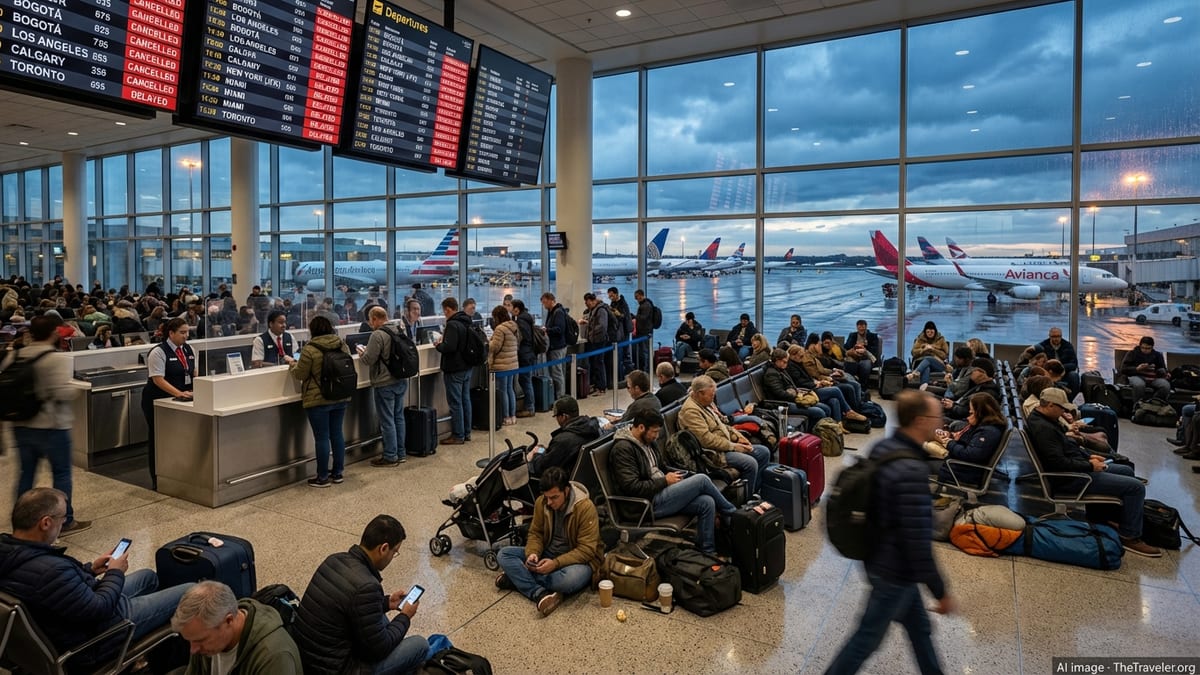
Mixed Disruptions From Caribbean Hubs to Southern Africa
Publicly available flight-tracking and airport operations data for Wednesday, May 13, indicate that the disruptions are spread across several networks rather than concentrated in a single storm system or IT outage. Winair services in the northeastern Caribbean, Lam Mozambique flights within southern Africa, and Tradewind’s Caribbean and U.S. East Coast routes all show scattered cancellations and late departures alongside curtailed schedules at larger North American carriers.
In the Caribbean, Winair’s short-haul operations linking islands such as St. Maarten, St. Barthélemy and Dominica are especially sensitive to weather and aircraft availability. Regional timetables published by eastern Caribbean airports show that even a small number of grounded turboprops can ripple quickly through tightly timed morning and late-afternoon banks, forcing re-accommodation of passengers on already busy services.
Across the Atlantic, Lam Mozambique’s domestic and regional network centered on Maputo remains relatively compact, but any aircraft out of rotation can translate quickly into cancellations on high-demand routes such as Maputo to Beira or Nampula. Recent fleet updates and leasing activity have aimed to increase reliability, yet today’s figures suggest the carrier is still operating with little spare capacity to absorb operational shocks.
Tradewind Aviation, which blends scheduled shuttle services with charter flying between the U.S. Northeast, Florida and Caribbean islands, appears to be experiencing localized disruptions similar to those seen at larger airlines. When small fleets and niche routes are involved, even isolated maintenance events or crew reassignments can leave passengers with fewer same-day alternatives than at major hubs.
United States Carriers See Knock-On Delays
Within the United States, the day’s 82 cancellations and 52 delays include flights operated by regional carrier Jazz on codeshare services, as well as mainline operations from United Airlines and Alaska Airlines. Data compiled from U.S. aviation statistics and same-day tracking dashboards suggest that most of these events are clustered around a handful of major hubs rather than evenly spread nationwide.
United’s network, which relies heavily on connecting traffic through airports such as Chicago, Denver, Houston and Newark, can experience chain reactions when early departures are disrupted. Even a modest number of grounded aircraft or late-arriving inbound flights can lead to subsequent schedule adjustments and rolling delays throughout the day, particularly in mid-continental hubs where banks of flights are closely timed.
Alaska Airlines, focused on the U.S. West Coast and transcontinental routes, is similarly vulnerable when weather or congestion affects key airports like Seattle or San Francisco. Industry performance dashboards from the U.S. Department of Transportation show that carrier-controlled causes such as maintenance and crew availability, along with national aviation system constraints like air-traffic flow programs, routinely rank among the leading drivers of cancellations and delays.
For passengers, the practical impact is often felt less in the raw numbers and more in how they interact with tight connections. A single delayed regional arrival can cause missed links to long-haul flights, particularly on routes with limited daily frequencies to smaller cities in the United States, Canada or Latin America.
Likely Causes: Weather, Congestion and Tight Fleets
While exact reasons for each of the 82 cancellations and 52 delays vary by flight, historical data and current weather patterns suggest a familiar mix of contributing factors. Seasonal storms in parts of North America and the Caribbean, localized low visibility, and air-traffic flow restrictions are all typical triggers when several airlines report operational challenges on the same day.
Analyses of U.S. Bureau of Transportation Statistics reports show that air carrier issues such as maintenance, crew scheduling and aircraft rotations are consistently among the top causes of disruptions. Tight scheduling and high fleet utilization mean that unscheduled technical inspections or crew duty-time limits can quickly force cancellations, especially for smaller carriers with limited spare aircraft.
In regions like Mozambique and the eastern Caribbean, infrastructure constraints can compound these issues. Short runways, limited ground-handling capacity and a reliance on turboprop operations in variable tropical weather make on-time performance harder to maintain, particularly when airlines are balancing rising demand with modest fleet growth.
Technology-related issues, including intermittent outages in reservation or dispatch systems, can also lead to preemptive cancellations or rolling delays. Although no large-scale outage has been widely reported today, aviation analysts often note that even minor system interruptions can create localized backlogs, especially at hub airports already operating near capacity.
What Affected Travelers Should Do Today
For passengers booked on Winair, Lam Mozambique, Tradewind, Jazz, United or Alaska Airlines, the most important step is to confirm flight status before leaving for the airport. Airline mobile apps and official customer channels typically reflect gate changes, cancellations and newly assigned departure times more quickly than terminal display boards, particularly when operations staff are making rapid adjustments.
Travel experts frequently advise that passengers who see a cancellation or extended delay posted should act immediately to secure alternatives. Rebooking through digital channels can be faster than waiting in airport queues, and travelers connecting through major hubs may have a better chance of finding replacement seats on earlier or later departures to nearby airports.
Those on multi-leg itineraries through the United States, the Caribbean or Mozambique should pay particular attention to minimum connection times. Even short delays can jeopardize onward flights at busy hubs. Where possible, same-day changes to longer layovers or to more frequent routes may reduce the risk of being stranded overnight.
Passengers are also encouraged to retain receipts for meals, hotels and ground transportation if disruptions force unplanned stays. Depending on the cause of the delay and the airline’s policies or applicable consumer-protection rules in the departure or arrival country, some out-of-pocket costs may be recoverable through the carrier or travel insurance.
Broader Implications for Reliability Across the Americas
The latest wave of disruptions underscores how interconnected air travel has become across the Americas, the Caribbean and adjacent regions such as southern Africa. A mechanical issue on a regional turboprop in the morning, a localized thunderstorm over a hub in the afternoon, or congestion in a busy flight corridor can each reverberate across several airlines’ operations within hours.
Industry observers note that carriers are juggling strong demand with capacity constraints and labor-market pressures, leaving less margin to absorb irregular operations. Regional airlines like Winair, Lam Mozambique, Tradewind and Jazz play a critical role in feeding passengers into larger networks, but their smaller fleets and specialized routes make them more exposed when even one aircraft or crew pairing is unavailable.
For major players such as United and Alaska, the challenge lies in maintaining resilience across vast networks spanning dense domestic corridors and long-haul international services. Investments in new aircraft and scheduling tools are intended to improve on-time performance, yet occasional days of widespread disruption remain a feature of modern air travel, particularly during periods of active weather or peak holiday demand.
As today’s 82 cancellations and 52 delays illustrate, travelers planning trips within or across the Americas may benefit from building flexibility into their itineraries, monitoring conditions along their routes, and understanding their options when flights do not operate as scheduled.