


More news on this day
Russia is beginning to restore commercial air links to parts of the Middle East, aligning with a broader shift among major tourism and aviation markets that are cautiously resuming flights and scaling back large repatriation programs after months of war-related airspace closures.
Get the latest news straight to your inbox!
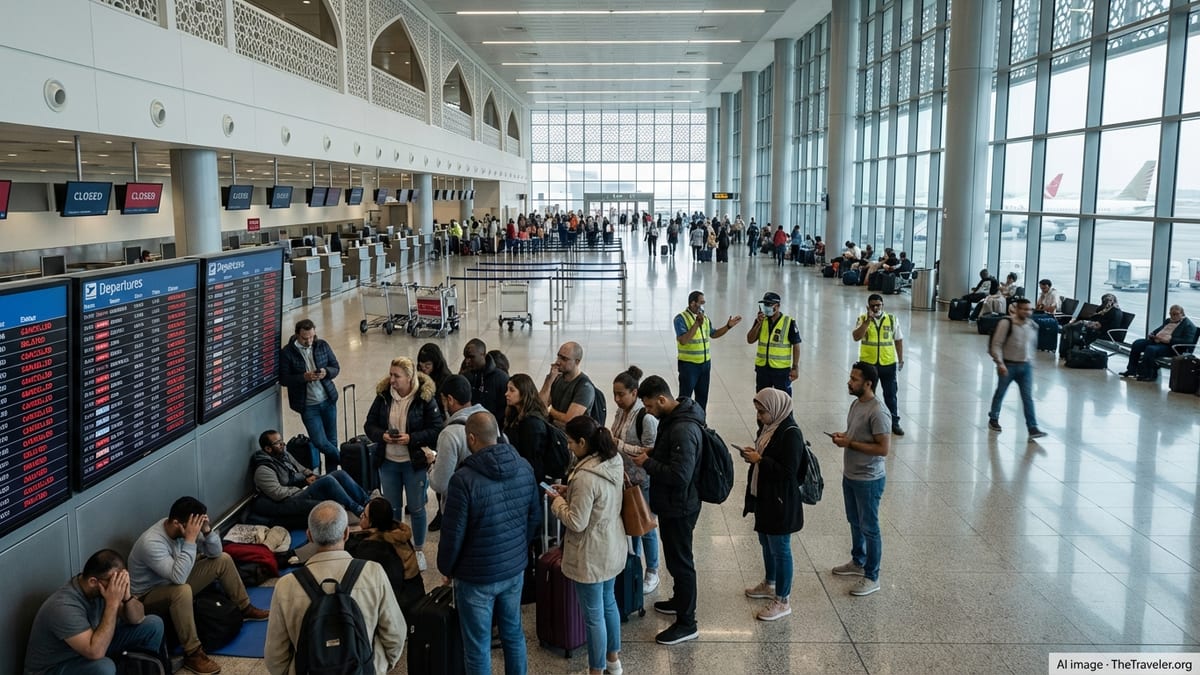
From Mass Repatriations to Managed Reopenings
After the outbreak of the Iran war in late February 2026, governments from the United States, Canada and Brazil to India, China and European Union states launched large-scale repatriation efforts to extract their nationals from Israel, the Gulf and surrounding conflict zones. Publicly available information shows that many of these operations relied on special charter services and ad hoc corridors through relatively unaffected hubs in Egypt, Jordan and southern Saudi Arabia as core Middle Eastern airspace temporarily shut to routine traffic.
Travel advisories and evacuation trackers compiled in March and April described hundreds of evacuation and repatriation flights operated by or on behalf of countries including the United Kingdom, Germany, France, Italy, Spain, Sweden and others, as commercial schedules collapsed. These movements were layered on top of already disrupted networks following earlier conflicts, leaving airports such as Tel Aviv’s Ben Gurion, Dubai International and major Saudi gateways handling only skeletal services and emergency movements.
By mid spring, reports indicated that many of these repatriation programs had reached a turning point. As limited ceasefires took hold and targeted airspace closures were refined, several states signaled that they were shifting from extraordinary evacuation operations back toward commercial solutions, allowing airlines to take over the bulk of passenger flows. This transition is now visible in schedules across North America, Europe and Asia, where carriers are rebuilding, rather than merely evacuating, traffic to the region.
The latest phase is characterized less by headline-grabbing airlifts and more by cautious schedule additions, complex rerouting and continued restrictions over the most sensitive corridors. For travelers, that means fewer emergency repatriation notices and more conventional booking options, although seat capacity remains far below prewar norms on many trunk routes.
Russia Relaxes Middle East Flight Restrictions
Russia’s civil aviation regulator has emerged as one of the most recent major authorities to soften its posture on Middle Eastern airspace. In April, the Federal Air Transport Agency, Rosaviatsia, announced that Russian airlines would again be permitted to operate flights to Iran and resume ticket sales for services to and from the United Arab Emirates, reversing earlier prohibitions introduced in response to the Iran war and related security concerns.
According to published coverage, the regulator linked the change to coordination with transport and foreign policy bodies and to a modest stabilization in the security environment. Rosaviatsia had previously urged carriers to suspend ticket sales not only to Iran and the UAE but also to Bahrain, Iraq, Kuwait and Qatar, while flights to Israel were halted outright. The updated guidance allows a resumption of certain corridors, albeit under tighter operational and routing controls, particularly where overflight of contested airspace remains restricted.
Russia has also begun to ease its stance toward Israel. Mid April reporting from Moscow noted that authorities were permitting daytime flights to and from Tel Aviv on a limited basis, with pilots required to adhere to specific altitude bands and routing designed to skirt areas of highest military activity. While night operations remain constrained, the change marked a symbolic shift from blanket cancellation advisories toward a more nuanced risk-managed approach.
These adjustments bring Russia more closely into alignment with a diverse group of countries, including the UK, Germany, France, Canada, Brazil, India, China, Thailand and Malaysia, that have gradually reopened at least some commercial links to Middle Eastern destinations. In many cases, the new services are operating alongside residual repatriation capacity, reflecting a hybrid phase between emergency response and full-scale tourism recovery.
Israel and Gulf States Loosen Pauses on Incoming Flights
The shift in Russian policy comes as several Middle Eastern governments themselves move to lift or relax inbound flight pauses imposed at the height of the conflict. Israeli aviation updates in recent weeks describe a gradual expansion from strictly controlled repatriation and humanitarian movements toward broader, though still limited, commercial traffic. Ben Gurion Airport has increased its roster of departing and arriving carriers, with selected European and regional airlines restoring operations on carefully timed rotations.
Across the Gulf, carriers and aviation authorities in the United Arab Emirates, Saudi Arabia, Qatar and Kuwait have similarly begun to reintroduce flights that were suspended amid missile strikes, airspace closures and insurance constraints earlier in the year. Industry bulletins highlight, for example, the partial restoration of services from Saudi Arabia to major UAE cities and to Amman, as well as the resumption of a reduced schedule at Qatar’s main international hub. These moves have helped reestablish the Gulf as a critical interchange point for long haul traffic between Europe, Asia and Africa.
Iran, which closed key airports and portions of its airspace during the heaviest fighting, has also restarted selected international services from Tehran according to recent travel and financial market commentary. This reopening is closely watched by carriers in Europe and Asia whose most direct routings historically traversed Iranian skies. While many airlines continue to divert around the region, the prospect of more predictable, if still constrained, overflight options is seen as a step toward rebuilding connectivity.
At the same time, some aviation safety bodies in Europe have kept heightened conflict zone advisories in place, urging carriers under their jurisdiction to avoid or severely limit operations to certain destinations and over particular airspace blocks. This split between regional authorities, which are opening airports, and foreign regulators, which remain cautious, explains why travelers may find Middle Eastern carriers operating routes that some European airlines are still not yet ready to restore.
Global Carriers Navigate a Patchwork Recovery
For major airlines in the United States, Canada, Brazil and across Europe and Asia, the Middle East reopening is unfolding as a patchwork rather than a single coordinated event. Some carriers have already announced the return of specific services to Tel Aviv, Dubai, Riyadh or Doha, often at reduced frequency and with flexible timetables that can be adjusted quickly if the security picture deteriorates.
Others, particularly in Europe, have taken a more conservative stance. Guidance from regional safety regulators has in some cases recommended extended suspensions of flights to Israel and certain Gulf states, pushing carriers such as Lufthansa, British Airways and their partners to maintain cancellations or reroute passengers via alternative hubs. Industry reports describe a divergence in strategy, with Middle Eastern and Asian airlines capitalizing on their greater willingness or regulatory ability to serve destinations that some Western competitors continue to avoid.
In Asia and the Pacific, publicly available government advisories still urge heightened caution for travel to parts of the Middle East, even as airlines in India, China, Thailand, Malaysia and other markets quietly add capacity back to Gulf and Levant routes. Many of these services are geared not only to tourism but also to labor, education and business flows that rely heavily on connections through Dubai, Doha, Abu Dhabi and Riyadh.
This uneven recovery is reflected in long haul network planning. Flights that once crossed the Gulf and Iran on near great-circle tracks are still commonly routed along southern or maritime corridors through Egypt, the Red Sea and Oman. Schedules remain vulnerable to late changes as operators monitor missile alerts, insurance conditions and real-time aviation risk assessments.
What the New Phase Means for Travelers
For individual travelers, the apparent breakthrough on repatriations and the phased reopening of flights bring both relief and new uncertainties. The broad wave of government-organized return flights that characterized March and early April is receding, replaced by growing commercial options operated by flag carriers and low cost airlines across Europe, North America, Asia and the Middle East.
Passengers originating in countries such as the UK, Sweden, Germany, the United States, Brazil, Canada, Spain, France, Italy, India, China, Thailand and Malaysia are once again able to find published itineraries into Israel and key Gulf destinations, often via one or two connecting hubs. However, capacity constraints and lingering risk controls mean that fares can be volatile and last minute cancellations remain a possibility, particularly to airports closest to front line activity.
Travel experts note that Russian participation in this reopening trend is significant for the wider tourism market. Russia is a substantial source of outbound leisure traffic to the Middle East, and the resumption of Russian airline ticket sales to Iran, the UAE and limited Israeli destinations is expected to add pressure for additional hotel and package inventory across the region’s resort centers.
At the same time, the situation is still evolving. Advisories in multiple jurisdictions continue to warn of potential flare ups and rapid changes to flight status. For now, the Middle East’s aviation map resembles a cautiously relit network: core nodes in Israel, the Gulf and neighboring states are reconnecting to global gateways from Moscow and London to São Paulo and Shanghai, but under conditions that keep flexibility and risk management firmly at the center of air travel planning.