

More news on this day
Flight operations at Hartsfield-Jackson Atlanta International Airport faced fresh strain in April 2026, as data tracking on-time performance recorded 129 additional delays that further tested the world’s busiest hub after weeks of operational turbulence.
Get the latest news straight to your inbox!
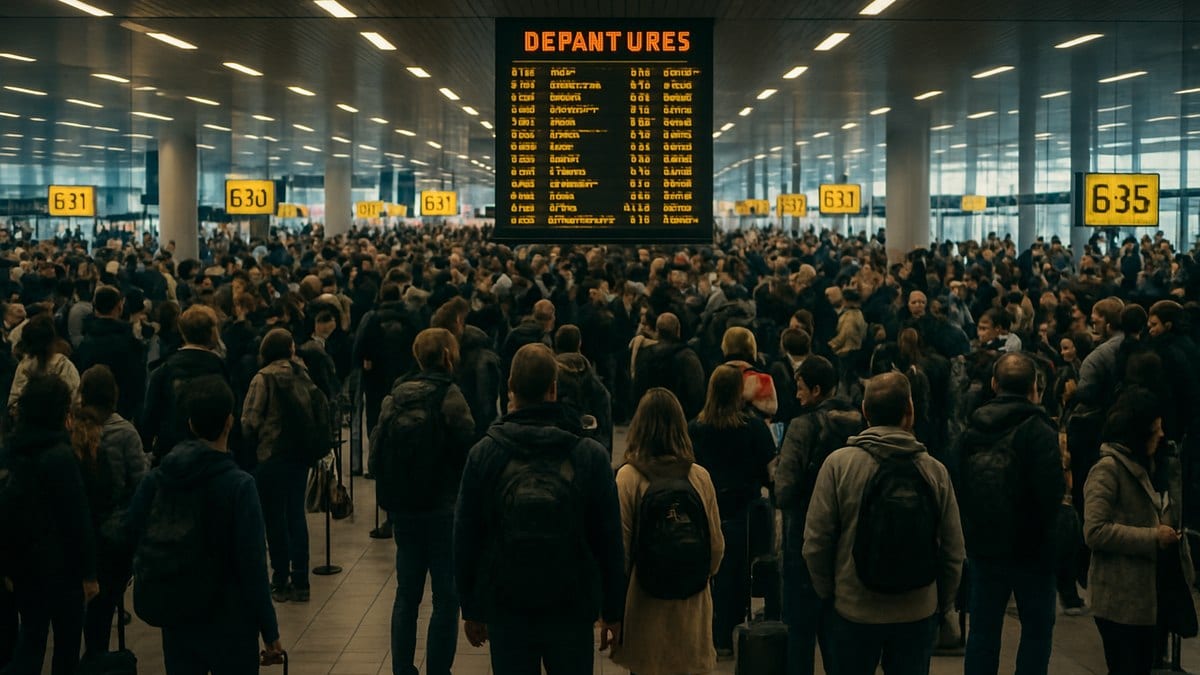
New Delay Spike Caps Weeks of Turbulence
The latest count of 129 flight delays in Atlanta arrives on top of a difficult late winter and early spring for air travel across the region. Tracking platforms and airline status boards have repeatedly shown elevated disruption levels at Hartsfield-Jackson since early March, with several days in which hundreds of flights were delayed or canceled as severe weather systems crossed the eastern United States and rippled through the airport’s tightly timed schedule.
Reports from local and national outlets describe a pattern in which relatively short ground stops or storms in key air corridors quickly translate into extended waits for passengers. At multiple points in March, heavy rain, thunderstorms and wider storm systems slowed traffic into and out of Atlanta, contributing to ground delay programs and tarmac bottlenecks that left some aircraft waiting for open gates and departure slots.
Publicly available operational data for early April indicates that the 129 new delays did not reach the extremes seen during the most severe March disruptions, when several hundred flights were affected on single days. Even so, the additional interruptions kept pressure on a hub that moves more passengers each year than any other airport and that serves as the primary connecting point for a wide domestic and international network.
The accumulation of disruption across March and April has underscored how quickly conditions can shift at Atlanta. Travelers who passed through the airport on calmer days reported near-normal operations, while those whose flights coincided with storms or staffing constraints encountered crowded concourses, dynamic gate changes and rolling departure pushes.
Weather, Staffing and Capacity Constraints Intertwine
Analysis of recent disruption patterns in Atlanta highlights several recurring factors behind the 129 April delays. Persistent spring storm activity across the Southeast has repeatedly forced air traffic managers to slow arrivals and departures, compress flight sequences and route aircraft around convective weather cells. Even when storms have not directly hit the airfield, nearby systems have reduced usable airspace and disrupted arrival and departure flows into the airport’s busy corridors.
Alongside weather, staffing levels in security screening and airline operations have remained under scrutiny. Coverage from Atlanta-based outlets over recent weeks has described periods of long security lines driven by limited Transportation Security Administration staffing, at times pushing wait times toward or beyond two hours before subsequently easing as schedules and staffing were adjusted. While security queues are separate from flight operations, extended screening times can complicate departure management and lead to late-arriving passengers at the gate.
Infrastructure and capacity constraints have also played a role. Federal aviation planning documents for 2026 flag Hartsfield-Jackson as operating close to its scheduled capacity during peak periods, meaning that small disturbances can create outsized delays when aircraft and crews are already tightly utilized. Construction and maintenance projects, along with routine runway and taxiway closures, can temporarily reduce capacity and leave fewer options to absorb surges in traffic or recover from earlier disruptions.
Together, these pressures have produced what analysts describe as a delay-dominant pattern in Atlanta this spring. Rather than widespread, daylong shutdowns, operations have generally continued, but at slower speeds that trigger rolling delays, missed connections and schedule knock-on effects across the broader network.
Impact on Airlines and Connecting Passengers
The 129 April delays have been spread across a mix of mainline and regional carriers that rely on Atlanta as a key connecting hub. Delta Air Lines and its regional partners account for the majority of movements at Hartsfield-Jackson, while ultra-low-cost carriers such as Spirit and Frontier maintain sizable schedules linking Atlanta with Florida, the Northeast and selected transcontinental routes. Disruption affecting even a small share of these flights can cascade across multiple airports as aircraft and crews fall out of position.
Published coverage of earlier April disruption days noted that delays in Atlanta had immediate consequences for long-haul passengers bound for destinations in Europe and across the United States. Tight connection windows, a hallmark of hub banking strategies, mean that when inbound flights arrive late, onward departures may have to be held or passengers rebooked. With Atlanta serving as a primary gateway to cities such as London, Paris and Amsterdam, missed connections can quickly translate into overnight stays and re-accommodation challenges across already busy holiday and business travel periods.
For airlines, the operational challenge has involved balancing schedule integrity with safety, crew duty regulations and customer service obligations. Publicly available statements from carriers during prior disruption waves in March emphasized weather and airspace constraints as key drivers of delays, while committing to provide rebooking options and, in some cases, flexible change policies for affected travelers. The additional 129 delays recorded in April have kept those customer-service and logistics teams busy as they work to restore normal rotations.
Downstream, smaller airports connected to Atlanta have also felt the effects. When departures from the hub are delayed, corresponding inbound flights to secondary cities in the Southeast and beyond often arrive late, compressing ground times and putting further strain on crews and airport resources. This dynamic helps explain why a single difficult day in Atlanta can generate ripple effects across large portions of the domestic network.
What Passengers Are Experiencing on the Ground
Travelers passing through Atlanta during the April disruption window have reported widely varying experiences, influenced largely by the time of day and whether their trips coincided with specific weather events or staffing pinch points. On the most affected days, social media posts and traveler accounts compiled in local coverage described tightly packed security queues, lines extending into the terminal lobby and long waits at boarding gates as departure times were revised.
At the same time, more recent observations and throughput data indicate that conditions have been fluid, with some days and time bands returning to relatively smooth processing. In early April, several local business and travel platforms highlighted periods when security waits at multiple checkpoints had fallen back to under ten minutes, suggesting that staffing adjustments and schedule smoothing were having an effect between storm systems and peak travel surges.
Inside the concourses, passenger experiences have similarly ranged from calm to crowded. On days affected by the 129 April delays, gate areas serving popular leisure and business routes have often filled up as passengers waited for revised boarding times. Dining and retail concessions inside the terminals have seen increased demand during these spells, while airport seating and charging points have been in high use as travelers looked for places to wait out rolling disruptions.
For connecting passengers, the most acute stress has involved uncertainty around tight transfer windows. With Atlanta’s layout requiring many travelers to use automated trains between concourses, a late inbound arrival can quickly leave only minutes to reach a distant gate. When irregular operations are in effect, gate changes and condensed boarding windows can add another layer of complexity, heightening the risk that travelers will miss flights even when aircraft ultimately depart only slightly behind schedule.
Guidance for Spring and Summer Travelers
The spike of 129 delays in April serves as a reminder that spring remains a volatile period for air travel through major hubs such as Atlanta. Travel rights organizations and consumer advocates generally advise passengers to build extra buffer time into itineraries that pass through connection-heavy airports, especially during seasons known for storm activity. That guidance has taken on renewed importance this year as operational data shows repeated disruption days in March and April.
For those planning trips through Hartsfield-Jackson over the coming weeks, publicly available advice from airlines and airport-focused travel resources emphasizes a few recurring themes. Travelers are encouraged to monitor flight status closely in the 24 hours before departure, use airline mobile apps for real-time gate changes, and arrive at the airport earlier than usual when forecasts call for storms or when news reports highlight staffing strain at security checkpoints.
Consumer advocates also note that while many of the 129 April delays in Atlanta have been linked to weather and airspace constraints, passengers still retain certain protections. In cases of significant delays or missed connections, travelers can typically request rebooking at no additional fare, and on particularly disrupted days some carriers have issued travel waivers that allow itinerary changes within defined windows. Understanding each airline’s policies in advance can help travelers respond more quickly if their flight becomes part of a disruption wave.
As the peak summer travel season approaches, analysts expect Atlanta’s operation to remain under close watch. The recent series of disruptions, including the latest 129 delays, has highlighted both the vulnerability and the resilience of the hub. While isolated storms and staffing challenges have repeatedly slowed the system, the airport has also demonstrated an ability to recover toward normal operations between events, a dynamic that will be critical as passenger volumes climb toward midyear highs.