


More news on this day
Air travel across Canada experienced another turbulent day as more than 200 departures and arrivals were reported delayed and at least 41 flights cancelled at major hubs including Toronto, Montreal, Halifax and Vancouver, affecting services operated by Air Canada, WestJet, Jazz, Inuit carriers, Pacific Coastal Airlines and several regional operators.
Get the latest news straight to your inbox!
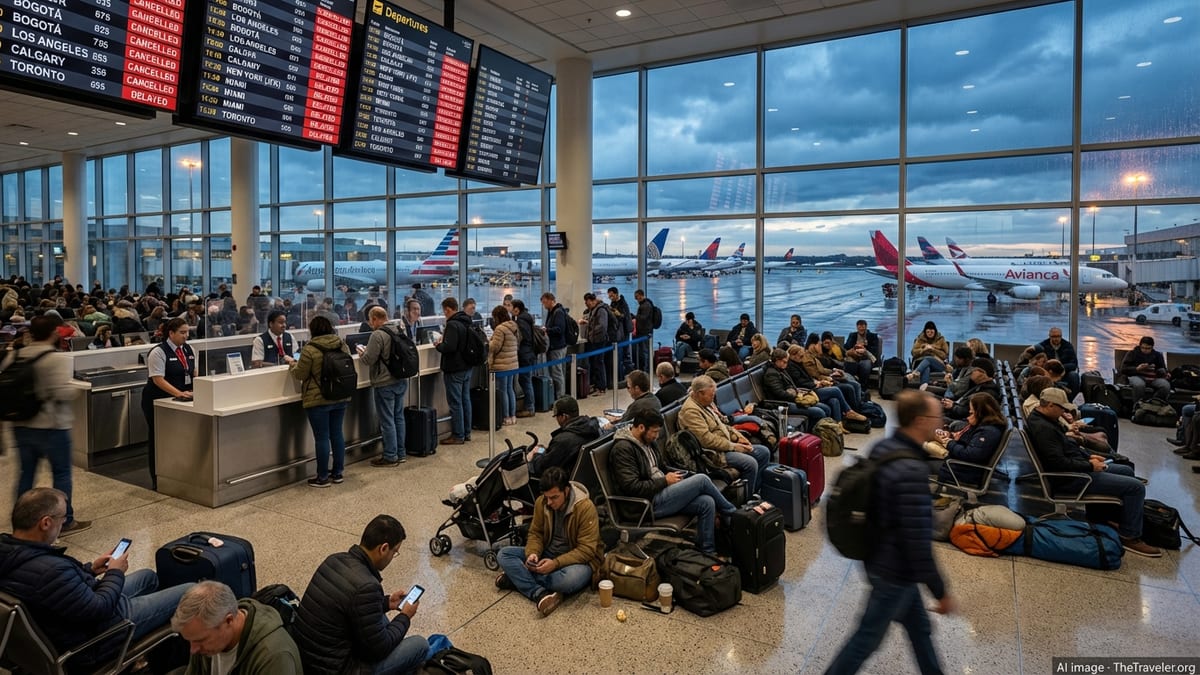
Widespread Disruptions Across Key Canadian Gateways
Publicly available tracking data and airport boards on May 18 indicate a fresh wave of disruption across the country’s busiest airports, echoing earlier bouts of irregular operations seen in recent months. Flight status tools and airport departure screens showed an estimated 215 delays and 41 cancellations clustered around Toronto Pearson, Montreal Trudeau, Halifax Stanfield, Vancouver International and several secondary airports.
The latest issues appear to be distributed across both mainline and regional networks, with large carriers such as Air Canada and WestJet showing multiple delayed rotations, while regional brands including Jazz and smaller operators such as Inuit and Pacific Coastal Airlines also appear in cancellation and delay lists. The impact stretches from short regional hops to longer cross country sectors linking Atlantic Canada, central hubs and the Pacific coast.
While the total number of affected flights is smaller than during severe winter weather events earlier in the year, the cluster of delays and cancellations concentrated at multiple hubs is creating extended knock on effects for passengers with connections, as late arriving aircraft and crew rest requirements ripple through afternoon and evening schedules.
Data from Halifax Stanfield’s live departure board on the morning of May 18, for example, showed an Air Canada service to Toronto listed as cancelled alongside a mix of on time and delayed flights, illustrating how even a small number of scrapped departures can significantly tighten options for travelers on busy domestic corridors.
Operational Strain Follows Months of Volatility
The current round of disruption is unfolding against a backdrop of months of volatile operations across Canada’s air travel system. Earlier in 2026, winter storms and freezing rain repeatedly forced mass delays and cancellations at Toronto Pearson and other hubs, while separate data compiled by flight compensation platforms documented more than 180 disrupted flights across Toronto, Montreal and Calgary on a single day in mid May.
Industry analysis published this spring has also highlighted how structural factors continue to pressure reliability. Rising jet fuel prices have led airlines to pare back or suspend some routes, particularly where margins are thin, while staffing and aircraft utilization remain finely balanced following the rapid rebound in demand. For carriers operating dense schedules out of major hubs, a single weather cell, technical issue or air traffic flow restriction can still trigger a cascading effect that is difficult to unwind within the same operating day.
Reports reviewing recent performance at Canadian airlines note that Western and Atlantic Canada often feel these ripple effects acutely, as delays and cancellations at Toronto or Montreal can strand aircraft and crews away from their next scheduled rotations to cities such as Halifax, Vancouver or smaller regional points. Passengers on those outer segments typically face fewer alternative departures, amplifying the real world impact of a relatively modest number of cancelled flights at a hub.
Online traveler accounts over recent weeks describe long waits at gates, repeated boarding and deboarding, and last minute cancellations due to a combination of weather windows, crew duty limitations and aircraft availability. The pattern suggests that while the core network remains broadly resilient, it is still operating with little slack when disruptions occur.
Passengers Face Missed Connections and Limited Alternatives
For travelers, the immediate consequences of the latest disruptions are felt in missed connections, overnight stays and hurried rebookings. With Toronto, Montreal and Vancouver serving as primary transfer points for both domestic and international journeys, even short delays can cause passengers to misconnect onto onward flights to Western Canada, Atlantic Canada, the United States or Europe.
Domestic services linking Toronto and Montreal with Halifax, Vancouver and other regional centers are particularly exposed. When an early flight is cancelled or significantly delayed, later departures on the same route can quickly sell out, leaving affected passengers with limited same day options. Travelers heading to smaller communities that rely on connections via these hubs are often forced into next day travel, especially when the disruption occurs late in the afternoon or evening.
Accounts shared on consumer forums in recent days describe travelers being offered rerouting through alternative hubs, or being asked to accept extended layovers to secure available seats. In some cases, flights have been restructured to add additional stops, such as routing an originally non stop service via Toronto, in order to consolidate demand and aircraft usage when one leg in a multi segment chain has been cancelled.
The uneven pattern of delays, with some flights operating on time and others cancelled outright, is also adding to passenger frustration. Travelers report confusion when airports appear calm and weather benign, yet their specific flight is removed from the schedule due to upstream operational constraints that are not immediately visible at the gate.
Weather, Fuel Costs and Network Complexity Among Key Drivers
Although no single nationwide weather system appears to be solely responsible for the latest round of disruption, localized conditions, air traffic flow measures and ongoing operational adjustments all play a role. Earlier in the year, heavy snow and freezing rain in southern Ontario and Atlantic Canada repeatedly forced large scale schedule changes. More recently, gusty winds and low visibility at certain airports have led to pockets of delays and diversions that continue to echo through interconnected networks days later.
At the same time, Canadian airlines are navigating a challenging cost environment, particularly for jet fuel. Public reports over recent weeks describe carriers trimming or suspending select routes that are no longer viewed as economically sustainable, especially on thinner domestic and cross border services. While such cuts are usually planned in advance, they can reduce the flexibility of the overall network, leaving fewer spare aircraft and crews to recover from unplanned disruptions.
Network complexity further complicates recovery efforts. A single aircraft might be scheduled to operate multiple legs in a day, for example flying from Halifax to Toronto, then onward to Vancouver and back to a different eastern city. If one of those early flights is cancelled or heavily delayed, the knock on effects can propagate thousands of kilometers away from the original problem, generating cancellations that appear disconnected from local conditions at the destination airport.
Regional and commuter operators, including those serving remote or northern communities, face an additional layer of challenge. Limited fleet sizes mean that a mechanical issue or weather related diversion can remove a substantial portion of available capacity, while alternatives such as road or rail are often impractical on the same day. When such services feed into larger carriers through code share or capacity purchase agreements, the disruption can complicate rebooking efforts across multiple companies.
What Travelers Can Do if Their Flight Is Affected
Travel advocates and consumer oriented guidance published in recent months suggest a number of practical steps for passengers caught up in these kinds of disruption waves. The first is to monitor flight status regularly in the 24 hours leading up to departure using airline apps or airport information pages, as many schedule changes are now communicated digitally before passengers reach the airport.
In the event of a delay or cancellation, travelers are encouraged to act quickly to secure alternative options, since available seats on remaining flights can disappear fast when a hub experiences multiple disruptions. Rebooking tools on airline websites and apps can sometimes provide faster access to alternatives than long phone queues, particularly during widespread events that generate high call volumes.
Passengers flying within or from Canada may also wish to review the obligations placed on airlines under the country’s air passenger protection framework. Publicly available guidance outlines circumstances in which travelers may be entitled to refunds, meal vouchers or accommodation when flights are cancelled or significantly delayed for reasons within a carrier’s control. Even when disruptions are linked to weather or air traffic restrictions, many airlines publish customer care policies that commit them to specific forms of assistance.
Looking ahead, travel planners often recommend booking earlier departures in the day, allowing longer connection windows at major hubs, and considering travel insurance during peak disruption seasons. While such steps cannot eliminate the risk of delay or cancellation, they can improve the chances of reaching a destination on the intended day when irregular operations sweep across multiple Canadian airports.