


More news on this day
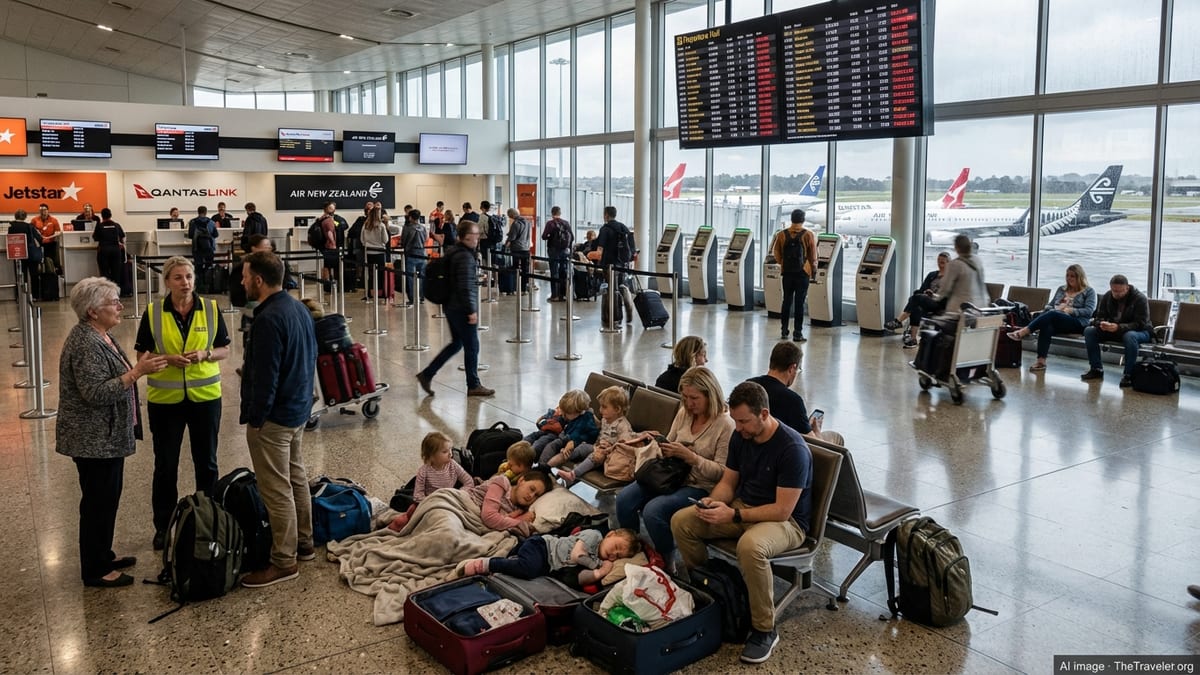
Air travel across Australia and New Zealand has been disrupted by a fresh wave of delays and cancellations, with major hubs including Sydney, Brisbane, Auckland and Wellington reporting hundreds of affected flights and widespread knock-on impacts for passengers.
Get the latest news straight to your inbox!
Wide Network Impact Across Both Countries
Recent operational data for June 2026 shows repeated disruption across the aviation networks of Australia and New Zealand, with multiple days of elevated cancellations and heavy delays. Published coverage indicates that on 4 June alone, 51 flights were cancelled and 433 were delayed across key airports, including Sydney, Melbourne and Brisbane in Australia and Wellington, Rotorua and other centers in New Zealand. A separate snapshot on 12 June reported a further 55 cancellations and more than 500 delays across the two countries within a single day.
The pattern has affected a broad range of carriers. Major full service airlines such as Qantas and Air New Zealand, low cost operators including Jetstar, and regional airlines such as Sounds Air and Alliance Airlines have all recorded disrupted services on different days. The disruptions have been spread across both domestic and trans-Tasman routes, affecting passengers travelling within each country as well as those flying between Australia and New Zealand.
While some earlier June reports highlighted only a handful of cancellations but a high volume of delays at airports like Sydney, Melbourne and Auckland, the more severe days have seen dozens of flights scrapped outright. This has had a compounding effect, as aircraft and crews end up out of position, extending the impact well beyond the initial schedule changes.
Key Airports: Sydney, Brisbane, Auckland and Wellington Under Pressure
Major international hubs have borne the brunt of the recent disruptions. Sydney and Melbourne in Australia, along with Auckland and Wellington in New Zealand, appear frequently in June operational tallies as airports with significant numbers of delayed and cancelled departures. Reports also reference impacts at Brisbane, Christchurch, Rotorua, Picton, Nelson and other regional gateways, underscoring the network-wide nature of the challenges.
In Sydney, a core hub for Qantas and a critical gateway for trans-Tasman travel, disruption has had ripple effects for connecting services. Brisbane, which maintains some of the busiest routes to New Zealand, has also seen knock-on delays when aircraft arriving from or departing to affected cities are held up. On the New Zealand side, Auckland and Wellington have seen repeated schedule changes, affecting both domestic connections and services to Australia.
Travel advisories and flight-status tools for major carriers show that even when cancellations are limited, extended delays can significantly alter travel plans. Late running services on key trunk routes between Sydney, Brisbane, Auckland and Wellington can result in missed onward flights and overnight stays, particularly for passengers on multi-leg itineraries across the Tasman.
Major Carriers and Alliance Partners Caught in the Disruption
The disruptions have affected a cross-section of airlines that underpin connectivity between Australia and New Zealand. Qantas and its regional and contracted operators, Virgin Australia, Air New Zealand, Jetstar, Alliance Airlines and Sounds Air have all appeared in recent daily tallies of delayed or cancelled flights. In some cases, smaller operators recorded a higher proportion of affected services relative to their limited schedules, while larger airlines logged greater absolute numbers of delays and cancellations.
These irregular operations come at a time when carriers have been working to rebuild and expand trans-Tasman capacity. Qantas has outlined plans for additional services between Australian and New Zealand cities, while Air New Zealand has announced new routes and future growth from key hubs such as Auckland. At the same time, partnerships and codeshare agreements between Virgin Australia and Air New Zealand, and between Qantas and various regional operators, mean that disruptions for one brand can have consequences across multiple flight numbers and marketing carriers.
For passengers, this interconnected network can complicate rebooking. Publicly available information indicates that responsibility for reaccommodation typically rests with the operating airline on a given leg, even when the itinerary features multiple carriers or alliance partners. That can prove challenging on days when several airlines are simultaneously managing delays and schedule changes.
Reasons Behind the Wave of Delays and Cancellations
Published reports attribute the June disruptions to a combination of operational and environmental factors, rather than to a single systemic failure. Weather remains a recurring challenge across the region, with winter conditions, low visibility and strong winds periodically affecting both takeoffs and landings at coastal airports and in more exposed locations such as Wellington. When weather limits operations at one hub, aircraft and crews can quickly fall out of rotation, leading to further delays elsewhere.
Operational data and airline advisories also point to broader capacity and scheduling pressures. Carriers in both Australia and New Zealand have been working with tight fleet and staffing margins as they rebuild networks and adjust equipment deployments. When one flight is delayed or cancelled, the lack of spare aircraft or standby crew can make it more difficult to recover the schedule later in the day, particularly on highly utilized domestic and trans-Tasman routes.
Infrastructure constraints, including curfews at certain airports and limited overnight slots, can further magnify the impact. If earlier flights run late, services planned for the evening can be brought close to curfew cut-offs, prompting schedule changes, revised timings or cancellations that may not be fully visible until the day of travel.
What Travellers Can Expect in the Coming Days
Given the recent pattern of disruption in early and mid June, travellers planning flights in and between Australia and New Zealand over the coming weeks may face continued pockets of irregular operations, especially during periods of poor weather or peak demand. Flight-status tools suggest that airlines continue to adjust specific services on short notice in response to operational conditions, with some days seeing relatively modest interruption and others marked by elevated delays.
Publicly available guidance from carriers and travel advisories indicate that passengers are generally encouraged to monitor their flight status closely on the day of departure and allow extra time for connections, particularly on itineraries involving Sydney, Brisbane, Auckland or Wellington. For those travelling on multi-leg or multi-carrier tickets, it remains important to understand which airline is operating each sector, as rebooking and care obligations typically follow the operating carrier rather than the marketing brand.
Despite the recent difficulties, airlines across the region continue to promote network growth and new route launches later in 2026, reflecting sustained demand for trans-Tasman and domestic travel. For now, however, the experience of June highlights how quickly weather, capacity constraints and tightly scheduled fleets can combine to disrupt even well-established corridors between Australia and New Zealand.