


More news on this day
Air travel across the United States experienced a fresh wave of disruption today, with publicly available trackers showing 113 flights canceled and more than 2,300 delayed at airports serving Texas, Los Angeles, Las Vegas, New York, Orlando, Philadelphia, and other major destinations, affecting operations at United, American, Southwest, Delta, SkyWest, and additional carriers.
Get the latest news straight to your inbox!
Major Hubs From Texas To The Northeast See Knock-On Disruptions
The impact of today’s disruption has been felt most acutely at large hub airports and busy leisure gateways. Airports serving Texas, including Dallas Fort Worth and Houston, have registered clusters of cancellations and extended delays, which in turn are creating late-arriving aircraft and crew shortages around the system.
Los Angeles International, Las Vegas, and New York area airports have also recorded elevated delay counts. Even where outright cancellations remain limited, rolling departure pushes of 30 minutes or more have been frequent, adding to congestion in terminal areas and straining gate capacity during peak banks of departures.
Orlando and Philadelphia, both important nodes for domestic and transcontinental itineraries, are seeing a mix of weather- and volume-related delays. Reports indicate that some travelers connecting through these airports are missing onward flights as tight layovers evaporate under growing departure queues.
The net effect is a patchwork of disruption that may not always appear severe at a single airport, but combines across the network into a day in which hundreds of flights are withdrawn from schedules and thousands encounter significant delay minutes.
United, American, Southwest, Delta And Others Manage Domino Effects
Today’s figures highlight how quickly operational strain can ripple across all major U.S. carriers. United, American, Southwest, Delta, SkyWest, and additional regional partners are all contending with aircraft and crews that are out of position because of earlier disruptions, further complicated by local weather and air traffic management constraints.
Operational data and airline status pages show that no single carrier is solely responsible for the 113 cancellations and 2,325 delays logged nationwide today. Instead, each airline’s network is reacting to a combination of factors, including storm systems affecting key hubs, airspace flow programs near large coastal cities, and residual congestion from prior days.
Regional operators, including SkyWest and other contract carriers, are particularly exposed when mainline schedules shift. Because they often operate shorter-haul feeder routes into hubs such as Dallas Fort Worth, Houston, Los Angeles, and New York, a single crew or aircraft imbalance can temporarily break multiple spokes in the network.
For travelers, the practical outcome is a day in which brand loyalty offers limited protection. Even passengers booked on early-morning or historically reliable routes have encountered rolling delays or last-minute cancellations as airlines attempt to reset their operations.
Weather, Airspace Limits And Staffing All Play A Role
While no single national weather catastrophe dominates today’s headlines, a combination of unstable spring conditions and constrained airspace has contributed to the disruption picture. Storm cells in parts of Texas and the central United States have required routing adjustments and temporary flow restrictions, cutting available capacity at some of the busiest hubs.
In coastal markets such as Los Angeles and New York, air traffic management programs have limited departure and arrival rates at various points in the day. Even modest reductions in scheduled capacity at these airports can quickly translate into queues of aircraft waiting for takeoff, which then propagate delays to their next destinations, including Las Vegas, Orlando, and Philadelphia.
Operational resilience remains under pressure as airlines continue to navigate tight staffing margins for both flight crews and ground handlers. Industry data and recent analyses of U.S. flight performance show that a system already operating near capacity can struggle to absorb even routine weather disturbances, leading to a higher probability that minor issues cascade into broader disruption.
Today’s performance figures underscore that passengers are encountering a system in which several moderate stressors, rather than one dramatic event, can be enough to push cancellations above the hundred-mark and delay counts into the thousands.
Travelers Face Long Lines, Missed Connections And Limited Options
At airports from Texas to the Northeast, travelers have been greeted by crowded check-in areas, busy rebooking counters, and full customer service phone queues. Public posts and local media coverage describe families stranded overnight, business travelers racing between gates, and leisure passengers in holiday markets like Las Vegas and Orlando facing unexpected extra days away from home.
Missed connections have been a particular challenge. With flights tightly banked at hubs, a delay of even 45 minutes into Dallas Fort Worth, Houston, Los Angeles, or New York can cause passengers to misconnect onto the last departure of the day to smaller cities, leaving few same-day alternatives. In some cases, travelers are being rebooked on itineraries that add connections or require departures a full day later than planned.
Airlines are offering standard disruption options such as waiving change fees within affected date windows, allowing travelers to move to earlier or later flights on the same route. However, seat availability is limited on popular corridors, especially into and out of major hubs and peak leisure destinations. This is leading some passengers to explore alternate routings or even ground transportation for shorter legs.
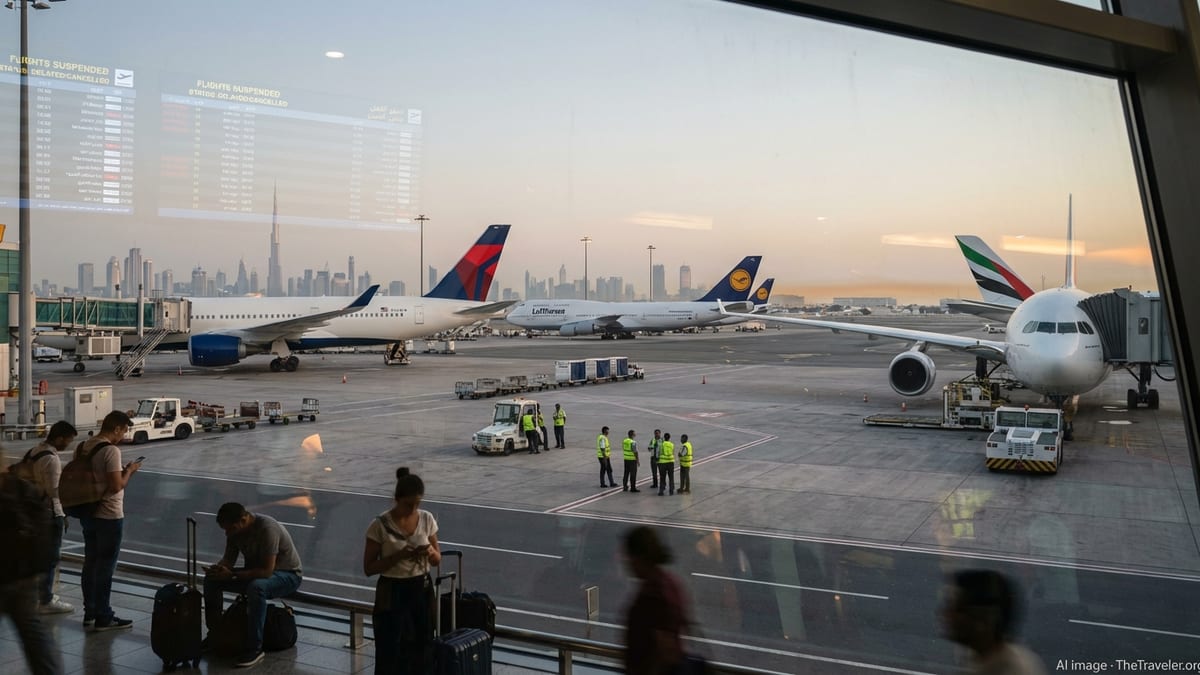
For those already at the airport, departure boards filled with yellow and red status indicators are serving as a visual reminder of how sensitive the U.S. aviation network remains to weather and operational shocks, even outside of major holiday periods.
What Passengers Can Do As Disruptions Continue
With delays and cancellations likely to create residual impacts into the next operating day, travelers are being urged by widely shared advisories and consumer travel guidance to take a proactive stance. Monitoring flight status directly through airline channels before leaving for the airport can help avoid unnecessary waits in crowded terminals.
Same-day travelers are frequently advised to arrive earlier than usual at affected hubs and to allow longer connection times when rebooking. For those whose flights are showing lengthy delays, contacting the airline through multiple channels, including mobile applications and call centers, can sometimes surface alternative routings that are not yet widely displayed.
Data from recent years demonstrates that early-morning departures tend to be less vulnerable to knock-on delays from previous flights, while late-evening departures face higher risks of rolling disruptions. Passengers with flexible plans may consider shifting to earlier flights on high-impact days, particularly when traveling through airports that are repeatedly highlighted in delay and cancellation statistics.
As today’s nationwide figures illustrate, even a relatively modest cancellation count can be paired with several thousand delayed flights, creating a challenging environment for anyone attempting to move across the country by air. For now, the focus for both airlines and travelers remains on getting through the current disruption cycle while minimizing further schedule damage into the week ahead.