

More news on this day
Travelers across Portugal are facing significant disruption today as 131 flight delays and 27 cancellations hit key routes served by TAP Air Portugal, Iberia and Lufthansa at Lisbon, Porto, Faro and Madeira, amid days of adverse weather and mounting operational strain.
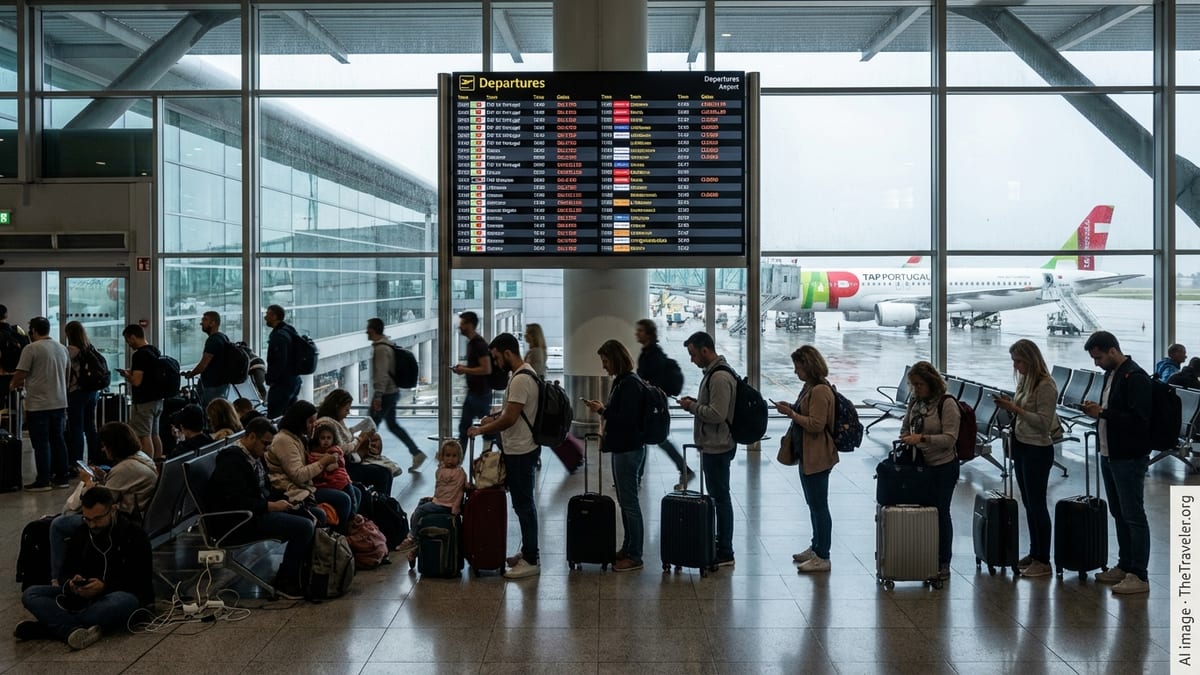
Stormy Weather Compounds Strain on Portugal’s Air Network
The latest wave of disruption comes at the tail end of a turbulent week for Portuguese aviation, with strong winds and low-visibility conditions repeatedly affecting operations, particularly in the islands. In Madeira, gusty crosswinds and fast-changing cloud ceilings have forced airlines to divert or cancel flights, contributing heavily to the cancellations now rippling through the wider network.
Airport operator ANA has warned for several days that unsettled weather could affect arrivals and departures, urging travelers to verify flight status before heading to the airport. That warning has proved prescient, as airlines struggle to maintain regular schedules while ensuring safety on approaches to challenging airports such as Funchal’s Cristiano Ronaldo International, where crosswind limits are strictly enforced.
These meteorological challenges come on top of a winter season already shaped by Atlantic storm systems bringing high winds and heavy rain to Portugal and neighboring Spain. As carriers adjust rotations, any disruption at weather-sensitive airports such as Madeira can cascade into mainland hubs, feeding into a broader tally of delays and missed connections.
Lisbon and Porto Bear Brunt of Delays
Lisbon’s Humberto Delgado Airport, TAP Air Portugal’s main hub, has seen the largest share of today’s disruption. A combination of late inbound aircraft from weather-affected routes, tight turnaround times and air traffic control flow restrictions has pushed departure times back across European and long haul services. TAP’s operations to cities such as Paris, Madrid and key intercontinental gateways are reported to be running behind schedule, with knock-on effects for connecting passengers.
Porto’s Francisco Sá Carneiro Airport is also experiencing an unusually high level of delays, as aircraft arriving late from Lisbon and other European hubs create a rolling backlog. While most flights are eventually departing, the accumulation of 131 delayed services across the country reflects how even moderate schedule slippage at one hub can propagate through a network in a matter of hours.
For passengers, the practical impact is long queues at check in and security, as well as crowded departure lounges where travelers wait for revised boarding times. Staff on the ground are juggling rebooking requests and voucher issuance for those facing lengthy waits, with priority given to families traveling with children, elderly passengers and those with tight onward connections.
Madeira and Faro Face Cancellations and Diversions
While Lisbon and Porto contend with delays, airports at Madeira and Faro have been more directly hit by cancellations. In Madeira, the combination of strong crosswinds and turbulence around the airport’s hillside approaches has forced several airlines to scrub sectors, particularly those attempting multiple approaches without meeting safety thresholds for landing. TAP Air Portugal and Lufthansa, among others, have been obliged to cancel or divert flights to mainland airports when conditions deteriorate.
At Faro, a gateway for the Algarve’s winter sun travelers, morning and early afternoon operations have been punctuated by cancellations and extended holding patterns as weather fronts move across southern Portugal. Iberia and partner airlines operating Iberian Peninsula and European routes have reported schedule irregularities, with some services cancelled outright where aircraft and crews are out of position.
The 27 cancellations recorded today across the four airports represent a relatively small proportion of overall traffic but have a disproportionate impact on affected passengers, especially those flying to or from island destinations where alternative options can be limited. In some cases, travelers are being reprotected on flights departing a day or more later, forcing last minute changes to accommodation and onward plans.
Airlines Activate Contingency Plans for Stranded Passengers
With operational irregularities accumulating, TAP Air Portugal, Iberia and Lufthansa have activated contingency protocols designed for disruption days. These plans include flexible rebooking policies, the issuance of meal and hotel vouchers when delays stretch into extended waits, and the deployment of extra staff at key customer service points in Lisbon and Porto to handle reissue queues.
Airline representatives stress that safety remains the overriding priority, particularly in Madeira, where weather conditions can change rapidly. Crews are being briefed to avoid pushing aircraft or operational limits, even if that means additional delays or diversions. Ground teams are also coordinating closely with airport authorities and air navigation services to manage arrival and departure flows and reduce congestion periods.
Passengers affected by the disruption are being encouraged to use airline apps and digital channels as the primary source of real time information, since call centers and airport desks are experiencing high demand. Those already at the airport are advised to stay close to their gate once a boarding time is confirmed, as available operational windows can be short when weather briefly improves.
Knock-on Effects Across Iberian and European Routes
The issues in Portugal are echoing across the broader Iberian and European air traffic system. Iberia’s Madrid hub, already managing its own wave of delays and cancellations in recent days, is contending with misaligned connections for passengers arriving late from Lisbon and Porto. Lufthansa’s Frankfurt and Munich bases are also managing irregular operations when aircraft from Portugal arrive behind schedule or rotations are disrupted by cancellations at Madeira and Faro.
Travel analysts note that winter and early spring remain vulnerable periods for European aviation, when storms and unsettled conditions frequently interact with tightly timed schedules and high aircraft utilization. When several hubs experience weather or capacity challenges in quick succession, as has happened this week in Spain and Portugal, it becomes increasingly difficult for airlines to absorb the shock without widespread delays.
For now, there are no indications of long term schedule reductions, and airlines expect to gradually restore normal operations as weather stabilizes and aircraft rotations are rebalanced. However, today’s 131 delays and 27 cancellations across Lisbon, Porto, Faro and Madeira underline how quickly travel plans can be upended, and how essential it is for passengers to build extra time into itineraries during volatile weather periods.