

More news on this day
Travelers moving through Denver International Airport in Colorado faced mounting disruption as publicly available data showed 166 flights delayed and one cancelled, affecting multiple major airlines and key routes across the United States.
Get the latest news straight to your inbox!
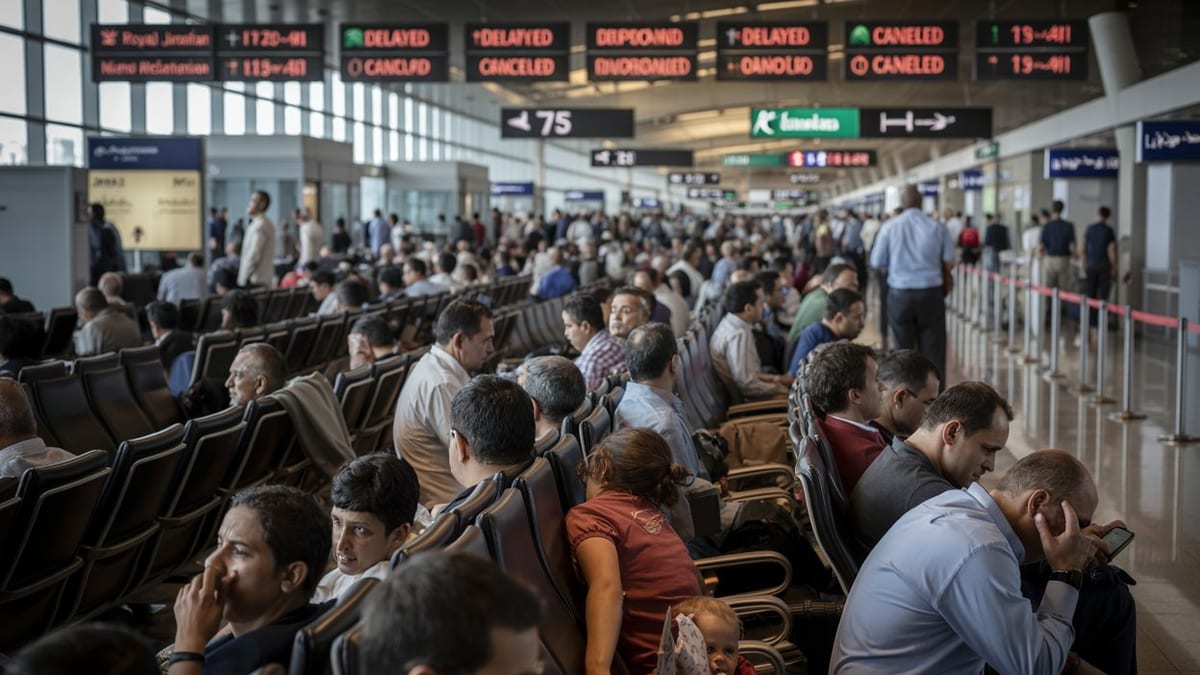
Image by Travel And Tour World
Widespread Delays Ripple Through Major Carriers
The latest operational data indicate that Denver International Airport experienced a concentrated wave of delays, with 166 departures and arrivals running late and one flight cancelled. The disruption affected a mix of domestic services across the airport’s busiest banks of flights.
Publicly available trackers show that United Airlines, Southwest Airlines and Frontier Airlines were among the most affected carriers at the Colorado hub, alongside several smaller operators. The pattern reflects the dominant presence of these airlines at Denver, where they operate extensive networks across the Mountain West and beyond.
The overall scale of delay remains modest compared with past severe weather or infrastructure events that have led to hundreds of cancellations at Denver. However, the concentration of late-running flights within peak travel windows significantly complicated schedules for passengers attempting to connect onward to other major U.S. cities.
Operational data point to a mix of primary delays, such as late-arriving aircraft, and secondary knock-on effects as airlines adjusted rotations, reassigned aircraft and crews, and held flights to consolidate passengers. This produced a cluttered departure board through much of the day for several concourses.
Key Routes to Chicago, Dallas, Los Angeles and New York Affected
The disruption at Denver had a marked impact on some of the country’s most heavily traveled corridors, particularly flights to and from Chicago, Dallas, Los Angeles and New York. These city pairs form part of the core networks for United, Southwest and Frontier, all of which rely on Denver as a connecting hub or focus city.
Routes linking Denver with Chicago and Dallas are especially sensitive to schedule changes because they feed dense midcontinent and southern networks. When Denver departures on these routes run late, connection banks in both directions can be affected, magnifying inconvenience for travelers attempting same-day links to secondary markets.
Services to Los Angeles and New York, two of the largest long-haul domestic markets from Denver, also showed delays as aircraft rotations slipped behind schedule. Publicly accessible timetables indicate that even modest late departures on these longer sectors can cascade into evening operations, limiting recovery options and raising the risk of missed overnight connections.
While only one flight was recorded as outright cancelled, the combination of heavy delay volumes on high-demand routes left many travelers facing extended waits in terminal areas, rebookings onto later departures and, in some cases, the need to adjust ground transport and accommodation plans at their final destinations.
Possible Weather and Congestion Factors Behind the Disruption
Early assessments from aviation and meteorological coverage suggest that a combination of regional weather and airspace congestion may have contributed to the delayed operations at Denver. The airport’s location on the High Plains frequently exposes it to rapidly changing conditions, including wind shifts, low clouds and thunderstorms during transitional seasons.
Reports on broader national air traffic flows indicate that constraints at other major hubs in the central and eastern United States can also affect Denver’s on-time performance. When holding patterns, route restrictions or ground delay programs are imposed elsewhere, aircraft inbound to or outbound from Denver may experience additional taxi and air time, compounding local scheduling pressures.
In earlier weather events this year, monitoring services and aviation analyses have linked similar clusters of delay at Denver to a mix of winter storms across the Midwest and East Coast, as well as convective weather in Texas and the central corridor. While the current disruption is less severe in scale, the pattern of scattered, multi-hour delays aligns with those previous episodes.
Operational data further suggest that some delays at Denver originated upstream, with flights already behind schedule on arrival, limiting airlines’ ability to turn aircraft quickly. Once early rotations slip, recovery often depends on spare aircraft and crews being available, which can be difficult on busy travel days.
Passenger Experience: Long Lines and Tight Connections
For travelers inside the terminal, the impact of 166 delayed flights was most visible in extended queues at customer service counters and busy gate areas. Social media posts and traveler forums described crowded concourses, with passengers watching departure boards update repeatedly as new estimated times were posted.
Those with tight connection windows at Denver were particularly affected. Even short pushbacks to departure times can create uncertainty for passengers attempting 30 to 45 minute connections across multiple concourses, especially when gate changes occur or when regional jets arrive at remote stands that require busing.
Some travelers reported opting to switch to later flights where space allowed, trading earlier departure times for more reliable onward connections at Chicago, Dallas, Los Angeles or New York. Others chose to remain on their original services in the hope that delays would compress as aircraft made up time en route, a common occurrence on longer sectors.
Airport services, including retail and dining outlets, appeared to benefit from the longer dwell times, as passengers sought food, power outlets and quieter corners to work or rest. At the same time, publicly available customer feedback highlighted frustrations over limited seating and the difficulty of securing last-minute hotel rooms for those whose onward connections became impractical late in the day.
Airlines Work to Stabilize Schedules
According to published airline and airport operations updates, carriers at Denver moved to stabilize schedules by the later waves of departures. This typically involves prioritizing aircraft and crews for flights serving major hubs, where onward connection options remain strongest and recovery capacity is highest.
United, Southwest and Frontier, which collectively operate a large share of Denver’s daily flights, appeared to focus on protecting evening departures to key markets such as Chicago, Dallas, Los Angeles and New York. Public schedules show that maintaining these trunk routes helps prevent disruption from spilling into the following day’s first departures and early-morning connection complexes.
Aviation analysts note that when an airport experiences a cluster of delays without a large number of cancellations, the recovery window can be relatively short if weather and airspace conditions improve. In such cases, airlines may be able to reduce average delays over the course of several hours, even if some individual flights remain significantly behind schedule.
Travelers with upcoming itineraries through Denver are being advised, in publicly available guidance, to monitor flight status closely, allow additional connection time where possible and consider earlier departures on key routes. While the latest data suggest that operations are gradually returning to more typical on-time levels, the day’s disruption underscores Denver’s central role in the U.S. network and the speed with which issues there can echo across multiple regions.