


More news on this day
Passengers traveling through Monterrey and Guadalajara faced mounting disruptions this week as a wave of 56 flight delays and six cancellations rippled across major airlines serving two of Mexico’s busiest airports.
Get the latest news straight to your inbox!
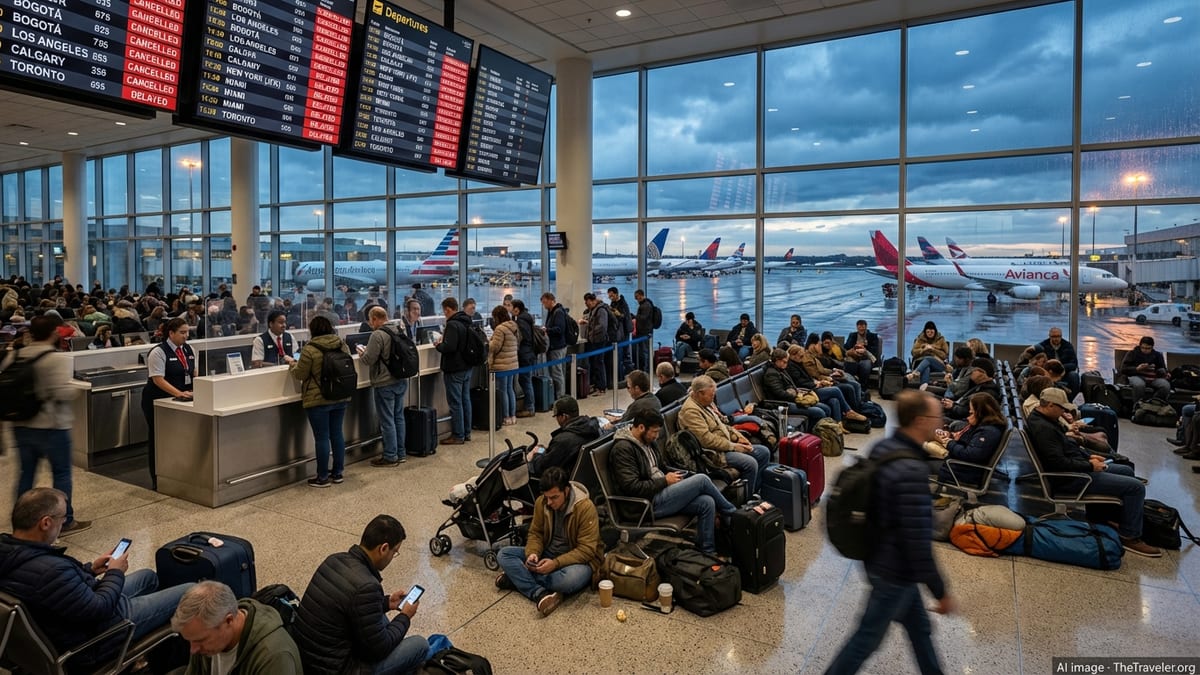
Disruptions Hit Key Mexican Hubs at Peak Travel Time
The latest operational data for Monterrey International Airport and Guadalajara International Airport indicate a sharp uptick in off‑schedule operations, with dozens of departures and arrivals running late or scrubbed entirely. The combined total of 56 delays and six cancellations has created longer lines at check in and security, congested boarding areas, and mounting frustration among passengers attempting to connect to domestic and international routes.
Monterrey and Guadalajara rank among Mexico’s highest traffic airports for both passenger volumes and aircraft movements, serving as essential links between northern and central Mexico and major cities in the United States, Latin America, and beyond. With such a dense schedule of point to point and connecting flights, even a cluster of disrupted operations can quickly cascade into missed connections and aircraft and crew being out of position.
Publicly available flight tracking boards for both airports show delays affecting a mix of early morning, midday, and evening departures, suggesting broader operational strain rather than a short-lived weather event confined to a single time window. Travelers on some routes have reported accumulated delays of several hours as airlines work to reshuffle aircraft and crews.
The timing of the disruption coincides with heavy summer demand and increased travel to World Cup host cities, amplifying the impact. Both Monterrey and Guadalajara have seen higher passenger numbers linked to tournament-related travel, which leaves less slack in already crowded schedules when irregular operations arise.
Major Carriers Confront Operational Strain
Reports from airport status boards and independent flight tracking platforms show that the disruptions are spread across multiple carriers, including large Mexican airlines and foreign operators serving key cross-border routes. While no single airline appears to account for all of the off-schedule flights, patterns of delay on certain domestic trunk routes and Mexico United States services are particularly notable.
Operational information for Monterrey and Guadalajara indicates that delays are affecting departures to Mexico City, Tijuana, Cancun, and major U.S. gateways such as Houston, Dallas, and Los Angeles. These are routes that typically rely on tight turnarounds and complex crew rotations, making them especially vulnerable when earlier legs run late or when aircraft require unscheduled maintenance checks.
Industry observers monitoring on-time performance metrics note that some carriers serving the two airports have already been under scrutiny in recent months for elevated delay rates on select routes. The current wave of disruptions is expected to weigh further on punctuality statistics for the July travel period, which is closely watched by both regulators and consumer advocates.
Airlines have responded by reassigning aircraft, consolidating lightly booked services, and in some cases canceling flights outright when recovery within the same operational day is not feasible. These measures can help restore network stability but often result in extended rebooking times for passengers in affected markets.
Weather, Congestion, and Knock-On Effects
While the precise causes of each individual delay vary, the pattern of disruption at Monterrey and Guadalajara reflects a combination of seasonal weather challenges, airspace congestion, and knock-on effects from earlier irregularities in the network. Mexico’s summer rainy season frequently brings low clouds, thunderstorms, and reduced visibility that can slow arrivals and departures and force temporary flow restrictions.
Recent days have seen intermittent adverse weather in parts of the country, including conditions that prompted temporary operational adjustments at other major Mexican airports. When one hub or spoke airport experiences slowdowns or brief closures on a runway, late-arriving aircraft can quickly propagate delays across subsequent sectors, including flights to and from Monterrey and Guadalajara.
At the same time, increased demand linked to tourism and major sporting events has pushed air traffic toward capacity at peak hours, with airports juggling packed departure banks and high utilization of gates and taxiways. Under these circumstances, even relatively minor disruptions can trigger a chain reaction, leaving flights queued for takeoff slots or waiting for gates to become available.
Observers also point to lingering pressures on staffing and maintenance resources across the industry, with airlines continuing to fine-tune schedules and fleet usage after several years of rapid demand shifts. Any mismatch between planned and available crews, or a late return of an aircraft from heavy maintenance, can ripple through a network and manifest as delays far from the original source of the issue.
Passenger Impact and Consumer Rights
For travelers caught in the current wave of irregular operations, the immediate concern has been uncertainty around departure times, missed connections, and unexpected overnight stays. Check-in counters and customer service desks at Monterrey and Guadalajara have reported heavier than usual traffic as passengers seek rerouting options, meal vouchers, and accommodation assistance.
Consumer information platforms focused on Guadalajara and other Mexican airports highlight that passengers have specific rights under national regulations when flights are significantly delayed or canceled. Depending on the cause and length of the disruption, travelers may be entitled to vouchers, partial refunds, or compensation, particularly when the delay is attributable to controllable factors within the airline’s operations rather than severe weather or air traffic control restrictions.
Travel analysts recommend that passengers document boarding passes, receipts, and any written notifications about changes to their itinerary, as these materials can be important when seeking reimbursement or filing a claim. Keeping records of revised departure and arrival times, as displayed on airport monitors or airline apps, can also help substantiate the duration of a delay.
With multiple carriers affected, some passengers have opted to switch routes or even alternate airports within Mexico when feasible, trading a direct flight for a connection if it offers a more reliable path to their final destination. However, such workarounds are often limited during busy periods, when remaining seats on unaffected flights are scarce.
Planning Ahead Amid Ongoing Volatility
The latest disruption at Monterrey and Guadalajara underscores the volatility that continues to characterize global aviation, even as passenger volumes rebound and airlines expand schedules. For upcoming travelers, the situation serves as a reminder to build additional buffer time into itineraries, especially when connecting to long-haul flights or time-sensitive events.
Travel planners suggest that passengers monitor flight status closely in the 24 hours before departure, using both airline channels and independent tracking tools where available. Early awareness of a significant delay or cancellation can expand rebooking options and reduce the likelihood of extended airport waits.
Travel insurance policies that specifically cover missed connections, delays, and cancellations can also provide an extra layer of protection, though coverage terms vary widely. Passengers are encouraged to review policy details in advance, paying close attention to definitions of covered events, compensation limits, and documentation requirements.
As operations stabilize in the coming days, aviation analysts will be watching performance metrics at Monterrey and Guadalajara for signs of improvement or further strain. For now, the combination of 56 delays and six cancellations across major airlines has added another challenging chapter to what was already shaping up to be a tightly stretched summer for air travel in Mexico.