


More news on this day
Thunderstorms tracking across the Houston area on Tuesday are triggering new rounds of ground delays at George Bush Intercontinental Airport, slowing arrivals and departures at one of the nation’s busiest summer travel hubs.
Get the latest news straight to your inbox!
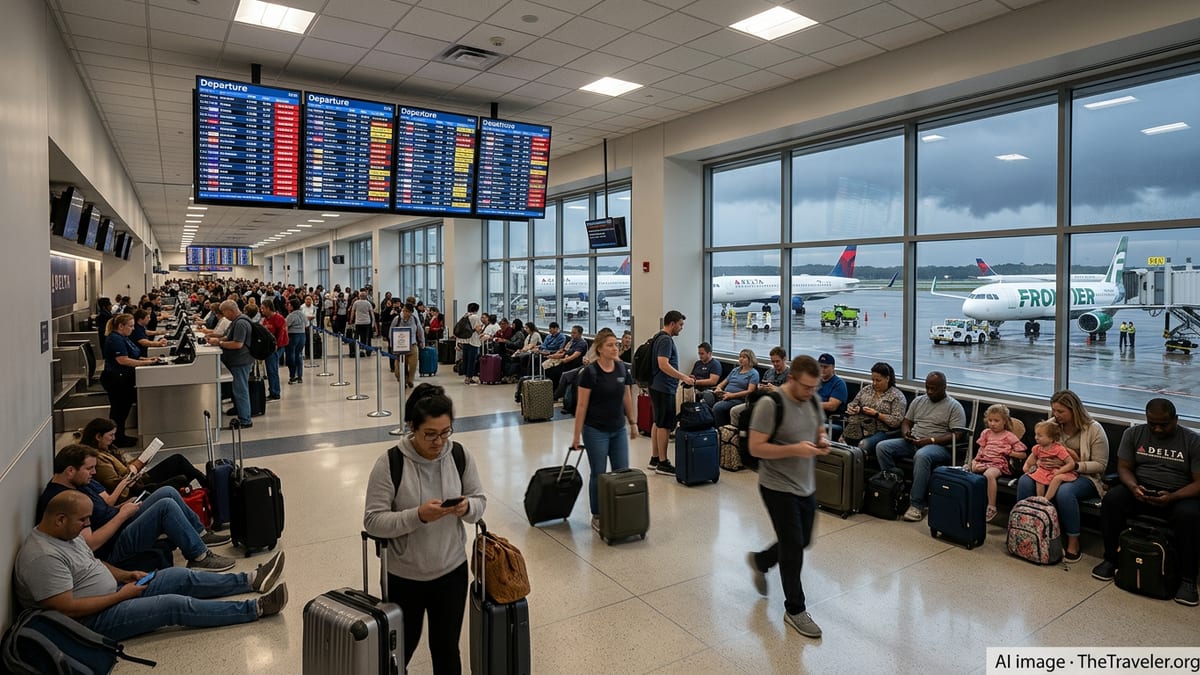
Thunderstorms Disrupt Morning Flight Operations
Storm cells moving through southeast Texas on July 14 have led to a fresh set of ground delays at Houston’s George Bush Intercontinental Airport, as air traffic managers regulate the flow of flights into the region. Published advisories show that thunderstorms were expected to impact the Houston airspace overnight into Tuesday, prompting a formal ground delay program tied to weather around Bush Airport.
According to recent national airspace advisories, a ground delay program for Bush Intercontinental was in place into the early hours of Tuesday in response to thunderstorms in and around the Houston terminal area. The program regulates how many flights can arrive within specific time windows, spacing traffic and reducing the risk of aircraft stacking up in holding patterns while storms pass through.
Local coverage from Houston-based outlets indicates that Tuesday’s disruptions follow several days of storm-related slowdowns at both Bush Intercontinental and the city’s smaller Hobby Airport. Previous rounds of thunderstorms earlier in July led to temporary ground stops that halted most traffic into the airport and were followed by extended ground delays as carriers worked through backlogs of diverted and late-arriving flights.
Ground Delay Programs Limit Arrivals to Manage Storm Risk
The Federal Aviation Administration uses ground delay programs to meter air traffic into airports when bad weather or other constraints sharply reduce capacity. When thunderstorms settle over the arrival and departure corridors at Bush Airport, controllers limit the number of flights allowed to depart for Houston until conditions improve, effectively shifting some of the waiting time from the air to the ground.
Publicly available FAA operations plans for July highlight thunderstorms as the primary impact on Bush Intercontinental, noting that arrival rates would be restricted during periods of heavier weather. Similar advisories issued in recent weeks show that IAH has repeatedly cycled between full ground stops, where most inbound departures are held at their origin, and ground delay programs, where flights are assigned later arrival slots to match reduced runway capacity.
For airlines using Bush as a major connecting hub, even modest cuts to the hourly arrival rate can ripple through their wider networks. When storms force traffic to slow into Houston, aircraft and crews may end up out of position for later departures, leading to rolling delays throughout the day, especially during already busy summer travel periods.
Travelers See Longer Waits, Missed Connections and Diversions
Passengers traveling through Bush Intercontinental on Tuesday are experiencing longer-than-normal waits, both in the terminal and on board aircraft. Recent Houston-area coverage of storm-related disruptions at the airport has described average delays of close to an hour during active weather, with some flights held on tarmacs or diverted to secondary airports when storms intensified over Houston.
Experiences shared on traveler forums in recent months highlight how quickly conditions around Bush can change when thunderstorms build over the region. Flyers describe flights that push back on time only to wait for extended periods on taxiways while departure routes are temporarily closed, as well as arrivals forced to circle or divert until storm cells move away from final approach paths. Once storms ease, ramp operations can also be slow to restart if lightning persists near gate areas, delaying boarding and baggage handling.
The latest delays are unfolding just as airlines and airports contend with peak summer crowds and tight schedules. Even short disruptions at a large hub such as Bush Intercontinental can compound into missed connections, last-minute rebookings and crowded customer service lines as travelers scramble for alternate routes through less affected airports.
Weather, Construction and Seasonal Demand Add to Pressure
Thunderstorms are a regular feature of Houston’s warm-season climate, and aviation planning documents show that the city’s major airports rank among the more weather-sensitive hubs in the national airspace system. Seasonal storm patterns frequently reduce visibility, trigger wind shifts and generate lightning near runways, all of which can restrict operations at Bush Intercontinental.
In addition to weather, Bush is undergoing a multiyear modernization effort that includes work around terminal areas and gates. Federal construction impact reports for 2026 indicate that ongoing projects, such as bridge replacement and terminal upgrades, can temporarily reduce gate availability and overall airport capacity. When combined with convective storms, those constraints can intensify the operational strain during peak travel periods.
Historical studies of airport performance in Houston also show that average arrival delays increase sharply during periods of strong demand when infrastructure is already operating near capacity. With summer traffic volumes high, each round of thunderstorms leaves less slack in the system for airlines to absorb disruptions, making ground delay programs and tactical flow management an essential part of keeping operations stable.
What Passengers Can Expect for the Remainder of the Day
Forecast discussions for the Houston Intercontinental area on Tuesday point to scattered thunderstorms lingering through parts of the afternoon and evening, raising the possibility of additional, intermittent slowdowns. While conditions can improve quickly once individual storm cells pass the airfield, residual congestion often takes hours to work off as delayed and diverted flights are re-sequenced into the schedule.
Travel industry guidance suggests that passengers flying into or out of Bush Airport during active weather should be prepared for schedule changes, including departure pushes, gate swaps and tight connection windows. Same-day adjustments are common when air traffic managers introduce or lift delay programs in response to evolving radar imagery and storm intensity.
Publicly available airline alerts for July 14 indicate that at least one major carrier has issued a travel waiver for parts of South Texas, including Houston, tied to thunderstorms affecting the region. Such waivers typically allow eligible travelers to adjust itineraries within a limited date range without additional change fees, providing some flexibility to avoid the worst of the disruptions as storms continue to influence operations at Bush Intercontinental.