

More news on this day
Travel across Switzerland faced significant disruption as a fresh wave of flight suspensions and delays involving Scandinavian Airlines, Pegasus Airlines, Kuwait Airways and several other carriers left hundreds of passengers stranded at Zurich and Geneva airports.
Get the latest news straight to your inbox!
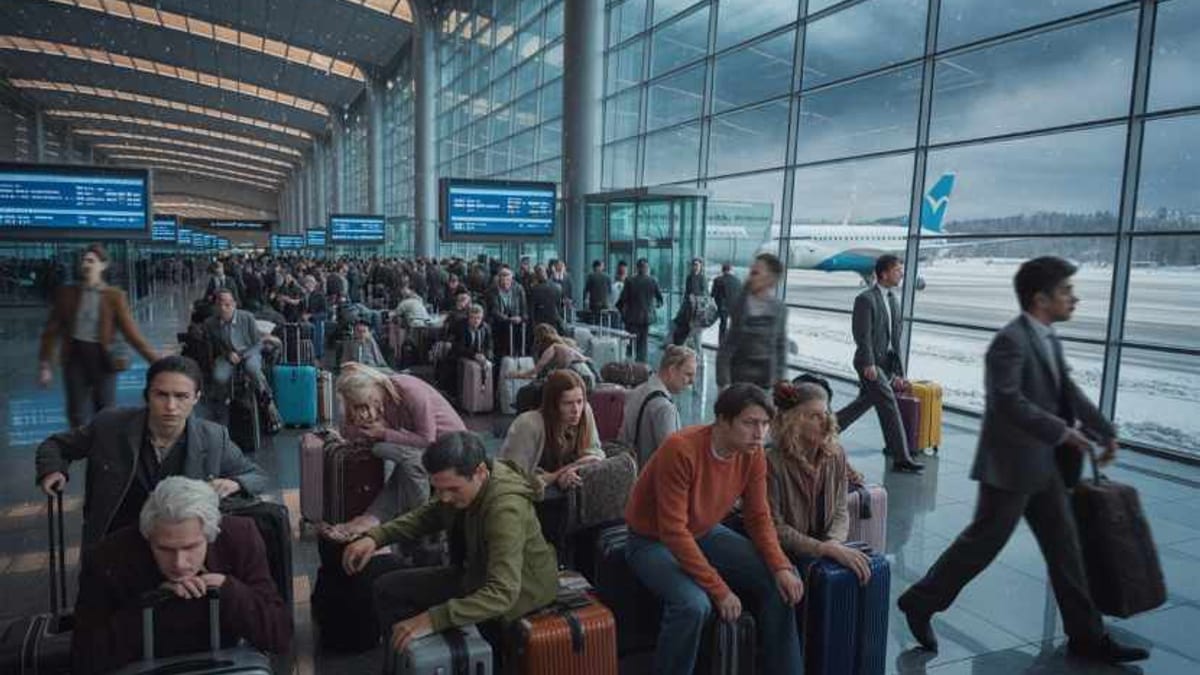
Image by Travel And Tour World
Wave of Cancellations Hits Key International Routes
Published flight information for Sunday, March 29, shows at least eight services involving Scandinavian Airlines, Pegasus Airlines, Kuwait Airways and additional international carriers withdrawn from schedules serving Zurich and Geneva, alongside a series of extended delays on remaining routes. While overall air traffic has been unsettled for weeks by wider regional airspace restrictions, the latest adjustments have concentrated pressure on Switzerland’s two main international gateways.
Operational data from airline and airport boards indicates that the affected services include links between Switzerland and hubs in Scandinavia, Turkey and the Gulf region, all of which normally provide onward connections to Asia, the Middle East and North America. The suspensions have created particular difficulties for travelers booked on multi‑segment itineraries, many of whom found their onward journeys abruptly severed mid‑route.
Travel forums and social media posts from passengers describe last‑minute gate changes, rolling delay estimates and, in several cases, cancellations announced only shortly before boarding times. With aircraft and crew out of position across the wider region, airlines have been reshuffling remaining capacity, which in turn has increased the likelihood of knock‑on delays for services that do continue to operate.
Publicly available timetables suggest that some carriers have opted to consolidate multiple lightly loaded flights into single rotations or route aircraft through alternative hubs, reducing the number of direct options into Zurich and Geneva. While this has preserved a basic level of connectivity, it has also made it significantly harder for stranded passengers to secure same‑day alternatives.
Passengers Stranded in Zurich and Geneva Terminals
By Sunday afternoon, images and reports shared online pointed to crowded departure halls at Zurich Airport, with passengers from suspended services queuing at airline service desks to request rebooking or refunds. Similar scenes were visible at Geneva Airport, where travelers described long waits for hotel vouchers and limited real‑time information about replacement flights.
Accounts from stranded travelers indicate that those with tight onward connections, including long‑haul services to Asia and Africa, have been hit hardest. Many reported missed connections after inbound flights landed significantly behind schedule, only to find that their onward legs had already departed or been canceled as part of the revised schedules.
For some passengers, the disruption has extended across several days. Individuals already delayed earlier in March by airspace closures or regional cancellations reported being rebooked through Zurich or Geneva, only to encounter fresh cancellations as airlines trimmed their operations again. The result has been a patchwork of short‑notice itinerary changes, overnight layovers and lengthy waits for revalidation of tickets.
Families traveling with children, older passengers and those on time‑sensitive trips for work or medical reasons have described the situation as particularly stressful. With local hotels near the airports reporting high occupancy driven by disrupted travelers, some passengers have reported difficulty securing accommodation at short notice or within the budgets originally planned for their trips.
Airlines Adjust Schedules Amid Regional Volatility
The latest suspensions affecting Scandinavian Airlines, Pegasus Airlines and Kuwait Airways come against the backdrop of a broader period of volatility across key air corridors between Europe and the Middle East. Published coverage over recent weeks has highlighted widespread airspace closures and rerouting activity that have forced carriers to add time to flights, divert aircraft and occasionally cancel sectors outright when operational constraints became too tight.
Operational updates from carriers serving Zurich and Geneva show that schedules have been under continuous review throughout March, with airlines frequently adjusting frequencies and timings in response to evolving overflight permissions and crew‑duty limitations. In several instances, point‑to‑point flights into Switzerland appear to have been sacrificed in order to preserve capacity on heavily used repatriation or trunk routes elsewhere in their networks.
Industry data released by European aviation bodies in March pointed to a marked reduction in overall flight volumes across affected regions, with some airlines operating at sharply reduced capacity compared with normal seasonal levels. Although Switzerland itself has remained open to air traffic, its role as a transfer point between Europe and long‑haul destinations has made Zurich and Geneva particularly sensitive to disruptions further afield.
Analysts following the sector note that such cascading effects are typical when multiple states restrict airspace at the same time. Airlines attempting to comply with safety directives, avoid no‑fly zones and operate within fuel and crew‑duty limits often have little choice but to simplify their networks temporarily, a process that can leave secondary city pairs with fewer or no direct links.
Knock‑On Impacts for Business and Leisure Travel
The disruption is being felt well beyond the immediate group of stranded passengers. Travel agencies and corporate travel managers in Switzerland report a spike in itinerary changes and urgent rebookings as companies attempt to keep staff movements on track despite the shrinking pool of available flights. Some firms have postponed non‑essential trips altogether, citing uncertainty about return options.
Leisure travelers have also been caught in the turbulence. Switzerland remains a major winter‑sports destination through March, and reports indicate that some visitors leaving Alpine resorts for Zurich and Geneva have arrived at the airport only to discover that their flights to Scandinavia, the Middle East or onward long‑haul destinations are no longer operating. With alternative seats scarce during peak departure periods, these travelers face the choice of extending holidays at their own expense or undertaking complex rail and bus journeys to reach other European hubs.
Travel insurers are beginning to feature more prominently in discussions among affected passengers, particularly in relation to coverage for accommodation, meals and missed connections. Policy wording varies significantly, and publicly available guidance from consumer groups in Europe suggests that travelers should check whether disruption caused by airspace closures and operational decisions falls within standard protections or is treated as an exceptional circumstance.
Local tourism operators are watching developments closely. While inbound tourism to Switzerland could be dampened if flight options remain constrained, some domestic operators note that travelers already in the country may opt to extend their stays while waiting for replacement flights, providing a short‑term boost to local spending in resort areas and cities.
What Travelers Can Do if Their Flight Is Affected
With schedules in flux, passenger advocacy organizations and travel advisers are emphasizing preparation and flexibility. Publicly available guidance recommends that travelers due to fly into or out of Zurich and Geneva in the coming days monitor their bookings regularly through airline apps or websites and sign up for real‑time alerts where available. Given the pace of changes, checks a few hours before departure may not be sufficient.
For those whose flights are canceled or severely delayed, European passenger‑rights regulations can provide a framework for assistance. Information from consumer agencies outlines that, on eligible routes and carriers, travelers may be entitled to care in the form of meals and accommodation, as well as rebooking or refunds. However, compensation payments can depend on whether the disruption is linked to extraordinary circumstances outside the airline’s control, a point that often requires case‑by‑case assessment.
Travel planners also suggest considering alternative routings through less affected hubs, even if that means additional stops or longer total journey times. Seats on such alternatives are limited and often command higher prices during disruption periods, but they can provide an important safety valve for those who must travel urgently. Rail connections from Switzerland to major airports in neighboring countries offer another way to reconnect with more stable long‑haul networks.
Travelers stranded overnight are being advised to keep receipts for all additional expenses, including meals, local transport and accommodation, in case they become eligible for reimbursement from airlines or insurers. Keeping detailed records of communications with carriers and booking agents can also help when submitting claims once travel is finally completed.