


More news on this day
Air travelers across Canada are facing a fresh wave of disruption as flight-tracking data and airport boards show dozens of cancellations and more than a hundred delays affecting services through Toronto, Vancouver, Montreal, CFB Goose Bay, Aupaluk and other communities, disrupting operations for Air Canada, Jazz, Inuit carriers, Porter and several smaller airlines.
Get the latest news straight to your inbox!
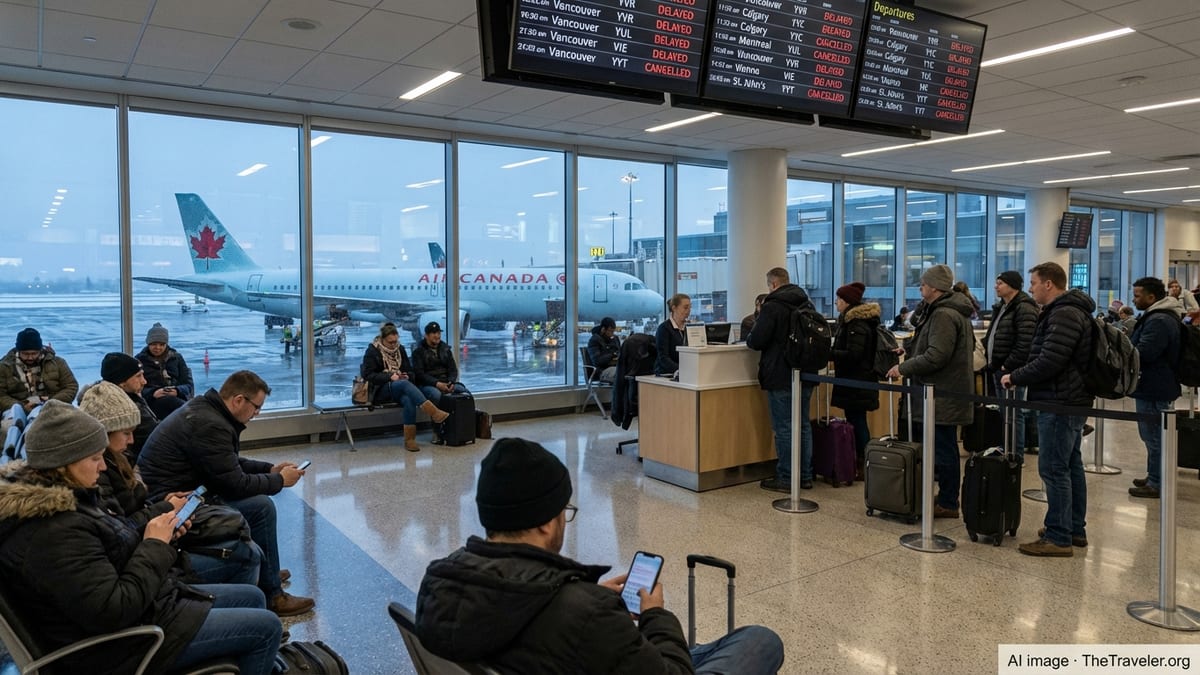
Major Canadian Hubs Log Dozens of Cancellations
Publicly available flight-status boards for June 16 indicate that Canada’s largest airports have seen a cluster of cancellations and delays across domestic and regional routes. Aggregated counts from airport and airline data show at least 62 flights cancelled and around 170 delayed nationwide, with Toronto Pearson, Vancouver International and Montreal–Trudeau bearing the heaviest loads.
In Toronto, a combination of delayed turnarounds and scrubbed departures is visible on services linking the city to Montreal, Western Canada and U.S. destinations. Recent schedules reviewed for the Toronto to Montreal corridor show a pattern of disrupted operations in recent days, including at least one cancelled rotation on the popular morning service AC430 between the two cities, underscoring the pressure on this high-frequency route.
Vancouver, already contending with special airspace restrictions around downtown for World Cup matches, has also recorded multiple delayed and cancelled departures to Eastern Canada. Historical data for flights such as AC308 from Vancouver to Montreal list a full cancellation on June 15 followed by an adjusted schedule today, illustrating how knock-on effects from previous days are feeding into the current disruption.
Montreal–Trudeau is simultaneously acting as both an origin and a recovery hub, as carriers work to reposition aircraft and crews. Flight-tracking information for services like AC301 between Montreal and Vancouver suggests that some long-haul domestic flights are still operating broadly on time today, but against a backdrop of earlier cancellations on similar pairings that reduced network resilience.
Remote Communities Feel the Strain
Beyond the big three hubs, remote and northern communities are also seeing the impact of the latest operational squeeze. Flight schedules involving CFB Goose Bay in Labrador show thinning frequencies and a higher-than-usual rate of same-day schedule changes, affecting both military-connected movements and commercial services that use the airport as a regional link.
In northern Quebec, Aupaluk and other coastal communities on the shores of James Bay rely heavily on smaller Inuit and regional carriers for essential passenger and cargo flights. Weather observations from Aupaluk Airport highlight gusty winds and low cloud in recent days, conditions that can quickly push small-aircraft operators to delay or cancel flights for safety reasons, further reducing connectivity for residents who have few alternative transport options.
These disruptions can be especially disruptive in regions where air travel underpins access to medical appointments, education, and resupply. When a single rotation is cancelled because of weather or aircraft availability, passengers may have to wait days for the next available seat, compounding the practical impact well beyond what similar statistics would mean at a major urban airport.
Regional observers note that while total cancellation numbers in the north are smaller than at Toronto or Vancouver, each lost flight carries outsized significance. The current wave of schedule changes therefore reinforces long-standing concerns about the fragility of air access for remote communities in Canada’s Arctic and sub-Arctic regions.
Airlines Confront Capacity, Crew and Weather Challenges
Industry reporting over the past several months has pointed to a mix of structural and acute pressures on Canadian airlines, including higher fuel prices, aircraft redeployments and tight crew availability on certain routes. Previous route adjustments by Air Canada and other carriers, such as trimmed frequencies and suspended services on select domestic and transborder links, show how operators have been attempting to rebalance capacity ahead of the busy summer period.
Despite these longer-term adjustments, the latest disruptions appear to be driven largely by day-to-day operational constraints. Passenger accounts and recent analyses of airline operations describe a recurring combination of late-arriving aircraft, crew timing limits and localized weather systems that can swiftly cascade through tightly scheduled domestic networks, particularly on east–west trunk routes.
Smaller airlines and regional subsidiaries such as Jazz are particularly exposed when a single aircraft or crew pairing falls out of place. Because these operators run thinner schedules, reallocating equipment is more difficult, which can transform what begins as a short delay into a full cancellation. Inuit and northern carriers face similar constraints, with fewer spare aircraft to call upon when maintenance or weather disrupts a rotation.
Porter Airlines, which has been expanding its presence in Montreal and other eastern markets, is also operating within these conditions. While publicly available timetables show that many Porter flights are continuing as planned, the network-wide strain on Canadian aviation infrastructure leaves all carriers vulnerable to further shocks if bottlenecks arise at key airports or within air traffic control services.
Passengers Navigate Rebooking and Compensation Rules
For travelers caught up in today’s wave of cancellations and delays, rebooking and compensation rules have become crucial. Canadian air passenger protection regulations require airlines to provide alternative arrangements and, in some cases, compensation when flights are disrupted for reasons within the carrier’s control, such as crew or scheduling issues.
Consumer resources and government advisories emphasize that passengers whose flights are cancelled or significantly delayed should retain documentation, monitor airline notifications and confirm whether the disruption is classified as within or outside the carrier’s control. This distinction often determines eligibility for hotel vouchers, meal support and financial compensation, particularly on larger carriers like Air Canada and its regional partners.
Recent traveler accounts from major hubs reference passengers being moved to later same-day departures or rerouted through different cities when nonstop options were no longer available. In cases where weather or airspace restrictions have played a role, support typically focuses on rebooking rather than compensation, although policies can vary by airline and by the exact circumstances of the delay.
Travel advisors suggest that passengers build additional time into itineraries involving tight domestic connections, especially through Toronto, Vancouver and Montreal. With current data pointing to continuing strain across the Canadian network, even routine trips can quickly become multi-leg journeys if a single sector is scrubbed from the schedule.
Broader Questions for Canada’s Air Travel System
The latest tally of cancelled and delayed flights is intensifying discussion about the robustness of Canada’s air travel system heading into the peak summer season. Experiences over the past year, from weather-driven shutdowns to recurring staffing concerns, have raised questions about whether current infrastructure and personnel levels are sufficient to handle spikes in demand or unexpected constraints such as temporary airspace closures.
Reports on operations at Vancouver, for example, have previously highlighted the sensitivity of the airport to air traffic control staffing levels and special-event airspace measures. With temporary restrictions now in place around portions of the city during major sporting events, airlines and passengers alike are watching closely for further knock-on impacts on scheduling and approach patterns.
At the same time, carriers are weighing how to balance profitability with resilience. Moves to streamline networks and pare back underperforming routes can improve financial performance but may also reduce flexibility when irregular operations strike. The current round of cancellations and delays across Toronto, Vancouver, Montreal, Goose Bay and northern communities illustrates how thin margins for error can translate quickly into national disruption.
For travelers planning trips within Canada in the coming weeks, the pattern emerging from today’s data underscores the value of flexible itineraries, travel insurance and close monitoring of flight status. As airlines and airports work to restore regular operations, the experience of this disruption is likely to feed into ongoing debates about investment, staffing and regulatory oversight in Canadian aviation.