


More news on this day
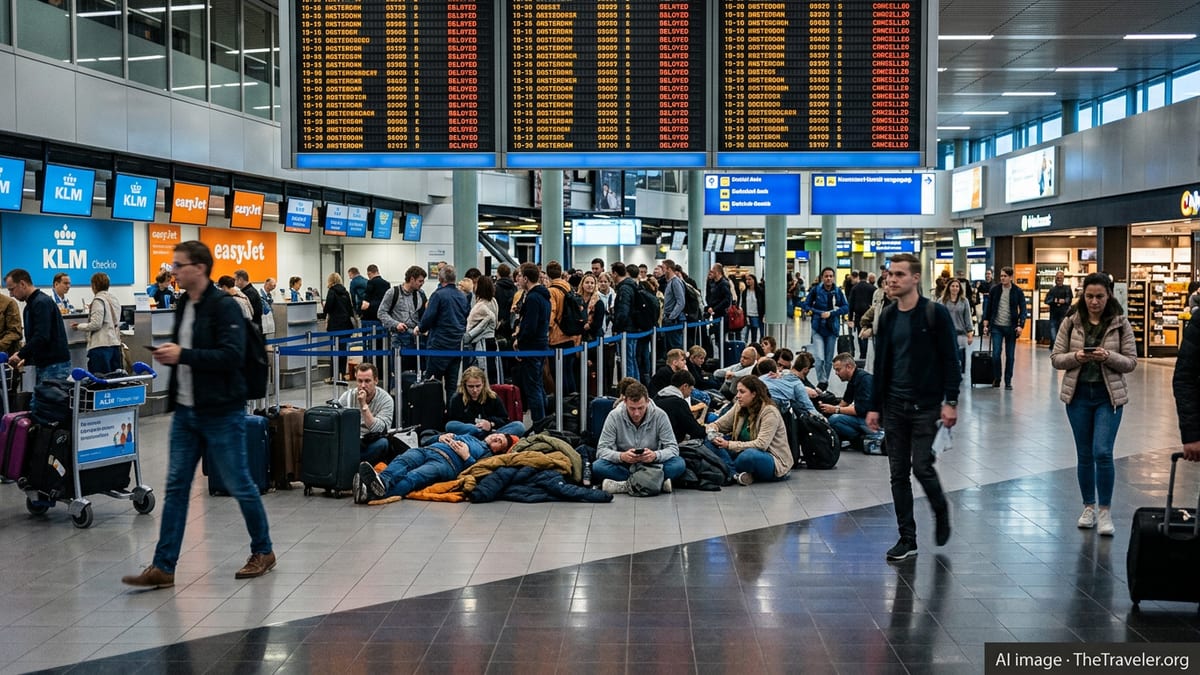
Travelers passing through Amsterdam Schiphol Airport on Tuesday, 16 June faced extensive disruption as 149 flights were delayed and 14 canceled, snarling traffic across major European and long haul routes and leaving passengers stranded for hours in crowded terminals.
Get the latest news straight to your inbox!
Widespread Disruption Across European and Long Haul Networks
According to live scheduling data and multiple operational trackers, the disruption at Schiphol affected a broad mix of domestic, European and intercontinental services. Departures and arrivals on some of the airport’s busiest corridors to London, Paris and Frankfurt were hit by rolling delays, while long haul flights serving New York and other North American gateways experienced schedule changes and extended ground holds.
Published coverage indicates that today’s problems at Schiphol coincided with wider operational strain across several major European hubs, where weather, air traffic control constraints and knock on effects from earlier disruptions have combined to create an unstable operating environment. In Amsterdam, the impact was visible in long queues at check in, security and transfer desks, as travelers tried to secure alternative routings or later departures.
While the number of outright cancellations at Schiphol remained relatively limited compared with the airport’s average daily schedule, the 149 delayed flights significantly compressed capacity throughout the day. Aircraft and crews fell out of position, leading to a cascade of late departures and missed connections that extended well beyond the immediate 14 flights removed from the timetable.
Operational data from flight status platforms showed delays rippling across peak bank departures, particularly in the morning and late afternoon waves when Schiphol typically handles dense clusters of European and transatlantic flights. These bottlenecks magnified the effect of each individual disruption, making recovery more complex for airlines.
Major Carriers Including KLM, Delta, easyJet and British Airways Affected
As Schiphol’s primary hub airline, KLM bore a significant share of today’s disruption, with its short haul European network particularly exposed. Publicly available information from flight tracking sites highlighted delays on several KLM services into and out of Amsterdam, as well as schedule changes on feeder flights from regional European cities that connect into long haul departures.
Transatlantic partners such as Delta Air Lines and other global carriers that rely on Schiphol as a connecting point between North America and Europe also experienced knock on delays. Recent bulletins and schedule data show that Delta has already been managing weather related and operational challenges across its network in June, and today’s irregular operations in Amsterdam added further strain to connections linking U.S. cities with the Dutch hub.
Low cost operators including easyJet, which uses Schiphol for dense point to point services to cities such as London and other UK and European destinations, also saw flights pushed back from their scheduled times. For these carriers, even modest delays can rapidly disrupt aircraft rotations, as each late arrival narrows the turnaround window for the next departure.
British Airways and other European network airlines operating high frequency services between Schiphol and London, Paris and Frankfurt reported altered departure and arrival times as they navigated air traffic restrictions and congestion around Amsterdam. Because many of these flights carry a substantial share of transfer passengers, any delay in Amsterdam can quickly propagate through wider networks on both sides of the North Sea.
Key Routes to London, New York, Paris, Dubai and Frankfurt Hit
The disruption was keenly felt on several of Schiphol’s most strategically important routes. London, one of Amsterdam’s top short haul city pairs, experienced a series of delays on both morning and evening departures, complicating day trip and business travel plans. Travelers heading to and from major London airports contended with altered boarding times and longer than expected waits on the ground.
On transatlantic services, publicly visible flight status feeds showed altered schedules on flights linking Amsterdam with New York and other North American hubs. While many of these flights ultimately operated, their delayed departures from the Netherlands increased the risk of missed onward connections in the United States and caused arrival times to creep later into the evening.
Continental European routes to Paris and Frankfurt, crucial for both business and connecting traffic, also saw their usual tightly timed operations loosened by delays. These sectors are often used as feeders into long haul services operated from the French and German hubs, so disruptions at Schiphol had the potential to reverberate into other airlines’ networks once delayed passengers attempted to rebook beyond Paris Charles de Gaulle or Frankfurt Main.
Services toward the Middle East, including routes that normally connect Amsterdam with Dubai and other regional gateways, were affected through a combination of direct disruptions and indirect knock on effects from earlier European delays. Recent scheduling adjustments by some carriers on Amsterdam–Dubai services in June meant that today’s irregular operations further constrained options for travelers trying to reach or transit through the Gulf region.
Passengers Face Long Queues, Missed Connections and Rebooking Challenges
Reports from travelers and publicly available commentary on social platforms described long lines at Schiphol’s transfer desks and customer service counters as delayed passengers sought new itineraries. For those with tightly timed connections, even relatively short delays on inbound flights to Amsterdam were enough to cause missed onward segments to London, New York, Paris or other destinations in Europe and beyond.
Many travelers turned to airline apps and websites in an effort to rebook without joining physical queues. Airlines including KLM and its transatlantic partners provide digital tools for changing itineraries, but when hundreds of passengers attempt to modify bookings at once, seat availability becomes limited and remaining options often involve overnight stays or indirect routings.
Experiences shared in recent months about disruptions at Schiphol suggest that accommodation and meal arrangements during mass delays can be uneven, with some travelers successfully securing hotels and vouchers while others struggle to reach customer service during peak disruption periods. Today’s combination of delays and cancellations appeared to recreate many of those familiar pain points, particularly for those traveling with families or on time sensitive business trips.
In addition to the immediate inconvenience, the operational stress at Schiphol highlighted longer running debates over the airport’s capacity, staffing levels and resilience planning. Recent commentary in European aviation circles has questioned whether current infrastructure and staffing are sufficient to handle surges in demand or weather related disruptions without triggering widespread knock on delays of the type seen today.
Passenger Rights and Next Steps for Affected Travelers
For travelers caught up in today’s delays and cancellations, consumer protection rules in Europe are an important factor in determining compensation and support. Under existing European Union regulations, passengers on eligible flights may be entitled to care, rebooking and, in some circumstances, financial compensation when flights are significantly delayed or canceled for reasons within an airline’s control.
Publicly available guidance from airlines serving Schiphol advises passengers to first verify the status of their specific flight using official apps or booking management tools, then follow instructions for rebooking or requesting refunds where applicable. Many carriers allow no cost changes to later departures in the event of disruption, particularly when irregular operations are acknowledged across a route or region.
Travel rights specialists note that documentation is essential for anyone seeking reimbursement or compensation. Boarding passes, delay notifications, receipts for meals, hotels and ground transport, and any written confirmation of disruption can help support later claims. Recent case discussions involving disruptions at Schiphol underscore the importance of keeping a detailed record of times, expenses and communications with airlines.
With schedules at Schiphol still in flux following today’s wave of delays, travelers with upcoming departures are being advised in public information notices and news reports to check their flight status frequently, arrive at the airport with extra time, and be prepared for possible changes. For those already stranded, patience, persistence with digital tools, and familiarity with applicable passenger rights remain the main tools for navigating another challenging day at one of Europe’s busiest hubs.