

More news on this day
Operational turbulence across several major Sun Belt airports has disrupted schedules and stranded an estimated 477 passengers across four states, as cascading delays and targeted cancellations expose ongoing fragilities in the U.S. airline network at the height of spring travel.
Get the latest news straight to your inbox!
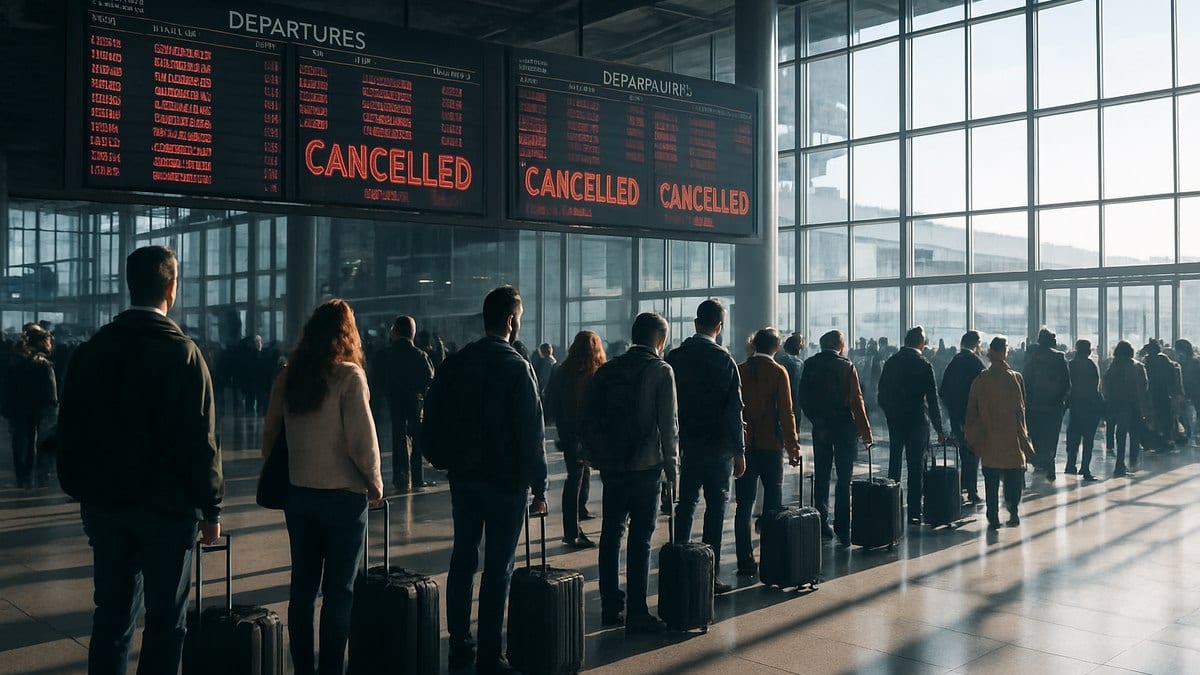
Disruptions sweep key hubs from Texas to the Southeast
Reports from aviation data trackers and regional news outlets indicate that a cluster of flight disruptions has centered on large connecting hubs in the southern United States, with the heaviest impacts in Texas and neighboring Sun Belt states. A mix of weather constraints on busy routes, tight crew scheduling and congested airspace has combined to slow operations across multiple airports that typically move high volumes of domestic traffic.
In Texas, recent coverage highlights rolling delays and cancellations across major airports including Dallas Fort Worth International, Houston, Austin and San Antonio, where hundreds of travelers have been forced into extended waits, missed connections and overnight stays. Published analyses describe how quickly disruptions at one large Sun Belt hub can ripple outward when aircraft and crews fail to arrive for subsequent rotations, compounding the impact for passengers with onward connections.
Comparable patterns have been reported at other southern hubs, where traffic-management initiatives and route adjustments linked to unsettled weather in the wider region have narrowed the margin for on-time departures. As schedules tighten and aircraft utilization remains high, even isolated thunderstorms or air-traffic constraints can trigger a chain of rolling delays that ultimately leaves travelers stranded far from their final destination.
Publicly available tracking data suggests that while the total number of affected flights remains a small share of daily schedules, the concentration of disruptions at a handful of Sun Belt hubs has magnified the experience for individual travelers, particularly those on evening departures and banked connecting waves.
Estimated 477 passengers stranded across four states
Based on typical load factors on narrow-body and regional aircraft operating among these hubs, aviation analysts estimate that roughly 477 passengers have been left temporarily stranded across four Sun Belt states in the latest wave of turmoil. That figure reflects travelers who were unable to secure same-day rebooking or ground alternatives and who instead faced overnight stays in terminals or nearby hotels.
The affected group includes a mix of origin and connecting passengers, with some stranded at their departure airport after cancellations and others stuck mid-journey at hub airports where onward legs were delayed beyond crew duty limits or scrubbed entirely. Coverage from industry-focused outlets notes that stranded travelers are most likely to be concentrated at peak connecting banks, when any schedule disruption can leave limited open seats on remaining departures.
Observers point out that the raw number of canceled flights is only one part of the picture. Full flights, higher leisure demand and continued reliance on tight aircraft rotations mean that a single canceled or heavily delayed departure can displace far more people than in earlier years, especially when there are few spare aircraft or crew available to step in.
In several of the most affected hubs, publicly accessible images and social media posts depict crowded customer-service lines, improvised overnight seating and baggage areas straining to keep pace with misconnected bags, all indicators that the passenger impacts extend well beyond what headline disruption statistics may initially suggest.
Weather, crew availability and network design under scrutiny
Recent data and published commentary attribute the Sun Belt turmoil to a familiar combination of short-term triggers and longer-term structural pressures. Seasonal storms in parts of the southern and central United States have prompted traffic-management programs and reroutes, which slow arrivals into busy hubs and squeeze departure windows for outbound flights.
At the same time, airlines continue to lean on high aircraft utilization and tightly wound crew schedules to meet strong travel demand. When an inbound aircraft arrives late or a crew approaches federally mandated duty limits, even a minor delay can force a schedule reset that cascades through the remainder of the day. Industry coverage notes that these dynamics are particularly acute at large connecting hubs, where a single delayed aircraft may be scheduled to operate multiple onward sectors across several states.
Network design also plays a central role. Sun Belt hubs in states such as Texas, Georgia and Florida serve as critical waypoints for coast-to-coast and north-south traffic flows. Publicly available analysis of recent disruption events shows that when those hubs encounter constraints, passengers in secondary cities often bear the brunt of cancellations and forced overnight stays because airlines prioritize keeping core trunk routes moving.
Regulatory discussions and policy proposals emerging over the past two years have also drawn attention to the passenger experience during large-scale disruptions, highlighting the stress, time loss and additional expenses faced by travelers when flights are significantly delayed or canceled.
Travelers navigate long lines, rebooking challenges and limited options
For affected passengers, the latest Sun Belt disruptions have translated into long wait times at service counters, repeated schedule changes and a scramble for scarce remaining seats on alternate flights. Reports from consumer-oriented travel outlets describe passengers in several hubs lining up for hours to rebook, only to find that the next available departure is not until the following day or that seats are available only from a different airport.
Some travelers have turned to rental cars, regional buses or rail connections to bridge last-minute gaps, particularly on shorter routes within and between the four affected states. However, high demand and limited capacity on these alternatives mean that not all stranded passengers can easily switch modes, especially when disruptions coincide with weekends, holidays or major events that already tighten local supply.
Aviation and consumer advocates consistently advise passengers caught in such turmoil to monitor airline apps and official communication channels closely, since same-day rebooking options can shift rapidly as carriers adjust schedules. Travel-industry coverage stresses that travelers who are flexible on routing or willing to use secondary airports sometimes secure earlier departures, though this approach often requires additional ground travel and out-of-pocket costs.
For those stranded overnight, the availability of hotel vouchers and meal support varies by carrier, cause of disruption and local inventory. Some passengers may find that nearby hotels are fully booked during major disruption events, contributing to crowded terminal gate areas and makeshift overnight arrangements in public seating zones.
Broader implications for reliability in the Sun Belt corridor
The latest episode of flight turmoil in the Sun Belt adds to a growing record of strain across the U.S. aviation system, particularly at warm-weather hubs that have seen sustained passenger growth in recent years. Published performance data show that as traffic rebounds and expands, disruption events are affecting a larger pool of travelers, even when they are concentrated in particular regions or short time windows.
Analysts following airline operations suggest that the current pattern underscores how sensitive high-density hub networks have become to even modest weather or staffing disruptions. When multiple Sun Belt hubs experience delays on the same day, the likelihood of stranded passengers across several states rises sharply, as spare capacity to absorb schedule shocks dwindles.
For airports, tourism bodies and local economies in the affected states, repeated disruption events risk eroding traveler confidence, especially among business travelers and international visitors who rely on tight connections. Some travel commentators have warned that persistent reliability issues could encourage passengers to favor competing hubs or alternative routings, potentially shifting demand away from certain Sun Belt gateways over time.
While airlines continue to refine schedules, invest in technology and adjust staffing to manage peak travel periods, the latest wave of stranded passengers across four Sun Belt states highlights the ongoing challenge of maintaining reliability in a system where weather volatility, crowded skies and high demand leave little room for error.