

More news on this day
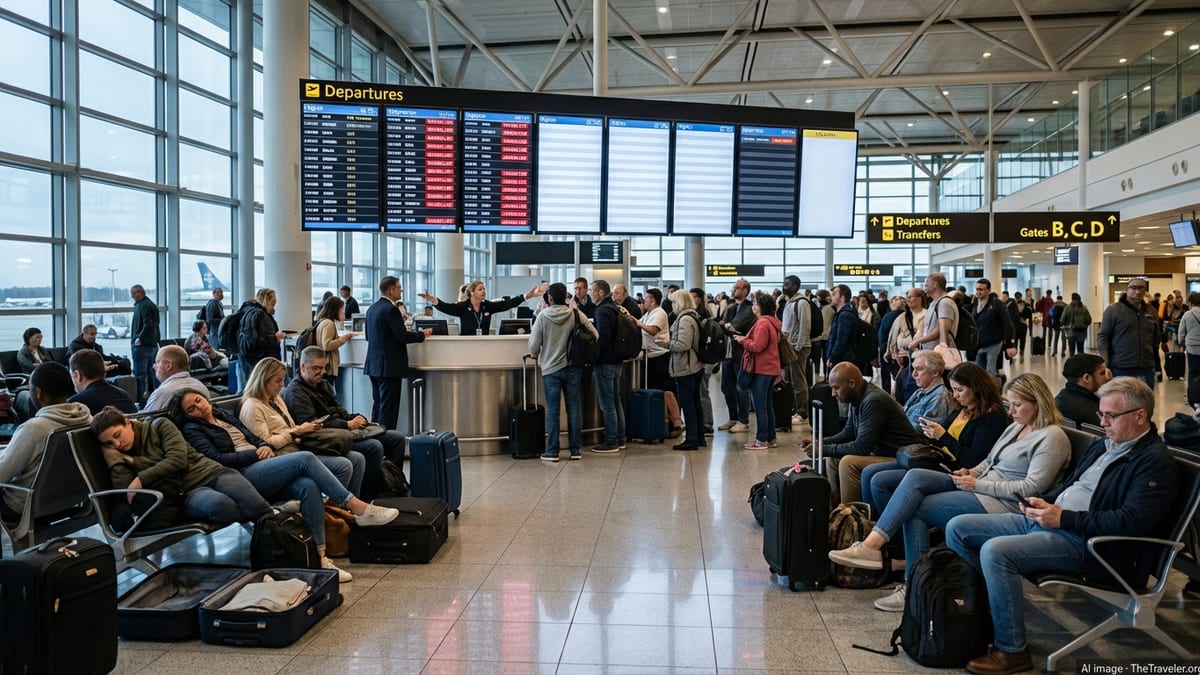
Passengers at Kuwait International Airport are facing fresh disruption as at least nine flights have been canceled amid an extended closure of Kuwaiti airspace, compounding wider Gulf route upheavals affecting services to Dubai, Riyadh, Doha and London.
Get the latest news straight to your inbox!
Targeted Cancellations Underscore Prolonged Airspace Shutdown
Publicly available operational data and regional media coverage indicate that the latest wave of disruption at Kuwait International Airport is tied directly to the continued shutdown of Kuwait’s airspace, introduced after the escalation of conflict involving Iran and several Gulf states in late February 2026. Travel risk advisories updated on April 8 describe Kuwaiti airspace as fully closed, with no general resumption of regular civil flights announced.
Within this broader shutdown, at least nine commercial passenger flights scheduled to operate through Kuwait International Airport have been canceled, including services that would typically connect to major hubs such as Dubai, Riyadh, Doha and London. While Kuwait’s overall scheduled traffic has already been sharply curtailed for weeks, these targeted cancellations highlight the operational fragility facing airlines as they attempt to maintain limited connectivity across a fragmented regional network.
Available schedules and airline advisories show that both Kuwait Airways and Jazeera Airways remain constrained by the closure, with carriers forced either to ground departures outright or reroute traffic through neighboring countries where airspace remains partially or fully open. The pattern of cancellations on trunk routes to the United Arab Emirates, Saudi Arabia, Qatar and the United Kingdom reflects both regulatory restrictions and the challenge of safely plotting alternative corridors around multiple closed flight information regions.
Industry analysis of the current situation in the Gulf suggests that Kuwait International Airport, once a regular transit point for regional and long haul itineraries, has effectively become a limited operations hub, with only a small subset of flights able to move when permissions and routing options allow. The cancellation of nine additional services in this context further reduces already scarce options for stranded or would‑be travelers.
Impact on Kuwait Airways, Jazeera Airways and Regional Connectivity
National flag carrier Kuwait Airways and low cost operator Jazeera Airways are among the airlines most directly affected, as both rely heavily on outbound and inbound traffic through Kuwait International Airport to connect passengers with the wider Middle East and Europe. Aviation tracking summaries for March and early April show extended periods with no regular Kuwait Airways departures from Kuwait, alongside reduced Jazeera Airways schedules linked to the airspace closure.
Recent business media reports state that Jazeera Airways has been attempting to rebuild capacity by shifting part of its operation into Saudi Arabia, using airports such as Al Qaisumah and Dammam as alternative gateways. This strategy has offered a partial lifeline for some passengers, but the latest cancellations out of Kuwait City underline that the home market remains largely sidelined as long as the local airspace restrictions remain in force.
Kuwait Airways, which traditionally operates direct services to major destinations including Dubai, Riyadh, Doha and London, has seen those flagship routes heavily disrupted. Some passengers with Kuwait to London bookings in late March and April have reported online that tickets remain in limbo, as airlines await clearer timelines on when Kuwaiti airspace might safely reopen or when stable detour agreements via third countries can be implemented.
The loss of direct links from Kuwait to key regional hubs also hinders onward connectivity. With Dubai, Doha and Riyadh functioning as constrained but still active nodes for long haul traffic, passengers who would usually route from Kuwait through those hubs now have to seek alternative departure points, often involving cross border surface travel to Saudi Arabia or other states where airports retain limited operations.
Regional Airspace Closures Ripple Across Gulf Hubs
The cancellations at Kuwait International Airport are part of a broader pattern of aviation disruption affecting much of the Gulf. Open source aviation assessments published in early April note that Kuwait’s airspace remains fully closed, Bahrain’s is effectively closed with narrow exceptions, and Qatar and the United Arab Emirates are operating on restricted corridors with enhanced security controls. Saudi Arabia and Oman are described as comparatively open, though individual airports have experienced temporary suspensions.
These layered restrictions follow a wave of missile and drone activity across the region since late February, including reported strikes near critical infrastructure in Kuwait and around major hub airports in the United Arab Emirates and Qatar. Safety driven decisions by civil aviation authorities have led to the creation of extensive no fly zones, compelling airlines to suspend or significantly reroute flights that would ordinarily cross Kuwaiti, Bahraini, Qatari, Emirati or adjacent airspace.
For travelers, the result is an unpredictable patchwork of operational statuses that can change at short notice. Some Gulf carriers have announced limited resumptions of selected services through controlled corridors, while maintaining the suspension of many flights to destinations such as Dubai, Doha and Riyadh until mid April or beyond. Others have focused on consolidating capacity on a smaller number of long haul routes, for example between Gulf hubs and London, while withdrawing from shorter regional links that no longer have viable routings.
Analysts tracking global aviation patterns report that tens of thousands of flights across the Middle East have been canceled or rerouted since the start of the conflict induced closures. The knock on effect extends far beyond the region itself, as airlines in Europe, Asia and North America adjust schedules to avoid closed or high risk airspace, increasing flight times and operational costs on routes that previously traversed the Gulf.
Passengers Face Rebookings, Detours and Uncertain Timelines
For passengers booked on the nine canceled flights at Kuwait International Airport, as well as on numerous other affected services, the immediate priorities are refunds, rebookings and alternative routing. Airline policy notices collected by travel media show a mixture of options, including complimentary date changes within specified travel windows, vouchers and, in some cases, full refunds. However, not all carriers have offered the same level of flexibility, and some travelers have reported difficulties obtaining clear guidance regarding departures scheduled beyond early or mid March.
With Kuwait’s airspace still closed as of April 8, travelers trying to leave the country are increasingly relying on overland links to Saudi Arabia, then flying out via airports such as Dammam, where operations have periodically continued when security conditions permit. Travel security briefings describe this as a practical, though not risk free, workaround that requires close monitoring of airport status updates and cross border movement advisories.
Passengers aiming for destinations like Dubai, Doha, Riyadh or London are often facing multi segment itineraries that bear little resemblance to their original tickets. Instead of a single nonstop or one stop journey from Kuwait, many are now piecing together a combination of road transfers and flights via alternative Gulf or even non regional hubs, depending on which airspaces are open on the day of travel.
Consumer advocates and travel planners are advising passengers to check flight status tools frequently, register for airline notifications and maintain flexible plans, noting that even flights listed as operating can be subject to late alterations because of shifting airspace permissions. In this environment, the cancellation of nine additional Kuwait services is seen less as an isolated event and more as a symptom of ongoing volatility that is likely to persist until a durable regional security arrangement allows aviation authorities to relax current restrictions.
Outlook: Limited Relief Until Airspace Reopens
Near term prospects for a rapid normalization of flights to and from Kuwait remain uncertain. While some Gulf carriers have begun restoring partial schedules through specific corridors, current travel intelligence suggests that full reopening of Kuwaiti airspace has not yet been scheduled, and that neighboring states continue to enforce extensive overflight restrictions linked to the wider conflict.
Airlines serving the region appear to be planning for a phased recovery, gradually increasing capacity on select long haul routes where safe and approved paths exist, while leaving many regional connections, including some Kuwait linked services to Dubai, Riyadh, Doha and London, either suspended or operating at a fraction of their pre crisis frequency. The cancellation of nine flights at Kuwait International Airport fits within this cautious approach, prioritizing safety and regulatory compliance over rapid expansion of services.
For now, passengers with upcoming itineraries touching Kuwait are being urged by travel information services to maintain close contact with airlines and, where possible, to consider flexible tickets or alternative departure points. Until authorities in the region adjust current airspace notices, Kuwait International Airport is expected to remain vulnerable to further schedule changes, with each new cluster of cancellations reinforcing the reality that Gulf travel is likely to stay disrupted well into the coming weeks.