

More news on this day
Kazakhstan’s low-cost carrier FlyArystan will increase its free hand baggage allowance from 5 kilograms to 7 kilograms on March 1, 2026, signaling a shift in how budget airlines across Eurasia balance passenger comfort with ultra-low fares.
Get the latest news straight to your inbox!
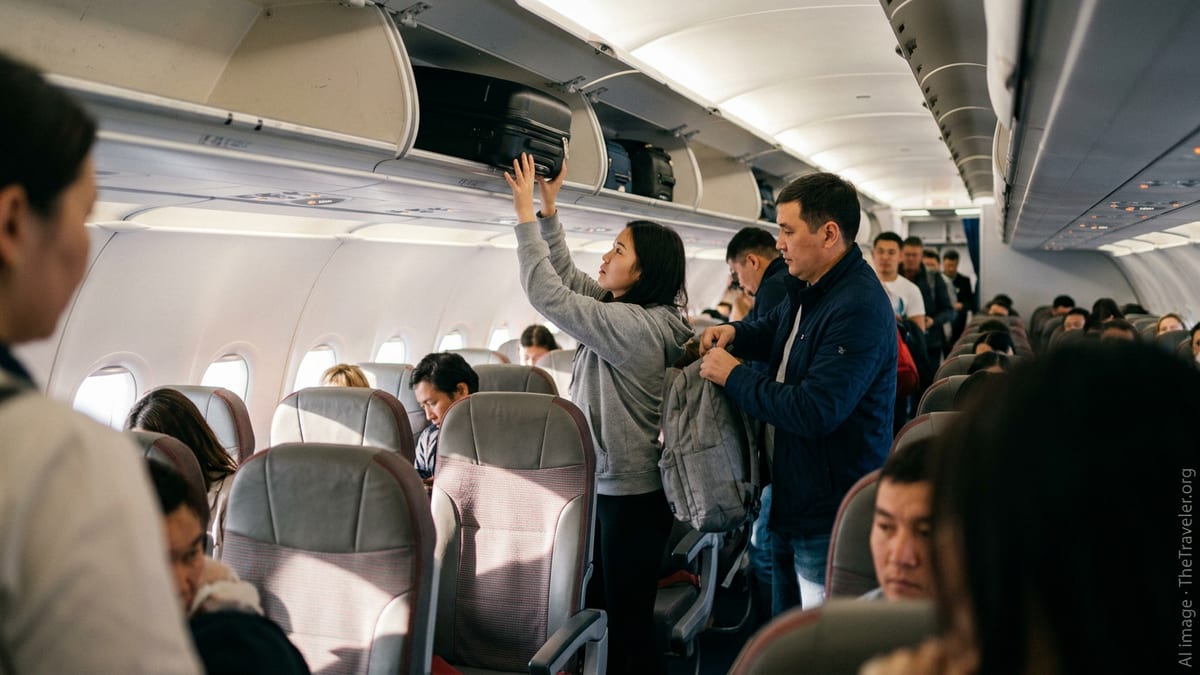
A Bigger Cabin Bag for the Same Ticket Price
From March 1, 2026, all FlyArystan passengers will be entitled to carry a single piece of hand baggage weighing up to 7 kilograms, up from the current 5-kilogram limit. The airline is keeping its existing size cap of 56 by 23 by 36 centimeters and maintaining its long-standing rule of one cabin bag per passenger. In practical terms, that gives travelers extra packing room for essentials without asking them to pay more at booking.
Importantly for price-sensitive travelers, FlyArystan has framed the change as a comfort upgrade rather than a new source of revenue. The free allowance is rising, but base ticket structures remain unchanged, with additional charges still applying only to heavier cabin bags above 7 kilograms or to checked baggage. For passengers who carefully pack to avoid the hold, the added 2 kilograms is effectively a no-cost benefit.
The move comes after years in which low-cost carriers globally have tended to reduce free cabin entitlements, introduce strict one-bag rules, or shift capacity into paid “priority” products. FlyArystan’s decision to expand, rather than shrink, its free hand baggage bracket positions the Kazakh budget airline in contrast to that trend.
Responding to How Budget Travelers Actually Fly
FlyArystan has cited internal statistics from 2024 and 2025 showing that roughly three-quarters of its passengers traveled with only minimal cabin baggage. That data suggests a customer base heavily oriented toward short breaks, domestic hops within Kazakhstan, and regional point-to-point trips where checking a suitcase is the exception rather than the rule.
For these travelers, an extra 2 kilograms in the overhead locker can make a noticeable difference. It can mean adding a second pair of shoes, a thicker sweater for winter flights through Almaty or Astana, or simply not having to juggle toiletries and electronics at the last minute to stay under the scale. By tailoring its policy to how customers already travel, FlyArystan is betting that a modest increase in allowed weight will translate into a disproportionate boost in satisfaction.
The timing also matters. The policy applies to flights from March 1, 2026, while journeys operated through February 28 continue to follow the older 5-kilogram rule. That clear cut-off allows passengers and travel agents to plan around the change when booking spring and summer trips, and it gives airport staff a defined transition point for enforcement at gates and check-in counters.
Operational Discipline Without Added Friction
Despite the more generous allowance, FlyArystan is not relaxing its stance on cabin baggage discipline. The airline continues to stress that all personal belongings, from laptop bags and cameras to gift boxes and duty-free purchases on domestic routes, must fit inside a single piece of hand baggage. Items that do not fit within the specified dimensions, or that push weight above the free limit, are routed into paid options such as increased cabin allowance or checked bags.
This balance is critical for a low-cost operator that relies on short ground times and quick turnarounds. Strict one-piece rules help keep boarding lines flowing, reduce disputes at the aircraft door, and ensure that overhead lockers can accommodate everyone’s bags. By adding weight but not extra pieces, the airline aims to boost comfort without compromising punctuality or adding complexity for crew.
FlyArystan has also reinforced pre-boarding checks at the gate to verify weight and size before passengers step onto the aircraft. That tighter control is likely to remain in place under the new 7-kilogram regime, preserving cost discipline while enabling travelers who comply with the rules to enjoy more flexible packing.
Competitive Signaling in the Low-Cost Market
The decision to increase free hand baggage allowance is also a competitive signal within Central Asia’s rapidly evolving low-cost aviation landscape. As neighboring carriers adjust their own baggage rules, cabin products and fee structures, FlyArystan is positioning itself as a budget airline that can improve comfort without eroding its value proposition on price.
By linking the change explicitly to passenger behavior and not to a parallel rise in base fares, the carrier is underscoring its low-cost DNA. It remains a point-to-point operator with unbundled pricing, but it is willing to revisit older constraints when data show that a small concession can make travel easier for the majority of its customers.
For competing airlines in the region and beyond, FlyArystan’s move may raise questions about whether aggressively monetized cabin baggage policies risk alienating frequent short-haul travelers. As more passengers seek to avoid checked luggage entirely, cabin comfort and flexibility are becoming differentiators even in the no-frills segment.
What It Means for Passengers Planning 2026 Trips
For budget travelers already planning itineraries for spring and summer 2026, the new policy offers more breathing room in both their bags and their budgets. Passengers who would previously have considered paying for extra cabin weight can now shift that money toward other trip costs, from airport transfers to accommodation upgrades.
Those flying on or after March 1 are advised to double-check their booking dates and understand that the 7-kilogram limit applies only from that point forward, with earlier departures still capped at 5 kilograms. The airline continues to recommend packing valuable or fragile items in cabin baggage, making the higher allowance particularly useful for travelers carrying electronics or camera equipment.
As the broader industry debates how much baggage should be bundled into the cheapest tickets, FlyArystan’s updated hand baggage policy stands out as an example of how airlines can fine-tune rules to better match real-world travel habits. For millions of passengers trying to stretch every tenge or euro on their next trip, two extra kilograms in the overhead bin could prove to be one of 2026’s most welcome small changes in the skies.