

More news on this day
FlyNamibia is set to sharply increase flights between Windhoek, Victoria Falls and Maun from April 2026, in a strategic move aimed at tightening Southern Africa’s safari circuit and giving travellers many more options for cross-border itineraries.
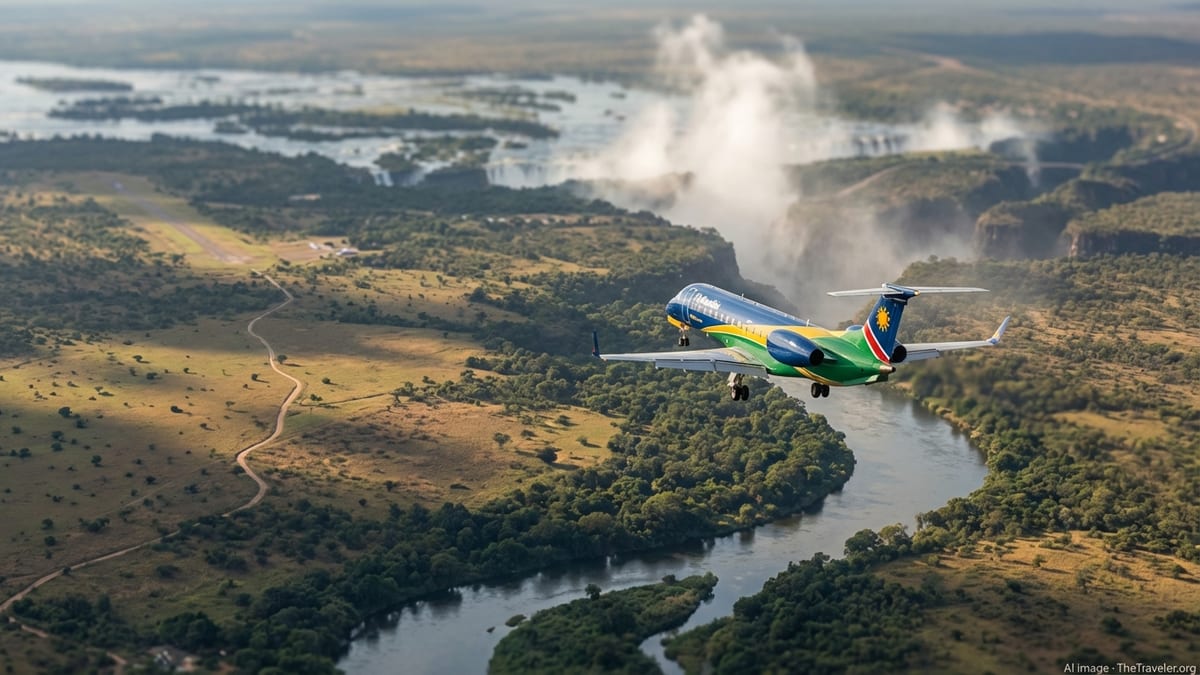
More Flights, More Flexibility on Key Safari Routes
From April 2026, FlyNamibia plans to double its Windhoek to Victoria Falls services from three to six flights a week, according to recent updates from the airline and regional aviation analysts. The carrier will also increase frequencies on its Windhoek to Maun route, with the Maun and Katima Mulilo link set to grow to four weekly services. These changes build on FlyNamibia’s existing seasonal operations, which already connect Namibia’s capital to two of Southern Africa’s most sought-after safari gateways.
The boosted schedule is designed to give both leisure and business travellers greater flexibility when planning trips that combine Namibia’s deserts and wildlife reserves with Botswana’s Okavango Delta and the Victoria Falls region on the Zimbabwe–Zambia border. Shorter layovers, more choice of travel days and better onward connections are all central to the expansion strategy.
FlyNamibia’s regional flights will continue to operate from Windhoek’s Hosea Kutako International Airport, linking into the airline’s domestic network and its FlyNamibia Safari circuit, which serves key tourism hotspots such as Sossusvlei, Swakopmund and Etosha. The enhanced frequencies should simplify logistics for tour operators stitching together multi-country itineraries, particularly during the peak dry season when demand for safari travel is highest.
Industry observers say the move reflects growing confidence in Southern Africa’s tourism rebound, with Namibia, Botswana and Zimbabwe all reporting stronger arrivals and longer stays from core markets including Europe, North America and South Africa.
Timings Designed Around Safari and International Connections
While full summer 2026 schedules have yet to be finalised, FlyNamibia’s current operations on the Windhoek–Maun and Windhoek–Victoria Falls routes offer a clear indication of how the expanded network will function. The airline’s regional services are typically timed to allow same-day connections from long-haul arrivals into Windhoek and from neighbouring hubs such as Johannesburg and Cape Town.
According to aviation schedule specialists, the Windhoek–Maun route currently runs three times a week, primarily serving travellers heading to or from Botswana’s Okavango Delta lodges. The Victoria Falls route, launched as a seasonal service and now operating three times weekly, caters to both holidaymakers and regional business traffic. From April 2026, the planned jump to six weekly Victoria Falls flights and four weekly Maun services will effectively turn these routes into near-daily options during busy periods.
FlyNamibia’s schedule is also coordinated with the FlyNamibia Safari circuit, which resumes each winter season and operates a clockwise loop through some of Namibia’s most popular wilderness areas. The airline has confirmed that departure times from Windhoek on the safari shuttle are set to connect with arrivals from Maun and Victoria Falls, meaning travellers can land from Botswana or Zimbabwe and fly on the same day to Sossusvlei, Swakopmund, Twyfelfontein or Etosha.
Behind the scenes, the airline is working with regional partners to fine-tune connection times so that passengers can move more seamlessly between flights, reducing overnight stops and cutting the total travel time between iconic destinations such as the Okavango Delta and Namibia’s Skeleton Coast.
Boost for Tourism, Trade and Regional Development
The increase in flights is expected to deliver a tangible boost to tourism across all three countries. Victoria Falls, Maun and Katima Mulilo are all critical gateways to major conservation areas, including the Kavango-Zambezi Transfrontier Conservation Area and the Okavango Delta, where lodge operators rely heavily on air access to bring in high-value, low-impact visitors.
Travel industry stakeholders say the additional capacity will help spread visitor flows more evenly across the week, ease pressure on certain peak travel days and create opportunities for new packages that combine desert, delta and waterfall experiences in a single journey. For local communities, more frequent services bring the potential for increased employment, greater demand for locally sourced goods and improved access to markets.
FlyNamibia has also highlighted the role of FlyNamibia Cargo in supporting regional trade. With more flights, shippers gain extra capacity for time-sensitive goods such as fresh produce, specialist equipment and manufactured items moving between Namibia, Botswana, Zimbabwe and beyond. The airline positions each route as contributing to Namibia’s broader economic upliftment, linking people, businesses and ideas across borders.
Government and tourism bodies in Namibia have repeatedly emphasised that air connectivity is a cornerstone of the country’s growth strategy, particularly as new investments in mining, energy and hospitality gather pace. The ramp-up in regional flights dovetails with this agenda, supporting both leisure and corporate travel into emerging economic hubs.
What Travellers Need to Know Before Booking
For travellers planning 2026 itineraries, the first key point is timing. The new frequencies are scheduled to come into effect in April 2026, aligning with the start of Southern Africa’s prime dry season, which typically runs from May to October. This period offers excellent wildlife viewing around Maun and the Okavango Delta, as well as clear skies and comfortable temperatures for visiting Victoria Falls and Namibia’s national parks.
Second, travellers should be aware that both the Windhoek–Victoria Falls and Windhoek–Maun routes are short regional sectors, usually around one to two hours in the air, but they cross international borders. That means valid passports, appropriate visas where required and adherence to customs and immigration regulations remain essential. Those combining multiple countries in one trip should check entry rules for each destination well in advance, particularly around transit times and multiple entries.
Third, the increased frequencies are likely to improve availability, but peak dates around school holidays and major events can still sell out quickly. Travel agents and tour operators recommend securing flights and lodge bookings early, especially for top-tier safari camps near Maun and popular lodges along the Zambezi and near Victoria Falls. For independent travellers, monitoring schedule updates closer to departure will be important as the airline finalises exact flight times.
Finally, travellers connecting onto the FlyNamibia Safari circuit from regional flights should note that safari shuttle departure times may vary slightly from day to day, as they are adjusted to meet inbound arrivals. Tour operators generally advise against booking same-day activities at your next lodge until the final flight timings are confirmed shortly before travel.
Shaping a More Connected Southern African Safari Circuit
FlyNamibia’s decision to ramp up flights to Victoria Falls and Maun fits into a broader pattern of airlines reinforcing intra-African connections that support multi-country tourism. By expanding frequencies on routes that tie together Namibia’s deserts and coast, Botswana’s wetlands and Zimbabwe’s world-famous waterfall, the airline is helping to create a more cohesive safari circuit across the region.
The airline’s partnership arrangements with other regional carriers, including synchronised schedules through Victoria Falls, are expected to make it easier to reach secondary cities such as Harare without routing through larger hubs further south. This, in turn, could open the door to new flows of visitors and encourage travellers to stay longer and explore more widely.
For FlyNamibia, the April 2026 expansion underscores its ambitions as Namibia’s primary domestic and regional airline, deepening its role in connecting communities and supporting commerce. For travellers, the practical outcome is simpler: more flight choices, shorter gaps in the timetable and a smoother path to some of Southern Africa’s most remarkable landscapes.
As airlines across the continent look for growth beyond traditional trunk routes, FlyNamibia’s focus on Victoria Falls and Maun shows how targeted regional connectivity can unlock significant tourism and economic benefits, reshaping how visitors experience the heart of Southern Africa’s wilderness.