

More news on this day
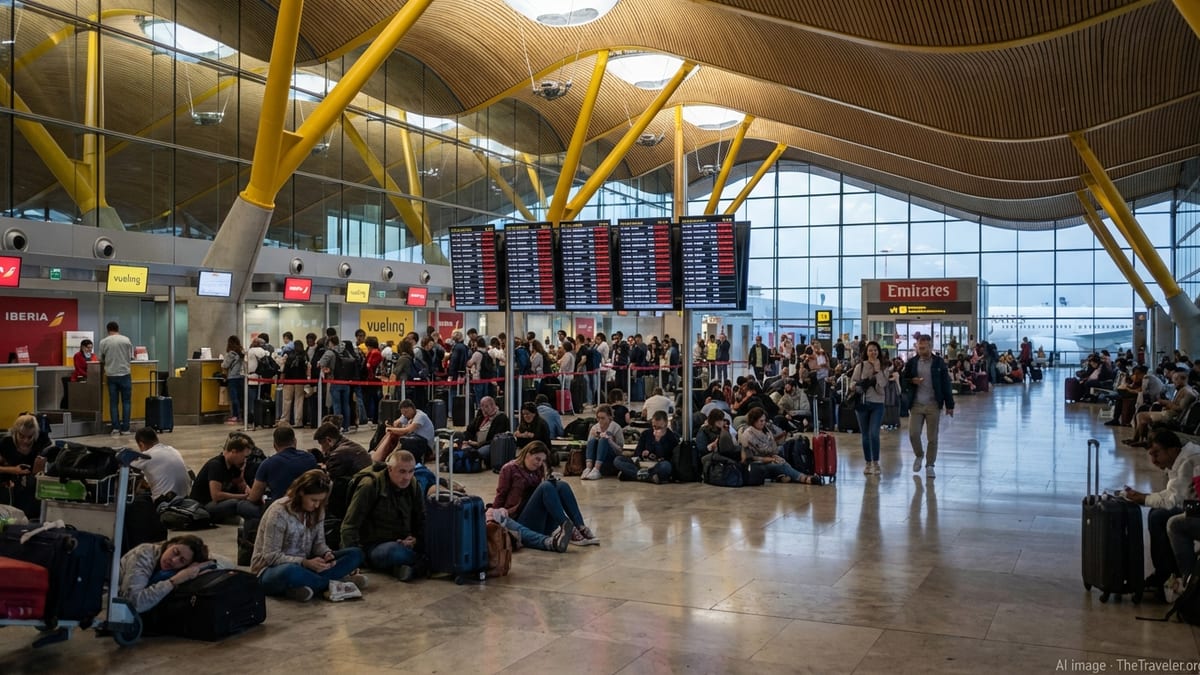
Hundreds of passengers were left stranded or severely delayed across Spain today as flight disruptions rippled through Madrid, Barcelona, Valencia and Malaga, where at least 31 services were cancelled and a further 276 delayed, affecting operations by Iberia, Emirates, Ryanair, Vueling Airlines, Qatar Airways and other major carriers.
Weather and Global Tensions Converge on Spanish Skies
Operational data from major hubs indicated a sharp uptick in disruption through the morning of February 28, 2026, with airlines and airport authorities blaming a combination of lingering weather issues and knock-on effects from global airspace closures linked to regional tensions in the Middle East. While Spain’s airspace remained open, airlines adjusted routings and aircraft rotations, creating bottlenecks that cascaded into delays and cancellations.
At Malaga–Costa del Sol Airport, controllers confirmed that dense early morning fog earlier this week forced low-visibility procedures and tighter spacing between aircraft, leaving schedules fragile and vulnerable. Though visibility had improved by today, airlines were still working through displaced aircraft and crews, contributing to fresh delays on both domestic and international services.
The timing proved particularly painful for leisure travelers and weekend city breakers heading in and out of Spain’s largest metropolitan gateways. With Madrid and Barcelona serving as key transfer points for long haul networks, even short hold-ups on feeder services quickly translated into missed connections and extended layovers for passengers bound for the Americas, the Middle East and Asia.
Madrid Barajas Hit Hard as Long Haul Networks Unravel
Adolfo Suárez Madrid–Barajas, Spain’s busiest airport and Iberia’s primary hub, saw some of the most pronounced disruption. Several Iberia departures to European capitals left late after aircraft arrived behind schedule from affected regions, while codeshare flights operated by partners including Qatar Airways and Emirates experienced rolling delays as crews and aircraft repositioned.
Passengers on early morning Madrid departures reported long queues at airline service desks as staff attempted to reroute those facing missed connections. Some travelers with onward flights to the Gulf and Southeast Asia were offered hotel accommodation or rebooked on services leaving later in the weekend, as reduced frequencies and altered routings limited same day alternatives.
Short haul traffic between Madrid and secondary Spanish cities also came under pressure. Schedule data showed that even high frequency shuttle style services, which usually absorb disruption more easily, were operating off pattern, with turnaround times compressed on some rotations and extended on others to allow for crew rest requirements and aircraft checks after weather and congestion related delays earlier in the week.
Barcelona and Valencia See Growing Knock On Effects
Barcelona–El Prat, another crucial base for Vueling and a major low cost gateway for Ryanair, reported a rising tally of delayed flights through the afternoon as late arriving aircraft from across Europe fell out of sync with tightly packed turnaround schedules. While most departures eventually operated, many left significantly behind schedule, creating uncertainty for passengers relying on self connections.
In Valencia, which has seen steady growth in international traffic through codeshares and seasonal leisure routes, disruption was particularly noticeable on services feeding into larger hubs. Travelers on partner flights marketed by global carriers such as Qatar Airways experienced extended waits as airlines juggled limited spare capacity to cover rotations affected by long haul schedule changes and crew duty limits.
Airport announcements in both cities urged passengers to remain close to departure gates and to monitor information screens for last minute changes. With aircraft often ready but held while airlines finalized updated routings or awaited connecting passengers from delayed feeder services, boarding calls were sometimes made at short notice, increasing stress levels among already anxious travelers.
Malaga’s Fog Legacy and Coastal Holiday Chaos
Malaga–Costa del Sol, gateway to the Costa del Sol resorts, has been grappling with the lingering impact of a severe fog episode earlier in the week that forced controllers to implement their most restrictive low visibility protocols. Although no mass diversions were required at the time, flights were spaced further apart than usual, leading to a backlog that airlines have struggled to clear completely before the busy weekend.
Today, that legacy combined with broader international disruption meant coastal holiday flights were among those hardest hit. Services operated by Ryanair and Vueling to and from northern Europe and the United Kingdom showed mounting delays, with some departures pushed back repeatedly as inbound aircraft arrived late from weather and congestion affected airports.
Inside Malaga’s terminal, families and golf groups heading home at the end of winter breaks queued at customer service counters seeking meal vouchers and updated itineraries. While most flights remained scheduled to operate, some passengers faced arrival times several hours later than planned, forcing last minute changes to train tickets, hotel checkouts and onward domestic connections.
Airlines Scramble to Rebook and Advise Passengers
Across all four airports, airline staff worked to contain the fallout, urging customers to use mobile apps and websites to track real time changes, rather than relying solely on printed boarding passes. Iberia, Vueling, Ryanair and long haul partners such as Emirates and Qatar Airways highlighted flexible rebooking options, allowing many affected travelers to switch to later flights at no extra fee where seats were available.
However, with 31 outright cancellations and hundreds of delays compressing available capacity, options were quickly exhausted on some of the most popular routes. In certain cases, passengers were advised to travel the following day or to accept alternative routings via secondary hubs, adding further hours and additional takeoffs and landings to already long journeys.
For travelers still due to fly to or from Madrid, Barcelona, Valencia or Malaga this weekend, airlines recommended arriving at the airport earlier than usual, traveling with carry on only where possible and keeping contact details updated within their booking records to receive push notifications. With schedules still fragile and aircraft and crews out of regular rotation, operational planners warned that further short notice adjustments could not be ruled out.