

More news on this day
Travelers passing through Fort Lauderdale-Hollywood International Airport are facing a fresh wave of disruption as at least 19 flights are canceled and 154 delayed, with knock-on effects rippling across major U.S. hubs and routes to Israel, stranding passengers from cities including Chicago, Nashville, San Antonio and Tel Aviv.
Fort Lauderdale Becomes Latest Flashpoint in Ongoing Disruptions
Operational data on Tuesday showed Fort Lauderdale-Hollywood International Airport again under strain, with a cluster of cancellations and triple-digit delays snarling already fragile winter schedules. The disruption is hitting both departures and arrivals, impacting early-morning bank flights and cascading into the afternoon as aircraft and crews fall out of position.
The most affected carriers include Spirit Airlines, JetBlue, American Airlines and Southwest Airlines, which collectively operate many of the point-to-point and connecting services that tie Fort Lauderdale to secondary U.S. cities and Caribbean gateways. Smaller carriers have also reported knock-on timing issues as they wait for congested airspace to clear and inbound slots to reopen.
Airport staff say much of the pressure is tied to tight turnarounds and congested routings into other troubled hubs along the East Coast and Midwest. With multiple U.S. airports experiencing weather and staffing-related slowdowns in recent days, Fort Lauderdale has effectively become a chokepoint for travelers attempting to reroute around earlier cancellations.
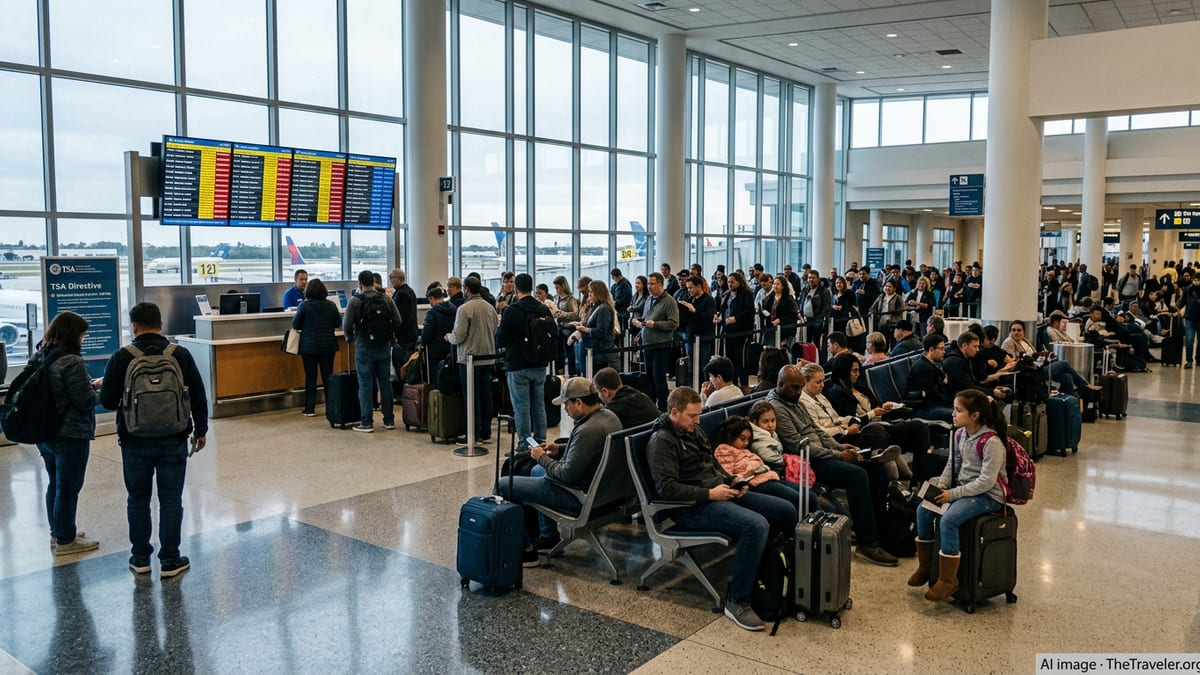
Passengers arriving to find their flights scrubbed or substantially delayed described terminals growing crowded throughout the day, with departure boards flickering between "delayed" and "gate change" notices as airlines worked to consolidate services.
Passengers Stranded From Chicago, Nashville, San Antonio and Beyond
The latest wave of disruption is hitting travelers far beyond South Florida, particularly those relying on Fort Lauderdale as a low-cost alternative to Miami or as a connection point for cross-country and Caribbean journeys. Flights linking Fort Lauderdale with Chicago, Nashville and San Antonio have faced rolling delays, leaving travelers stuck mid-journey and struggling to secure alternative routings.
At Chicago O’Hare, where hundreds of delays and more than a dozen cancellations were reported this week, the cumulative effect has been especially harsh for passengers continuing onward to Florida. Fort Lauderdale-bound flights have been pushed back repeatedly, sometimes missing onward connections to smaller southeastern and Gulf Coast cities.
In Nashville and San Antonio, Fort Lauderdale services on carriers such as Southwest and Spirit are operating on stretched schedules as aircraft cycle in late from earlier disrupted legs. Travelers attempting to start cruises from South Florida or connect to Caribbean island flights out of Fort Lauderdale report missed embarkation times and hurried rebookings onto later sailings or hotel stays.
Some passengers who managed to reach Fort Lauderdale on delayed inbound flights found their onward connections already canceled, forcing overnight stays in packed airport hotels or improvised arrangements with friends and family in South Florida.
Middle East Tensions and Tel Aviv Routes Compound the Chaos
The turmoil is being magnified by continued volatility on routes to and from Israel. While Fort Lauderdale itself does not host the same volume of nonstop Tel Aviv services as New York or South Florida’s largest international gateways, it is a key spoke in the broader network feeding U.S. travelers onto Israel-bound flights from hubs like New York, Boston and other East Coast cities.
Recent suspensions and schedule cuts on Tel Aviv flights by several major airlines have left fewer available seats and tighter connection windows for passengers originating in Florida. Travelers departing Fort Lauderdale to connect in cities such as New York, Boston or other northeastern gateways are finding that even minor delays on their first leg can cause them to miss their onward flight to Israel, with limited same-day alternatives.
As a result, disruptions in Fort Lauderdale are being felt disproportionately by passengers heading to or from Tel Aviv, many of whom are traveling for family visits or time-sensitive events. Some report being rebooked through multiple intermediate stops or held for 24 hours or more while carriers search for available seats on already constrained transatlantic and Middle East services.
Travel agents say the reduced flexibility in Tel Aviv schedules, combined with winter-weather vulnerabilities at Northeastern hubs, has created a brittle system in which any delay in Fort Lauderdale or another feeder airport can quickly escalate into missed international connections.
Low-Cost Carriers Under Pressure as Schedules Buckle
The disruption has again put the spotlight on the operational resilience of ultra-low-cost and hybrid carriers that dominate Fort Lauderdale’s traffic mix. Spirit and JetBlue, which together operate dozens of daily departures from the airport, have had to juggle tight aircraft rotations and limited spare capacity as they absorb delays from other airports and attempt to protect their highest-demand routes.
Industry analysts note that carriers with smaller fleets and aggressive scheduling can struggle to recover once widespread delays set in. With aircraft often slotted into back-to-back turns and a high percentage of flights operating near capacity, even a short ground hold or temporary airspace restriction can lead to residual delays that last well into the evening.
American and Southwest, which balance Fort Lauderdale operations with larger hubs elsewhere, are similarly walking a fine line between maintaining published schedules and consolidating multiple lightly booked flights into single departures to free up aircraft and crews. Some passengers have been notified of last-minute equipment changes or moved onto later flights as airlines attempt to rebuild their networks in real time.
For travelers, the experience is one of long lines at customer service counters, crowded gate areas and limited information, as front-line staff juggle changing dispatch instructions while handling rebooking requests and questions about vouchers and hotel accommodations.
What Travelers Can Expect in the Coming Days
With winter weather still active across large swaths of the United States and airspace restrictions and security considerations affecting parts of the Middle East, aviation experts warn that the ripple effects from Fort Lauderdale’s current disruption may linger for several days. Aircraft and crews displaced by today’s cancellations and long delays will need time to reposition, and tightly banked schedules leave little slack for quick recovery.
Passengers scheduled to travel through Fort Lauderdale this week, especially those connecting from cities such as Chicago, Nashville and San Antonio or heading onward to Tel Aviv via other hubs, are being urged to build extra time into their itineraries. Same-day connections that once appeared comfortable on paper now carry heightened risk when upstream delays are common.
Travel planners recommend that passengers monitor their flights closely via airline apps, reconfirm departure times before heading to the airport and consider earlier departures to major hubs when possible, giving themselves wider buffers before international or cruise departures. Travelers with flexible plans may wish to shift to nonstop routes or larger hubs less exposed to rolling delays.
For now, Fort Lauderdale-Hollywood International Airport remains open and operating, but its role as a key low-cost gateway to Florida and the Caribbean means any disruption there is likely to be felt far beyond South Florida’s beaches, touching travelers across the United States and on routes as far afield as Israel.