

More news on this day
Fort Lauderdale-Hollywood International Airport’s turbulent spring travel period, marked by heavy delays and hundreds of disrupted flights, is drawing fresh attention to how fragile U.S. airline networks remain during peak demand.
Get the latest news straight to your inbox!
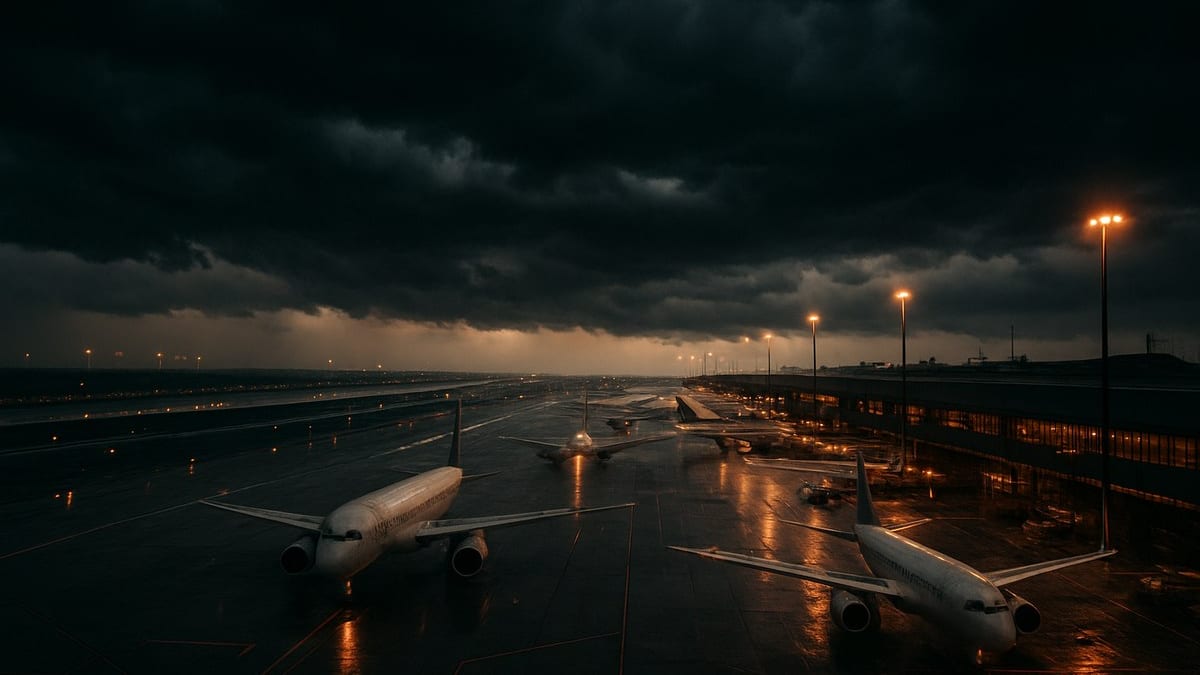
Spring Break Surge Collides With Strained Operations
Fort Lauderdale has been one of the focal points of this year’s spring travel stress, as heavy passenger volumes, intermittent weather problems and national aviation constraints converged across March and early April. Reports indicate that South Florida’s major airports, including Fort Lauderdale-Hollywood International Airport, saw long security lines, crowded terminals and a wave of delays and cancellations tied to the spring break surge and a partial federal government shutdown affecting aviation-related staffing and services.
On March 20, 2026, published data cited by multiple outlets showed Fort Lauderdale recording more than 200 disrupted flights in a single day, including cancellations and significant delays, placing it among the most affected airports in the country during that period. Coverage from travel and consumer news sites highlighted how Spirit Airlines, based at Fort Lauderdale, along with other large carriers, absorbed a disproportionate share of the schedule volatility as aircraft and crews fell out of position.
Separate tallies of national operations for late March underscored the scale of the strain. One aviation-focused analysis documented more than 3,000 delays and over 100 cancellations across the United States on March 31 alone, with Fort Lauderdale featuring among the airports experiencing notable knock-on effects as storms and ground delay programs rippled through the Eastern network.
The disruptions have been especially visible to leisure travelers, as the peak of spring break coincided with already tight airline schedules and strong demand for South Florida’s beaches and cruise connections. Publicly available airport statistics show Fort Lauderdale handling close to or above 9 million monthly passengers in recent high season months, leaving little margin when weather or staffing issues arise.
Weather Shocks Reveal Limited Buffer in Airline Networks
While passenger crowds are a predictable feature of March and April, the latest problems at Fort Lauderdale highlight how even modest weather disturbances can generate outsized disruption when schedules are running at near-capacity. Reports from aviation trackers describe intermittent ground stops and flow-control programs across multiple Eastern and Southern hubs in March 2026, as thunderstorms, low ceilings and wind disrupted normal departure and arrival rates.
Analyses of the period note that these restrictions did not always take the form of blanket halts. Instead, airports such as Fort Lauderdale, Orlando and others saw intermittent caps on movement, forcing aircraft into extended queues on taxiways or holding patterns and compressing the available departure windows. Travel commentary indicates that this stop-and-go pattern often prolonged the overall disruption, as airlines struggled to re-sequence flights, crews and gates.
Network planners have long acknowledged that Florida, and South Florida in particular, sit at a sensitive intersection of weather-prone airspace and dense leisure demand. Published research and on-time performance rankings regularly place Fort Lauderdale among U.S. airports that experience elevated delay rates during peak summer and holiday periods, a pattern now clearly extending into the spring break window of 2026.
The March and early April events suggest that, even outside of major hurricanes or extreme storms, the cumulative impact of ordinary convective weather and low-visibility conditions can be enough to upend schedules when there is little slack built into daily operations.
Carrier Concentration and Crew Positioning Complicate Recovery
The disruptions at Fort Lauderdale have also exposed how carrier concentration and tight crew rotations can magnify relatively local problems into broader system challenges. Fort Lauderdale functions as a key base for several large low-cost and hybrid airlines, with some carriers relying heavily on the airport for point-to-point leisure traffic.
Travel-industry coverage of the March 20 disruption day at Fort Lauderdale notes that one major ultra-low-cost carrier reported more than three dozen delays there alone, representing a high share of its daily schedule. When weather or air traffic control restrictions forced extended ground times, these aircraft were unable to reach subsequent destinations on time, triggering rolling delays across networks that stretch into the Midwest, Northeast and Caribbean.
Industry analyses published in late March describe similar challenges for other airlines at Fort Lauderdale, where tight turn times and limited spare aircraft made it difficult to absorb disruptions. In some cases, carriers reassigned aircraft away from lower-demand markets to support their South Florida operations, only to create secondary delays when those substitute flights themselves encountered congestion and flow restrictions en route.
Observers of the sector point out that crew-duty rules and overnight curfews at certain airports further complicate recovery. Once crews “time out” under safety regulations, flights may have to be canceled or significantly rescheduled, even if weather has improved, leaving Fort Lauderdale and its partners wrestling with residual disruption well into following days.
Infrastructure Limits and Local Planning Under Scrutiny
The latest spring disruptions are also prompting renewed discussion of how Fort Lauderdale’s physical layout and support infrastructure factor into network resilience. Travelers and aviation-watch forums frequently cite gate scarcity and bottlenecks at security checkpoints and road access points as recurring pain points, especially in Terminals 3 and 4.
Public documents from Broward County and the airport operator outline contingency plans for tarmac delays and irregular operations, including provisions for passenger care when flights are held on the ground. However, the recent turbulence has raised questions among analysts about whether existing gate capacity, ramp space and baggage systems can keep pace with both normal growth and bursts of seasonal demand.
Regional planning initiatives, such as proposed rail connections linking the airport to downtown Fort Lauderdale and the cruise terminals, are framed by local agencies as long-term efforts to ease congestion on airport access roads and provide alternatives when traffic snarls accompany major travel days. While such projects are years from completion, the spring 2026 experience is likely to strengthen arguments for accelerating surface-transport upgrades around the airport.
At the same time, airport status boards in early April have shown a comparatively calm picture, indicating that once national weather patterns stabilized and federal operations adjusted after the shutdown period, Fort Lauderdale’s day-to-day performance improved. This contrast between relative normalcy and recent chaos underscores how tightly balanced the system remains.
Travelers Adapt as Calls Grow for Systemic Fixes
For passengers, the immediate response to Fort Lauderdale’s spring disruptions has centered on tactical adjustments. Travel advisories and consumer guides are urging flyers to build in longer connection times, travel earlier in the day, favor nonstop flights where possible and rely on airline apps and official status boards rather than call centers to track evolving conditions.
Consumer advocates argue that the events in South Florida highlight broader systemic issues, including the industry’s dependence on complex hub-and-spoke patterns, the lack of significant buffer capacity during peak seasons and the vulnerability of leisure-heavy markets to even short-lived shocks. Commentaries across travel media suggest that, absent major changes in scheduling philosophy, staffing and infrastructure, airports such as Fort Lauderdale will continue to face outsized risk each spring.
Policy discussions are also turning toward questions of transparency around delay causes and passenger rights. Publicly available federal dashboards detailing on-time performance and airline accountability are being cited more frequently by travelers and analysts seeking to understand whether disruptions at airports like Fort Lauderdale stem primarily from weather, air traffic flow management, airline decisions or a combination of all three.
As airlines prepare for the summer high season and begin selling tickets for the 2026–27 winter, the spring turbulence at Fort Lauderdale is emerging as a case study in how closely interconnected local airport performance is with national network design. For many in the travel sector, it is a warning that the margin for error in peak leisure markets remains perilously thin.