

More news on this day
Fresh waves of delays and cancellations at Fort Lauderdale-Hollywood International Airport this week are underscoring how quickly spring weather and tight airline schedules can destabilize already stretched U.S. flight networks.
Get the latest news straight to your inbox!
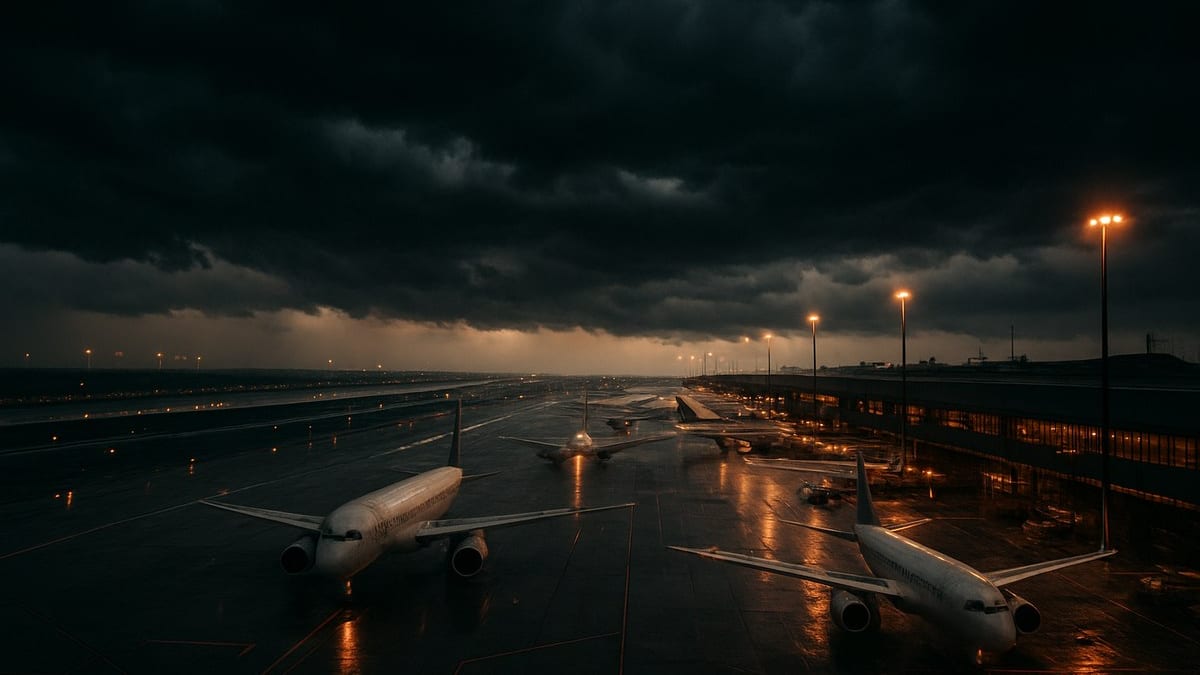
Stormy Skies Meet Peak Spring Demand
Publicly available flight-tracking data for April 9 indicates that Fort Lauderdale-Hollywood International Airport recorded well over 150 delayed departures and arrivals, along with a smaller number of outright cancellations, affecting carriers from large low-cost operators to regional airlines. The disruption followed days of unsettled weather across the Southeast and came as South Florida entered one of its busiest stretches of the spring travel season.
Weather services have highlighted an active pattern of rain and thunderstorms across central and southern Florida in early April, with forecasters warning that repeated downpours, embedded storms and low cloud ceilings would periodically slow air traffic. Reports indicate that this volatile setup has been particularly challenging when it coincides with peak morning and late-afternoon departure banks, when Fort Lauderdale’s runways and taxiways are already near capacity.
Industry coverage notes that this latest bout of disruption did not reach the scale of historic flooding events that have previously closed Fort Lauderdale’s airfield, but it has still rippled through the national network. Even modest slowdowns, such as ground delays or required spacing between arrivals during thunderstorms, can quickly generate queues, missed connections and aircraft out of position, especially at a high-throughput airport serving multiple point-to-point carriers.
The timing compounds the impact. Spring break and Easter travel have pushed U.S. passenger volumes to some of their highest levels of the year, with trade groups estimating several million travelers passing through domestic airports each day in March and April. In this environment, minor operational friction at a coastal gateway like Fort Lauderdale can magnify into multi-day headaches for travelers across the country.
Low-Cost Carriers Under Pressure
Available data for April 9 at Fort Lauderdale show that the bulk of delays affected airlines that rely heavily on point-to-point leisure routes, including large ultra-low-cost carriers. These operators often run tightly timed schedules with quick aircraft turnarounds and minimal spare aircraft or crew on standby. When thunderstorms slow departure flows or force temporary holds, these compressed timelines leave little margin to absorb the disruption.
Public analyses of recent holiday and storm periods across U.S. airports indicate that such business models can be particularly exposed when severe weather strikes a handful of key bases. A late inbound flight may cascade into missed departure slots, crew duty time limits and aircraft being stranded at outstations. As those knock-on effects accumulate, a local delay problem at an airport like Fort Lauderdale can transform into a broader network issue affecting routes as far away as the Midwest and Caribbean.
Travel industry commentary has also pointed to the concentration of similar carriers in South Florida as a vulnerability. With many airlines chasing the same high-demand leisure markets out of Fort Lauderdale and nearby Miami, schedules have grown denser while shared infrastructure such as gates, ground handling and security checkpoints has come under greater strain. When weather or air traffic control interventions reduce throughput, the competition for limited operational capacity can lead to rolling delays throughout the day.
At the same time, consumer advocacy groups note that low-cost operators continue to attract price-sensitive travelers despite the increased risk of disruption, especially during busy periods. For passengers, the trade-off between lower fares and higher exposure to cascading delays is becoming a central theme of spring and summer travel planning.
Systemic Stress in U.S. Spring Operations
Fort Lauderdale’s latest flight disruptions align with a wider pattern of strained spring operations across the United States. In recent weeks, severe storms and heavy traffic have produced thousands of delays and hundreds of cancellations nationwide, particularly around Easter weekend. Major hubs in Chicago, Dallas and Atlanta have all experienced significant slowdowns, and those events have fed into smaller but strategically important airports such as Fort Lauderdale.
Industry observers increasingly describe a structural issue rather than a series of isolated incidents. Airlines are operating near record utilization of aircraft and crews during peak travel windows, while air traffic control facilities and airport infrastructure face chronic staffing and capacity limitations. Under these conditions, a single weather system or localized outage can expose hidden fragilities in schedules that leave little room for recovery.
Analysts often compare current patterns with recent high-profile disruptions linked to technology failures or staffing mismatches, arguing that weather now serves as the trigger for deeper vulnerabilities. Whether the catalyst is a thunderstorm line approaching South Florida or a storm complex over the central United States, the end result is similar: flights stack up on the ground, crews approach legal duty limits, and passengers confront rolling delays that can stretch for days.
Spring is proving to be a critical testing ground. With summer schedules set to add even more flights, Fort Lauderdale’s recent experience is being watched as an indicator of how resilient, or fragile, U.S. airline networks may be when the next series of storms, surging demand or technical glitches arrives.
Local Bottlenecks, National Consequences
While Fort Lauderdale is not a traditional mega-hub, the airport plays an outsize role in connections between U.S. cities, the Caribbean and parts of Latin America. Reports indicate that the airport’s mix of domestic point-to-point services and cross-border flights amplifies the impact of any disruption, as aircraft and crews that start their day in South Florida often continue on to multiple destinations.
On busy spring days, security checkpoints, ramp space and taxiway congestion can all become bottlenecks. Travelers and local residents have repeatedly highlighted heavy road traffic around the terminal complex, which can slow arrivals and departures further. When thunderstorms force pauses in ground operations or require rerouting around cells offshore, these local constraints intensify, sometimes requiring airlines to hold or cancel flights to avoid gridlock.
These localized stress points feed into a larger national picture. When aircraft originating in Fort Lauderdale arrive late into mid-continent hubs, they may miss connection windows, setting off a chain of rebookings and crew rotations that can reverberate throughout an airline’s system. Conversely, if flights from other regions cannot depart on time for South Florida due to weather or airspace flow programs, gaps appear in Fort Lauderdale’s departure banks, leaving passengers and staff facing uncertain timelines.
Aviation planners and analysts see these dynamics as evidence that regional infrastructure and national scheduling decisions are now deeply intertwined. As spring travel intensifies, what happens on a stormy afternoon at Fort Lauderdale increasingly matters not just for beach-bound vacationers, but for travelers and airlines across the wider U.S. network.
Growing Calls for Greater Resilience
Recent coverage of air travel performance in early 2026 suggests that patience among travelers is wearing thin, particularly when disruptions occur repeatedly at the same time of year. At Fort Lauderdale, the combination of volatile spring weather, dense low-cost scheduling and longstanding infrastructure pressure has raised questions about what more can be done to make the system more resilient.
Some analysts argue that airlines may need to introduce more slack into spring schedules at weather-prone airports, even at the cost of short-term revenue, to prevent small incidents from snowballing into multi-day disruptions. Others highlight opportunities for targeted investments, such as additional ground handling resources, improved ramp drainage and enhanced traffic management tools that could help Fort Lauderdale keep operations moving during marginal weather.
There is also growing attention on how information is shared with passengers. Travel advocacy organizations maintain that clearer, more consistent communication about the causes of delays and realistic rebooking options can mitigate some of the frustration when disruptions are unavoidable. Fort Lauderdale’s latest episode, they contend, underscores the need for airlines and airports to present a united and transparent front when storms and system constraints collide.
For now, publicly available data indicates that operations at Fort Lauderdale have largely returned to normal following this week’s turbulence. Yet the episode stands as another reminder of how quickly conditions can deteriorate in a spring season shaped by energetic weather patterns and full planes. The question for the months ahead is whether the lessons from Fort Lauderdale will translate into tangible changes before the next band of storms moves in.