


More news on this day
Four Seasons Yachts is set to expand its young ultra-luxury fleet, with publicly available information indicating that Italian shipbuilder Fincantieri has signed a contract to construct a third vessel for delivery in 2031.
Get the latest news straight to your inbox!
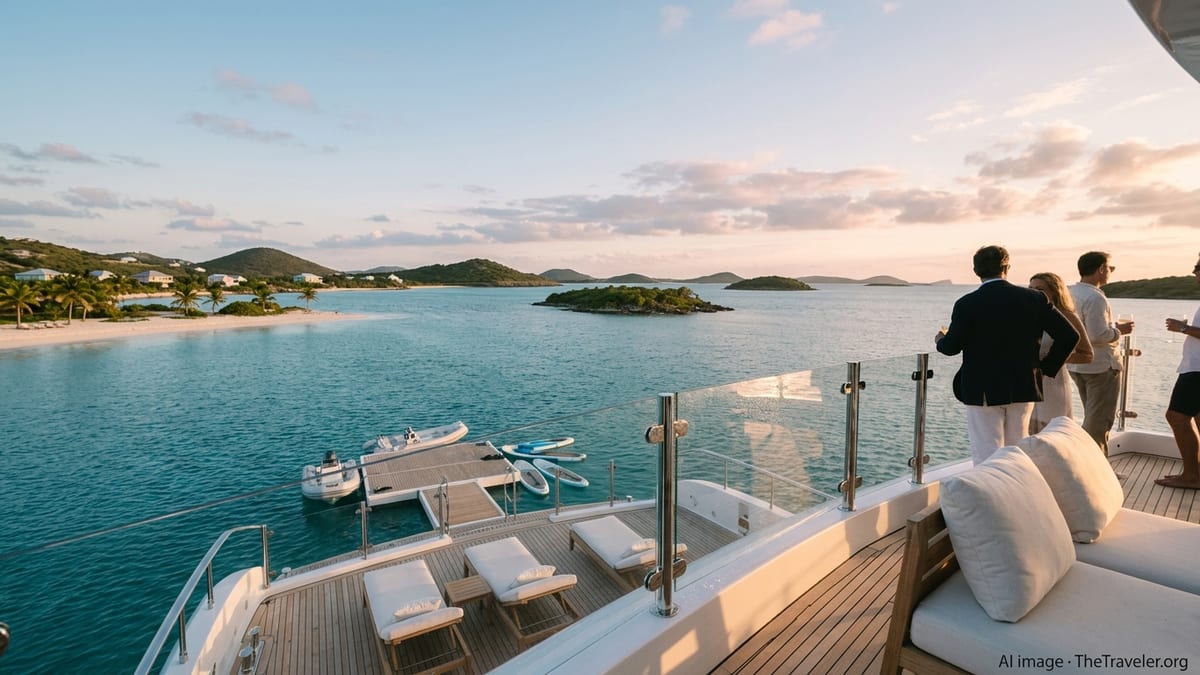
New Order Extends Four Seasons Yachts Growth Timeline
The latest contract, announced this week in Italian and international trade coverage, confirms that Marc-Henry Cruise Holdings, joint owner and operator of Four Seasons Yachts, has committed to a third ultra-luxury cruise ship. The vessel will continue the brand’s yacht-style, all-suite concept that aims to blend residential comfort with high-touch hospitality at sea.
Reports indicate that the newbuild will be delivered in 2031, several years after the debut of Four Seasons I and the planned entry into service of Four Seasons II. The order converts what was previously described as an optional third unit into a firm commitment, signaling confidence in the long-term potential of the Four Seasons-branded yacht segment.
Industry publications note that the ship will be built at Fincantieri’s Ancona yard, the same site responsible for the earlier Four Seasons vessels. The decision consolidates the partnership between the Italian shipbuilder and Marc-Henry Cruise Holdings at a time when ultra-luxury small-ship cruising is drawing sustained interest from high-spend travelers.
Financial details of the latest order have not been fully disclosed, but earlier statements around the class have referenced per-ship investments of more than 400 million euros, positioning the series among the most capital-intensive projects in the boutique cruise and yacht market.
A Three-Ship Series Built Around Residential-Style Suites
The new vessel will follow the template established by the first two Four Seasons Yachts ships, emphasizing expansive suites, generous outdoor space and a yacht-like profile rather than the scale of a traditional cruise ship. Trade coverage describes the class as an “all-suite” design, with accommodations conceived more like private residences than conventional cruise cabins.
Across the series, layouts highlight large terraces, flexible connecting suites and a high ratio of space per guest. Signature accommodations on the first ship include multi-level funnel suites and other configurations that extend across significant portions of a deck, an approach that is expected to influence the design of both the second and third vessels.
Common areas on Four Seasons I, now in service, include multiple dining venues, a transverse marina and generous pool decks, all configured for a relatively small passenger count compared with mainstream cruise ships. The third vessel is anticipated to retain this intimate scale while incorporating incremental refinements informed by the performance and guest feedback from the first two yachts.
By continuing with the same shipyard and core blueprint, the series is positioned as a coherent fleet rather than a set of one-off designs. This allows the operator to market a consistent brand experience while deploying the ships across varied itineraries and regions as demand evolves.
First Vessel Sailing, Second Under Construction
The order for a third ship comes as Four Seasons I begins regular operations and the second vessel advances through the construction pipeline. Fincantieri delivered Four Seasons I in early 2026, describing it as an ultra-luxury hospitality ship that incorporates advanced digital systems and a focus on energy efficiency.
The inaugural yacht launched with Mediterranean itineraries, bringing Four Seasons’ hotel-style service to sea with a relatively small complement of suites compared with mainstream cruise brands. Promotional material emphasizes personalized service, elevated dining and curated shore experiences as core differentiators.
The second vessel, Four Seasons II, is scheduled to enter service in early 2028, according to the company’s previously released statements and recent coverage. Like its sister ship, it is being constructed at Ancona and will feature a similar emphasis on residential-style suites, with an especially strong focus on large, apartment-inspired layouts designed for longer stays.
Together, the three-ship roadmap gives Four Seasons Yachts a multi-year growth trajectory, with new capacity arriving in staggered phases. This phased approach is typical in the luxury segment, where operators often seek to build brand awareness and fine-tune onboard offerings before committing to larger fleets.
Fincantieri Strengthens Position in Ultra-Luxury Niche
For Fincantieri, the third Four Seasons Yachts order reinforces its strategy of targeting high-end, technologically advanced vessels in addition to larger mainstream cruise ships. Company statements over recent months have highlighted the importance of ultra-luxury and expedition-style projects as a way to diversify its orderbook and showcase specialized design capabilities.
The yard’s work on Four Seasons I has been described in corporate and trade documents as part of a broader “intelligent ship” initiative, integrating digital architecture intended to optimize operations and enhance guest-facing services. While specific technical details of the third yacht have not yet been fully detailed in public materials, analysts expect continued evolution of those systems across the class.
The Ancona facility has become a focal point for Fincantieri’s boutique luxury projects, and the confirmation of a third Four Seasons unit supports long-range planning for skills, infrastructure and workforce at the site. The contract also contributes to a pipeline of deliveries stretching into the next decade, a key factor for shipyards navigating cyclical swings in cruise ordering.
Observers note that ultra-luxury ship orders, though smaller in capacity, can be particularly attractive for builders due to their complexity, technical sophistication and high per-berth investment, which often translate into premium pricing compared with more standardized vessels.
Implications for the Ultra-Luxury Cruise Market
The decision to confirm a third Four Seasons yacht comes at a time when the uppermost tier of the cruise and yacht sector is experiencing both heightened competition and strong interest from affluent travelers. In recent years, hotel-branded ships and yacht-style vessels have expanded the options available beyond traditional luxury cruise lines.
Market analysts suggest that a three-ship fleet provides Four Seasons Yachts with critical mass to operate in multiple regions and seasons, while still maintaining the scarcity and exclusivity central to its positioning. The extended delivery timeline, with the third vessel arriving in 2031, gives the brand room to gauge demand, adjust itineraries and refine its onboard product.
At the same time, the investment underscores confidence that the ultra-luxury segment can sustain premium pricing and occupancy levels in the years ahead. While some commentary in travel circles has questioned the cost and value proposition of hotel-branded yachts, the conversion of an option into a firm third-ship order indicates that the stakeholders see room for long-term growth.
As the first yacht continues to settle into service and the second progresses toward its 2028 debut, attention will increasingly turn to how the third vessel might differentiate itself within the class. For now, the confirmed order signals that Four Seasons Yachts and Fincantieri intend to remain active players in shaping the next generation of small, ultra-luxury ships.