


More news on this day
Changchun Rail Transit Corp is emerging as a prominent name in China’s rapidly evolving metro landscape, expanding the city’s rail network at home while its sister manufacturing hub, CRRC Changchun Railway Vehicles, delivers advanced rolling stock to global markets.
Get the latest news straight to your inbox!
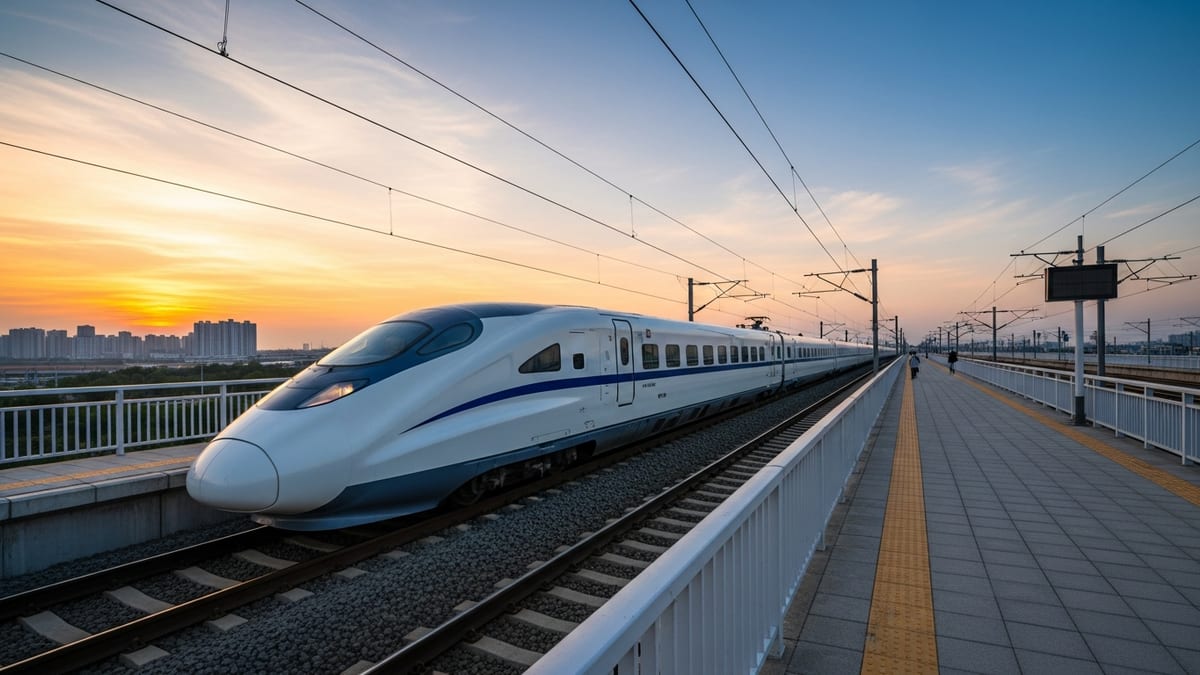
Growing metro network reshapes travel in Changchun
Publicly available information shows that Changchun Rail Transit now anchors mobility across the northeastern Chinese city, with multiple metro and light rail lines linking key residential districts, industrial zones and the airport. Over the past decade the network has steadily expanded, reflecting the national push to upgrade urban transport and reduce congestion in provincial capitals.
Recent additions have significantly extended the system’s reach. Reports indicate that Line 6, a largely underground east west corridor, opened its first phase in March 2024, bringing nearly 30 kilometers of new track into service and serving emerging neighborhoods in the city’s South New Area. Planning documents also show that Line 2 has continued to stretch eastward, bolstering connections between older central districts and newer suburban hubs.
Changchun’s long term plans call for further growth. Line 9, a north eastern route currently under construction, is expected to connect the urban core with Jiutai South Railway Station and Changchun Longjia International Airport by around 2027, creating a direct airport rail link that will reduce travel times for both residents and visitors. Together, these projects illustrate how Changchun Rail Transit is being used as a tool to knit together a sprawling metropolitan area that is seeking to reposition itself as a modern manufacturing and technology center.
For travelers, the maturing network means shorter surface journeys and more predictable connections between traditional city landmarks, business parks and transport gateways. The metro system is increasingly functioning as the backbone of daily mobility, with new stations spurring commercial development and higher density housing around key interchanges.
Infrastructure upgrades point to a digital future
Beyond civil works and new track, Changchun Rail Transit is in the midst of a quiet technological upgrade. Recent contract announcements highlight investment in signaling and platform safety systems on existing lines, particularly Line 4, which serves important rail hubs in the northern part of the city. According to published coverage of China’s rail equipment sector, a major systems integrator has secured work to modernize signaling and install platform screen doors, part of an effort to improve safety, reliability and energy efficiency.
These upgrades align with a broader shift across Chinese metro networks toward more automated operations and tighter headways. Modern communications based train control, integrated monitoring platforms and platform barriers are enabling operators to run trains more frequently while maintaining punctuality and safety, a critical factor as ridership recovers and grows after the pandemic years.
For Changchun, investment in smarter infrastructure also supports the city’s ambitions to market itself as a regional transport technology hub. Enhanced digital systems on the urban network create opportunities to test advanced equipment, data analytics and energy management tools that can later be deployed on other Chinese and international projects.
From a passenger perspective, the impact is visible in more orderly station environments and reduced waiting times. New platform screen doors, clearer passenger information and more consistent dwell times all contribute to smoother journeys, which are increasingly important as commuters weigh public transport against the flexibility of private cars and ride hailing services.
CRRC Changchun targets global urban rail markets
While Changchun Rail Transit focuses on local operations, the city’s rail ecosystem is closely linked to CRRC Changchun Railway Vehicles, one of the world’s largest builders of metro cars, high speed trains and light rail vehicles. Company profiles and trade data describe the manufacturer as a key supplier not only to Changchun’s own network but to metros across China and overseas.
In 2024, CRRC Changchun signed a contract to supply 24 metro trains to Belo Horizonte, the capital of Brazil’s Minas Gerais state, reinforcing its growing presence in Latin America. Local reports in Brazil and China noted that the new trains are intended to boost capacity and reliability on the city’s urban rail system and form part of a wider modernization push. The order adds to a portfolio that already includes metro fleets for cities such as Rio de Janeiro and São Paulo supplied by other CRRC subsidiaries, underscoring the conglomerate’s strategic emphasis on export markets.
Further afield, trade databases show CRRC Changchun components and assemblies moving regularly to the United States and Europe, supporting projects through regional subsidiaries. The company has supplied vehicles for metros and suburban rail systems in Asia, the Middle East and Africa, positioning Changchun as a manufacturing node with global reach even as its home city network continues to grow.
For destination cities, the appeal lies in a combination of relatively competitive pricing, customized configurations and a track record across climates that range from tropical South America to the winters of northern China. This export orientation feeds back into Changchun, sustaining skilled jobs and research capacity that, in turn, benefits the local transit operator through technology transfer and economies of scale.
High speed and maglev research reinforces Changchun’s brand
Changchun’s rail story is not confined to conventional metros. According to industry media, CRRC Changchun has become an important player in the development of China’s latest generation of high speed and maglev technology. In 2025 the company presented the lead car of a prototype superconducting maglev vehicle designed for speeds of up to 600 kilometers per hour at a major rail exhibition in Beijing, demonstrating the city’s role in pushing the boundaries of passenger rail engineering.
The company is also closely associated with the CR450 family of high speed trains, which Chinese rail authorities expect to finalize for service later this decade. Test runs have already exceeded 450 kilometers per hour, and technical discussions in professional forums highlight that some CR450 variants are produced at CRRC Changchun’s facilities. This program is viewed inside China as a flagship step toward ultra high speed rail suitable for long distance intercity corridors.
Such developments reinforce Changchun’s brand as a specialized rail innovation center and add a layer of interest for international visitors, who increasingly encounter Chinese built rolling stock and control systems in their own cities. For the local metro operator, proximity to cutting edge research provides early access to new materials, bogie designs, energy efficient subsystems and digital tools that can trickle down into urban rail fleets.
At a time when urban rail investment in parts of China is expected to slow amid tighter approval rules and financial pressures on local governments, Changchun’s combination of a growing metro network, export oriented manufacturing base and high speed research footprint sets it apart. The city’s rail transit ecosystem illustrates how a regional center can leverage domestic infrastructure development to build a globally connected industrial cluster that shapes how people travel far beyond its own boundaries.