


More news on this day
Dalian Rapid Transit, the rail backbone of the port city on China’s northeast coast, is entering a new phase of growth as planners refine expansion plans and operators focus on tighter integration with buses, trams and regional rail.
Get the latest news straight to your inbox!
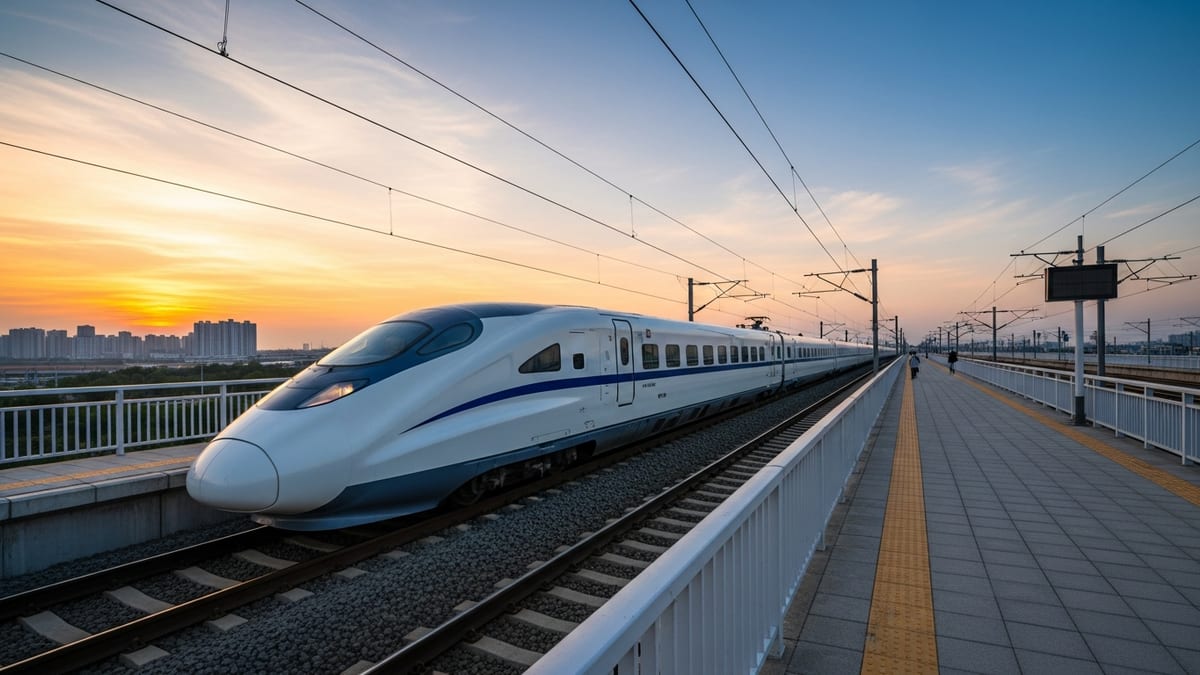
From Single Corridor to Citywide Network
Dalian Rapid Transit, often referred to locally as the Dalian Metro, has transformed significantly since the early 2000s, when service centered on a single light rail corridor running out from the urban core. Publicly available system maps now show a multi-line network spanning key coastal districts, industrial zones and suburban new towns.
The network links central Dalian with the coastal development belt stretching toward Jinzhou and Pulandian, areas that have seen steady growth in port logistics, manufacturing and housing. By tying these zones into a frequent rail spine, the system has helped shift longer commutes away from congested arterial roads.
Recent route overviews indicate that the metro now comprises several urban lines serving dense inner districts alongside longer-distance lines that function as regional rapid transit. This tiered structure reflects national planning trends in China’s medium and large cities, where rail systems are designed to handle both daily inner-city trips and commuter flows from expanding suburban clusters.
Ridership data published over the past decade point to a substantial increase in daily passengers compared with the early years of operation. Analysts note that this reflects both network expansion and incremental improvements such as higher frequencies, better station facilities and more seamless transfers to other modes.
Lines, Extensions and the 2026 Network Picture
Updated guides for travelers in 2026 describe four primary metro lines in operation, together serving more than 60 stations. These lines run across the north-south and east-west axes of the city, with important hubs at Dalian Railway Station and Dalian North Railway Station, where passengers can transfer between urban rail, conventional mainline services and high-speed trains.
Line layouts show that one corridor continues to operate partly as an elevated interurban route, reflecting the system’s origins as a light rail to outlying districts. Newer lines tend to be built to heavier metro standards, with higher-capacity trainsets, shorter headways and fully separated rights of way that allow for faster, more reliable journeys.
Planning documents and industry reports suggest that Dalian authorities are prioritizing infill stations and short extensions to close network gaps before launching entirely new phases. This approach aligns with a broader national shift in China’s urban rail sector, where attention is moving from rapid greenfield construction to operational optimization and financial sustainability.
For passengers, the evolving 2026 network means more direct journeys without the need to transfer to buses for the “last mile,” particularly in expanding residential districts. Stations that once stood at the urban fringe are increasingly surrounded by new housing, retail and offices, deepening the link between metro accessibility and land development.
Integration with Buses, Trams and BRT
Dalian’s rail network does not operate in isolation. The city maintains one of mainland China’s oldest tram systems, along with an extensive bus network and a bus rapid transit corridor that has been in place for more than a decade. Recent transport analyses describe the policy objective as knitting these modes into a single multimodal system, with rail as the backbone.
Travel guides for visitors emphasize that a single stored-value card can typically be used across metro lines, buses and many trams, simplifying fare payment for both tourists and residents. This form of integrated ticketing has become standard in large Chinese cities and is seen in Dalian as a relatively low-cost way to improve the passenger experience.
Interchange points at major rail stations increasingly double as bus and tram hubs, with dedicated bays and defined pedestrian paths. Although the quality of these interchanges varies, field reports indicate measurable reductions in transfer times where stop layouts have been redesigned to bring vehicles closer to station exits.
The city’s bus rapid transit corridor, operating on segregated lanes along a key arterial, offers complementary service to the metro by carrying shorter and medium-distance trips within the urban core. Planning commentary notes that maintaining this layered approach allows authorities to match capacity with demand while containing the high capital costs associated with new heavy-rail construction.
Technology, Operations and Passenger Experience
Technical specifications available from manufacturers and industry summaries indicate that Dalian’s metro fleet consists of modern electric multiple units designed for relatively high operating speeds and frequent acceleration and braking. Trains are equipped with air conditioning, real-time passenger information systems and platform-level door alignment that supports safe, rapid boarding.
Operational data show that headways on core sections are calibrated to handle heavy peak flows, especially during the morning commute from northern residential districts toward central business areas and port-related workplaces. Off-peak frequencies are lower but still sufficient to make rail a competitive alternative to private cars and ride-hailing services.
Passenger-focused enhancements have been introduced progressively. Station refurbishments have added clearer bilingual signage, improved lighting and better vertical circulation through escalators and elevators. These changes are particularly important for older riders and travelers with luggage heading to or from rail stations and the airport bus links.
Digital tools are also playing a growing role. Third-party journey planners and mapping apps now embed Dalian Rapid Transit timetable data and service updates, allowing riders to check next-train information, plan transfers and estimate door-to-door travel times. For visitors unfamiliar with local geography, this level of information has made the system more approachable.
Economic, Tourism and Environmental Impacts
Economic reports on Dalian’s development strategy highlight urban rail as a core element in repositioning the city as a high-quality coastal hub. By strengthening links among the old port areas, emerging technology parks and coastal leisure zones, the metro supports both commuter movements and the growing visitor economy.
Tourism-oriented coverage notes that several lines serve popular seaside destinations, shopping streets and historic districts, enabling visitors to move between attractions without relying on taxis. Integrated connections to long-distance rail and intercity buses further extend the metro’s catchment to nearby cities across Liaoning and beyond.
Environmental policy discussions emphasize the system’s contribution to cutting local air pollution and greenhouse-gas emissions by shifting trips away from private vehicles. Although Dalian continues to face peak-hour congestion and seasonal smog, transport scholars point to growing rail ridership as an important component of the city’s climate and air-quality strategies.
Looking ahead, analysts expect Dalian Rapid Transit to see more incremental upgrades than dramatic line openings, in line with nationwide trends. For residents and travelers, however, the cumulative impact of additional stations, better interchanges and more reliable operations is likely to be significant, reinforcing the metro’s role as the spine of mobility in this key northeast China port city.