

More news on this day
Freetown is moving to modernize and secure its rail heritage, advancing a new railway safety push that aims to protect visitors, support future passenger services, and position Sierra Leone’s capital as a more connected, rail-focused tourism hub in West Africa.
From Colonial Tracks to a Modern Safety Agenda
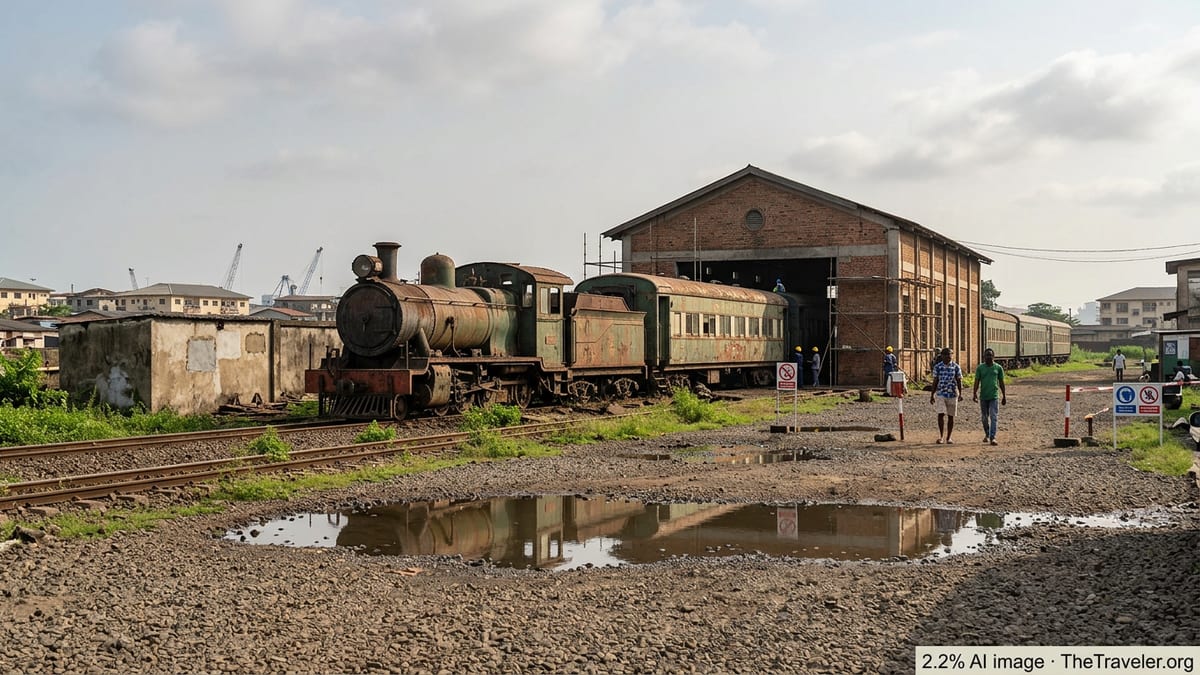
Rail transport has long been part of Freetown’s story, but for decades it was a story largely told through museum exhibits and fading infrastructure rather than active trains. The National Railway Museum in Cline Town preserves the locomotives, coaches, and memorabilia of the former government railway, which once linked Freetown with the country’s interior before services ceased in the 1970s. Today, that heritage is at the heart of a renewed effort to build a safer, more visitor-friendly rail environment in and around the capital.
Recent government planning documents and policy statements highlight rail rehabilitation as a strategic pillar for improving national connectivity and easing pressure on congested urban roads. Officials have begun referring to railway safety not simply as an engineering concern, but as central to tourism development, disaster preparedness, and inclusive mobility. In practice, this means applying rail safety thinking to heritage sites, industrial spur lines serving the port, and early-stage feasibility work for new passenger services.
For the travel sector, the shift is significant. Tourism operators in Freetown have long promoted the railway museum as a niche attraction for history enthusiasts, but with safety upgrades and better integration into the city’s transport and visitor circuits, rail-linked experiences are being positioned as a broader draw. The message from both municipal and national authorities is that Freetown wants to leverage its rail legacy in a way that is safe, reliable, and aligned with the city’s wider urban mobility reforms.
While full-scale passenger rail remains a medium to long-term objective, the emerging framework for rail safety is already influencing how tour routes are designed, how visitors access rail heritage sites, and how the city imagines future connections between the port, the central districts, and the international gateway at Lungi.
Protecting Rail Heritage After Fire and Flood Risks
The railway safety conversation in Freetown has been sharpened by recent incidents affecting heritage infrastructure. A fire at the Sierra Leone Railway Museum in 2025 prompted emergency repairs and a detailed review of how rolling stock, archive material, and the site’s structures are protected. Renovation work now underway in Cline Town is focused not only on restoring damaged sections but also on reinforcing walls, improving fire resistance, and tightening visitor safety protocols.
Museum managers, working with the Ministry of Tourism and cultural heritage bodies, have framed the renovation as an opportunity to upgrade safety systems to contemporary standards. This includes clearer evacuation routes, improved on-site surveillance, and stricter controls on adjacent industrial activities that might pose fire or pollution risks. For tour operators, these changes are intended to reassure visitors that the museum is both secure and professionally managed, even as it remains an active work site during phases of restoration.
More broadly, city officials are paying closer attention to how climate risks intersect with Freetown’s rail-related assets. Heavy rains, flooding, and coastal erosion have raised concerns about embankments, culverts, and drainage around disused alignments and access roads connected to the port and industrial zones. Incorporating basic rail safety checks into seasonal disaster preparedness, particularly along corridors frequented by visitors and local guides, is becoming part of the city’s resilience planning.
These efforts are modest compared with the complex standards applied to high-speed or heavy-haul rail systems elsewhere, but they represent an important step for a city re-engaging with its rail past. By stabilizing and upgrading heritage sites first, Freetown is creating a safer platform from which to expand rail-themed tourism products and, eventually, pilot new passenger movements.
Linking Rail Safety to Tourism and Urban Mobility
Freetown’s railway safety initiative is unfolding alongside a broader push to improve how people move in and out of the capital. Major investments in roads, public buses, and airport access are already reshaping the visitor experience. The government’s Integrated and Resilient Urban Mobility Project, backed by international partners, is overhauling key corridors, upgrading junctions, and tightening road safety enforcement across the city, particularly on routes used by tourists and commuters alike.
Within this context, rail is being explored as a complementary mode that could eventually relieve pressure on crowded arteries and offer safer, more predictable journeys. Policy papers and performance contracts signed with the presidency reference the reintroduction of national railway services and a rehabilitation program intended to connect Freetown more efficiently with inland regions. While these plans are still at the feasibility and design stage, officials consistently emphasize that any new or revived rail segments will have to meet robust safety benchmarks from the outset.
Tourism planners see potential synergies. A safer rail environment could support curated journeys linking the port, heritage quarters, and the railway museum, while also feeding excursions to beach destinations on the peninsula and cultural sites inland. Coordinated ticketing, better signage, and common safety standards across buses, ferries, and future rail connections are already being discussed within government and with development partners.
For now, visitors are more likely to encounter “soft” elements of the rail safety push: better information at museums and tourist offices about how to navigate transport hubs, more visible enforcement of safety rules around rail-adjacent roads, and efforts to manage crowds and vehicle movements at key transfer points such as the ferry terminals that connect Freetown with Lungi.
Institutional Reforms and Safety Oversight
The institutional landscape behind Freetown’s transport reforms is also changing, and these shifts are central to the emerging railway safety regime. The Sierra Leone Road Safety Authority has been upgrading its facilities and operational capacity, including a new headquarters in Freetown designed to improve data collection, enforcement coordination, and public outreach. While its primary mandate is road traffic, the authority’s work touches many of the interfaces between roads, ports, and potential rail corridors.
At the national level, medium-term development plans stress the need for stronger safety oversight across all transport modes. Aviation and maritime regulators are being equipped to meet international standards, and a similar logic is being applied to any future rail operations. This includes proposals for clearer accident investigation procedures, formal risk assessments for infrastructure projects, and training programs that would give engineers, inspectors, and emergency responders the skills they need to manage rail-specific hazards.
Officials say that integrating rail safety into the planning process from the beginning should help avoid the problems that have afflicted unregulated or informal transport services in the past. For Freetown, where hillside settlements, narrow streets, and rapidly growing suburbs complicate mobility, disciplined safety oversight is seen as a way to ensure that new infrastructure does not create fresh bottlenecks or risks for residents and visitors.
These institutional reforms may seem remote from day-to-day tourism, but they underpin the confidence that airlines, cruise operators, tour companies, and business travelers look for when choosing destinations. By signaling that safety is a priority across the transport spectrum, Freetown and Sierra Leone more broadly hope to strengthen their reputation as accessible, reliable places to visit and invest in.
What Travelers Need to Know Right Now
For travelers planning a trip to Freetown today, the railway safety initiative is visible mainly in the way heritage and transport are being managed rather than in new passenger trains. The National Railway Museum remains the primary rail-focused attraction, and visitors should expect some ongoing renovation work as safety and conservation upgrades continue. Local guides typically include clear briefings on where to walk, where not to climb on rolling stock, and how to move safely around the industrial setting.
Access to rail-linked sites is improving as wider transport projects advance. Enhanced electricity supply in Freetown, new road works, and expanded public transport services are gradually making it easier and safer to move between the city center, the port district, and coastal tourism areas. Travelers are advised to pay attention to local guidance on night-time movements, seasonal weather, and construction zones, which can affect travel times and routes.
Looking ahead, visitors who return in the coming years may find that Freetown’s relationship with rail has evolved from museum storytelling to a mix of heritage and limited passenger connectivity, shaped by the safety standards now being put in place. Tourism operators are already preparing rail-themed itineraries that could be scaled up quickly if rehabilitation projects proceed on schedule.
For now, those interested in the intersection of transport, history, and urban change will find in Freetown a city in transition, where efforts to protect and modernize railway assets are closely tied to a wider vision of safer, more inclusive travel across Sierra Leone.