


More news on this day
A freight train derailment in Bensalem Township, Pennsylvania, on Tuesday, June 30, 2026, disrupted regional rail traffic and triggered temporary shelter-in-place orders before subsequent inspections indicated there was no threat to public safety.
Get the latest news straight to your inbox!
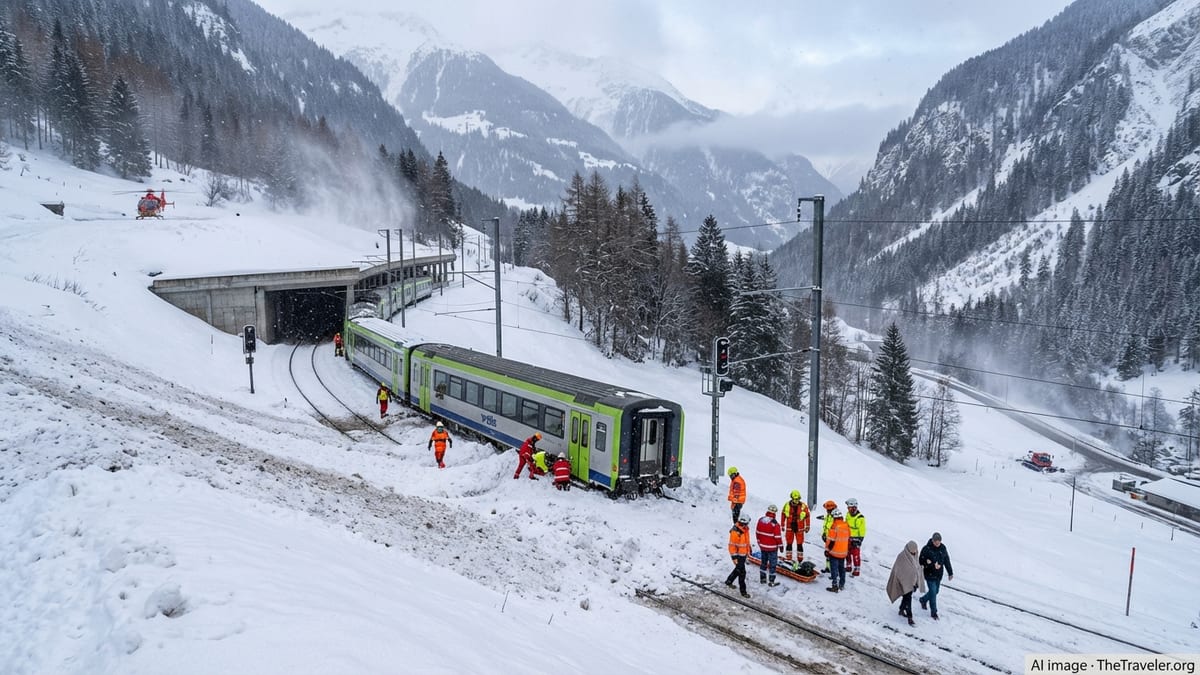
Derailment Near Neshaminy Falls Halts Trains and Traffic
Publicly available information shows that the derailment occurred in the afternoon between Street Road and the Neshaminy Falls regional rail station in Bensalem Township, Bucks County. Initial reports indicated that roughly a dozen to 16 freight cars left the tracks, sending several cars onto their sides near a busy rail corridor that also carries commuter trains.
Local news coverage describes a swift response from fire crews and hazardous materials teams, which converged on the right-of-way to assess the train consist and secure the surrounding area. Nearby streets were closed to through traffic, and regional rail service on the adjacent line was suspended as emergency personnel worked around active tracks.
According to published coverage from Philadelphia-area outlets, the affected freight line runs parallel to SEPTA’s West Trenton commuter route in a densely developed part of Bucks County. The proximity to residential neighborhoods and commercial corridors heightened initial concern as images of derailed cars circulated on social media and local television.
Despite the dramatic visuals of tilted and crumpled rolling stock, early reports did not indicate any injuries. Emergency responders focused on stabilizing the scene, confirming the contents of the damaged cars, and determining whether any cargo posed a risk to nearby homes or businesses.
Shelter-in-Place Orders Issued, Then Lifted
Shortly after the derailment, residents in parts of Bensalem Township were advised to shelter in place while hazardous materials teams evaluated the site. News reports indicate that the precautionary order covered neighborhoods closest to the derailment, with officials urging people to stay indoors and avoid the area while inspections were underway.
Local broadcast outlets report that the shelter-in-place order and limited evacuation measures were taken out of an abundance of caution due to uncertainty over what some of the freight cars were carrying. The potential presence of hazardous materials prompted responders to establish a wide safety perimeter and temporarily restrict access to nearby roads, including routes that link Bensalem with major highways.
By later in the day, television and radio coverage indicated that the shelter-in-place guidance had been lifted after inspections found no leaks of hazardous substances from the derailed cars. Statements relayed in regional news reports emphasized that air monitoring and visual checks around the train did not detect conditions that would pose a continuing risk to the public.
Updates carried by national news outlets also underscored that the scene had been stabilized and that the immediate focus shifted from emergency response to site cleanup and restoration of normal rail operations. The reassurance that no active hazard remained helped ease concerns among residents who had followed the incident closely throughout the afternoon and evening.
No Hazardous Leaks Found, Safety Concerns Linger
Coverage from multiple outlets, including regional television stations and national networks, highlights that subsequent assessments found no evidence of hazardous material leaks from the derailed freight cars. Reports indicate that tank cars in the train were inspected and that monitoring around the site did not register dangerous emissions.
Although the outcome in Bensalem avoided the worst-case scenarios often associated with rail incidents involving chemical cargo, the derailment has renewed public discussion about freight rail safety in communities that sit along busy main lines. Commentators in local coverage have linked the event to broader concerns that have grown nationally in the wake of high-profile derailments in other states.
Analyses appearing in regional newspapers note that the Bensalem incident occurred in a heavily populated corridor between Philadelphia and Trenton, where freight and commuter trains share a constrained transportation corridor. Even in a case where no releases occur, a derailment of more than a dozen cars can create significant disruption, from halted passenger service to temporary closures of nearby roadways.
Rail industry data cited in public reports point to long-term improvements in overall accident rates, but episodes such as the Bensalem derailment continue to fuel calls for more robust track inspections, infrastructure investments, and transparency about hazardous shipments moving through suburban neighborhoods.
Impact on Commuters and Regional Travel
For travelers and commuters in the greater Philadelphia region, the derailment’s immediate impact was felt in disrupted rail schedules and road detours. Local transportation coverage indicates that SEPTA temporarily suspended service on portions of the West Trenton Line while emergency teams worked near the right-of-way, prompting delays and rerouting for riders heading to and from Center City.
The interruption arrived during a weekday afternoon period when many passengers typically rely on regional rail for work and leisure trips. With trains held back from the affected segment, some travelers shifted to bus routes or highways, adding to congestion on already busy suburban roads. Drivers in Bensalem and surrounding communities encountered closures and police-controlled intersections near the derailment site.
Travel reports suggest that, once safety officials cleared the area, rail service was gradually restored, though passengers were advised to expect residual delays as railroads inspected tracks and overhead systems. Freight operations on the affected line are also expected to resume only after track repairs and structural checks are completed, which may require temporary rerouting of some cargo trains.
For visitors passing through Bucks County, the incident served as a reminder of how closely freight operations intersect with commuter infrastructure in the Northeast Corridor. Even a localized derailment can ripple across multiple modes of transport, briefly complicating both daily commuting patterns and longer leisure itineraries.
Bensalem Incident in Broader Rail Safety Context
In the wider context of rail safety, the Bensalem derailment adds to a series of recent freight incidents that have drawn attention to the movement of hazardous materials through populated areas. Commentaries in national and regional outlets frame the event as part of an ongoing debate over whether current federal standards and industry practices sufficiently protect communities along major freight corridors.
Publicly available federal data show that derailments remain relatively rare compared with the total number of train movements each year, and that accident rates have declined over time. Nonetheless, images of derailed tank cars near residential blocks, as seen in Bensalem, continue to resonate with residents who live close to rail lines and who may be unfamiliar with the specific safety systems and monitoring procedures in place.
Transportation analysts cited in media coverage often emphasize that the most serious risks typically arise when hazardous cargo is compromised, which did not occur in this instance. Even so, the combination of emergency alerts, shelter-in-place instructions, and live helicopter footage reinforced public interest in understanding how routes are chosen, how tank cars are designed, and how quickly rail operators can respond when something goes wrong.
For Bensalem and neighboring municipalities, the latest derailment is likely to spur renewed discussions about local emergency planning, notification systems, and coordination between freight railroads, commuter agencies, and township officials. While the June 30 event concluded without injuries or hazardous leaks, it has underscored how central freight rail remains to both the regional economy and the day-to-day life of communities built around the tracks.