


More news on this day
Severe thunderstorms across major hubs in the United States and Europe have triggered marathon tarmac delays, with hundreds of airline passengers reporting they were trapped on aircraft for up to eight hours before their flights were finally canceled or returned to the gate.
Get the latest news straight to your inbox!
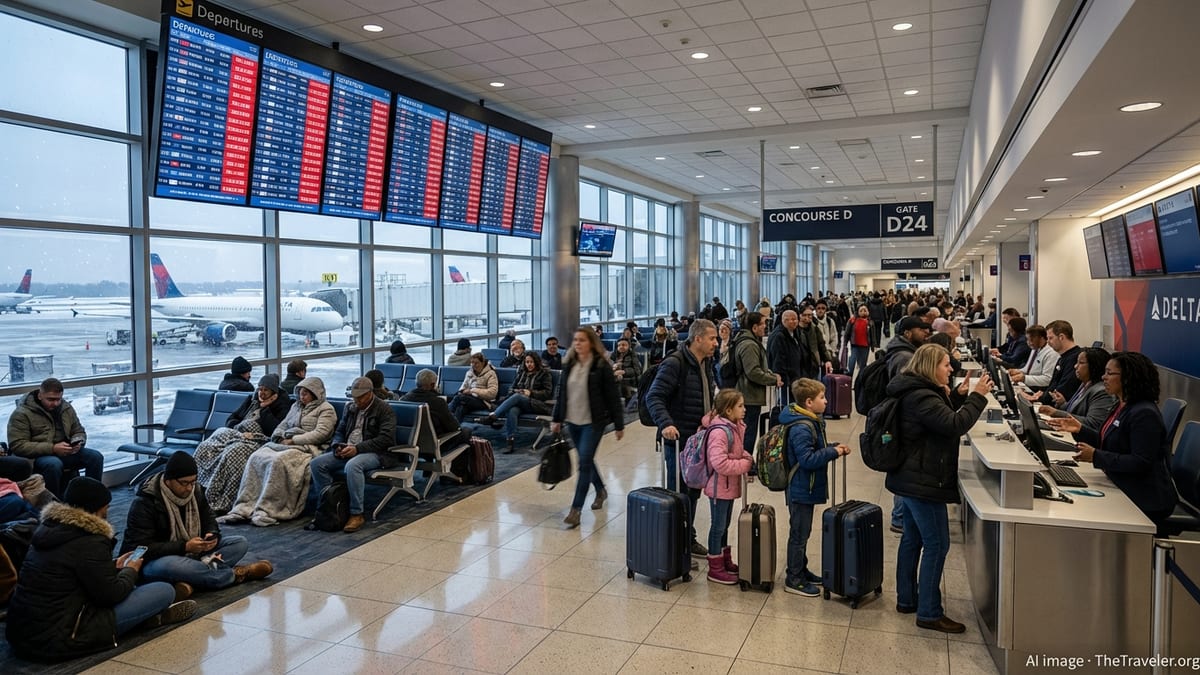
Storm Systems Turn Routine Departures Into All-Day Ordeals
Recent storm systems sweeping across key aviation hubs have turned routine departures into all-day ordeals, as lightning, low visibility and air-traffic control constraints combined to halt movements on the ground and in the air. Publicly available flight-tracking data and media coverage indicate that major airports including Newark Liberty International, Denver International, Houston’s George Bush Intercontinental and London Heathrow have all experienced significant weather-related disruptions within the past several weeks.
At Newark Liberty, reports describe passengers on a United Airlines service remaining onboard for around eight hours as severe weather moved across the Northeast, with the aircraft unable to depart and limited opportunities to return to an available gate. Similar accounts posted by travelers and covered by local television outlets detail restricted access to food, water and fresh air as the hours ticked by, while lightning activity and ground stops kept ramp workers away from parked planes.
In Denver, a severe thunderstorm warning and tornado-related weather prompted an extended ground stop in early June, freezing departures and slowing arrivals for hours. Coverage from passenger rights organizations notes that more than 1,000 flights were affected as operations were repeatedly paused and restarted, contributing to long onboard waits as aircraft queued for limited takeoff slots once conditions improved.
Transatlantic travel has also been hit. In late June, thunderstorms over southern England and the Continent disrupted schedules at Heathrow and Gatwick, with Eurocontrol data pointing to “heavy” delays and some passengers describing multi-hour onboard waits before eventual cancellations. Weather-related restrictions on arrivals and departures sharply reduced runway capacity, forcing airlines to make rapid decisions on which flights would operate.
How Eight-Hour Tarmac Delays Happen Despite Federal Limits
Extended onboard waits of this scale are particularly striking because United States regulations are designed to limit tarmac delays. The U.S. Department of Transportation’s tarmac delay rule generally caps domestic onboard delays at three hours for departures and arrivals before carriers must provide an opportunity to deplane, with higher thresholds for certain international flights. Airlines are required to maintain contingency plans describing how they will handle such situations.
In practice, however, exceptions in the rules and operational constraints can lead to longer waits. Safety considerations such as active lightning in the vicinity of an airport can halt ramp work, preventing jet bridges and mobile stairs from being moved into position or fuel lines and baggage equipment from being operated. When storms stall over a region and air-traffic control significantly reduces arrival and departure rates, the queue of aircraft waiting for a gate can grow quickly.
Recent accounts from Newark and other hubs suggest that some aircraft remained away from gates because terminals were at or near saturation, with every available stand occupied by other delayed flights. In those situations, crews may be reluctant to relinquish a takeoff slot or move off a taxiway without assurance of a gate assignment, yet the clock on tarmac delay limits continues to run as passengers sit in their seats.
Passenger-rights advocates note that airlines must balance safety-driven constraints with their legal obligations, ensuring that contingency plans are actively used rather than treated as paperwork. When delays approach regulatory thresholds, airlines are expected to either return to a gate or otherwise provide the option to deplane, even when that complicates subsequent departure timing.
Passengers Report Limited Supplies and Confusing Communication
For travelers inside the affected aircraft, the most common complaints in recent incidents relate to basic comfort and communication. Reports emerging from long tarmac delays describe diminishing food and beverage supplies as galley stores were depleted during the extended wait, with some passengers saying they received only small snacks or cups of water over several hours.
Social media posts and local coverage highlight frustration over scarce updates and shifting explanations regarding departure times. In multiple cases, travelers said projections for pushback or takeoff were revised in small increments throughout the day, making it difficult to decide whether to stay with their original flight or seek alternative routes. In some instances, delays ultimately ended with a full cancellation after crews reached their duty-time limits.
Temperature control has also emerged as a concern. While modern aircraft have environmental systems capable of maintaining cabin comfort, these systems can become strained during prolonged ground operations, particularly when engines are shut down and aircraft rely on auxiliary power units or ground-based systems. Travelers in several recent events reported cabins that felt increasingly warm and stuffy as the delays wore on.
Despite the discomfort, not all feedback has been negative. Some passengers have publicly praised individual flight and cabin crew members who provided frequent announcements, walked the aisles to answer questions and worked to accommodate families with small children. These accounts underscore the role that clear, consistent communication can play in mitigating the stress of uncontrollable weather disruptions.
What Passenger Rights Look Like When Weather Cancels Flights
For most travelers caught in these storms, the immediate question after an eight-hour tarmac delay is what support they can expect once flights are canceled. Passenger-rights organizations emphasize that compensation frameworks vary depending on the jurisdiction, the airline and the reason for the disruption.
In the United States, weather-related cancellations are generally classified as events outside an airline’s control, which means cash compensation is unlikely. However, consumer advocates point out that carriers are still expected to provide care in the form of rebooking assistance, meal vouchers or hotel accommodations in certain circumstances, based on each airline’s contract of carriage and public commitments. The U.S. Department of Transportation also invites travelers to file complaints if they believe airlines did not follow their own policies.
In Europe and the United Kingdom, compensation rules are more prescriptive, but also carve out exemptions for severe weather and air-traffic control restrictions. Travelers departing from or arriving into airports such as Heathrow and Gatwick may not be eligible for monetary compensation when thunderstorms are clearly documented as the cause, although they may still be entitled to meals, refreshments and accommodation during long waits.
Consumer groups advise documenting the duration of any onboard delay, keeping boarding passes and receipts, and reviewing airline policy pages after the fact. Even when cash compensation is off the table because of weather exemptions, travelers sometimes receive goodwill gestures such as frequent flyer miles, credits or travel vouchers, depending on the airline’s response to the disruption.
Why Thunderstorms Are Increasingly Disruptive for Busy Hubs
Meteorologists and aviation analysts note that the basic ingredients in these incidents are not new: strong thunderstorms have long posed challenges for airport operations. What appears to be changing is the degree of disruption a single storm line can cause when it intersects with a tightly scheduled, high-demand network.
Major hubs such as Newark, Denver and Houston operate near capacity during peak periods, with arrival and departure streams carefully sequenced to maximize runway use. When thunderstorms force air-traffic control to space out aircraft more generously or close certain approach paths, effective capacity can drop sharply. Even a brief ground stop can create a backlog that takes hours to clear, particularly if storms arrive in waves.
At the same time, airlines have optimized their fleets and schedules to keep aircraft and crew utilization high. This leaves less slack in the system when irregular operations occur. A cancellation triggered by weather at one hub can ripple across an airline’s entire network, stranding aircraft and crews in the wrong cities and compounding delays for passengers hundreds or thousands of miles away.
Analysts argue that as climate patterns bring more frequent episodes of intense convective weather in peak travel seasons, the industry will continue to face difficult choices about whether to add more schedule padding, reduce peak loads or invest in additional gate and ramp capacity. For travelers, that may translate into a heightened awareness that a single thunderstorm can turn a short flight into an all-day wait on the tarmac, even when regulations are intended to prevent the longest delays.