

More news on this day
Fresh rounds of April 2026 flight disruptions are rippling across at least five U.S. states, as severe weather, lingering holiday demand and operational strains combine to snarl air travel from Texas to the Northeast.
Get the latest news straight to your inbox!
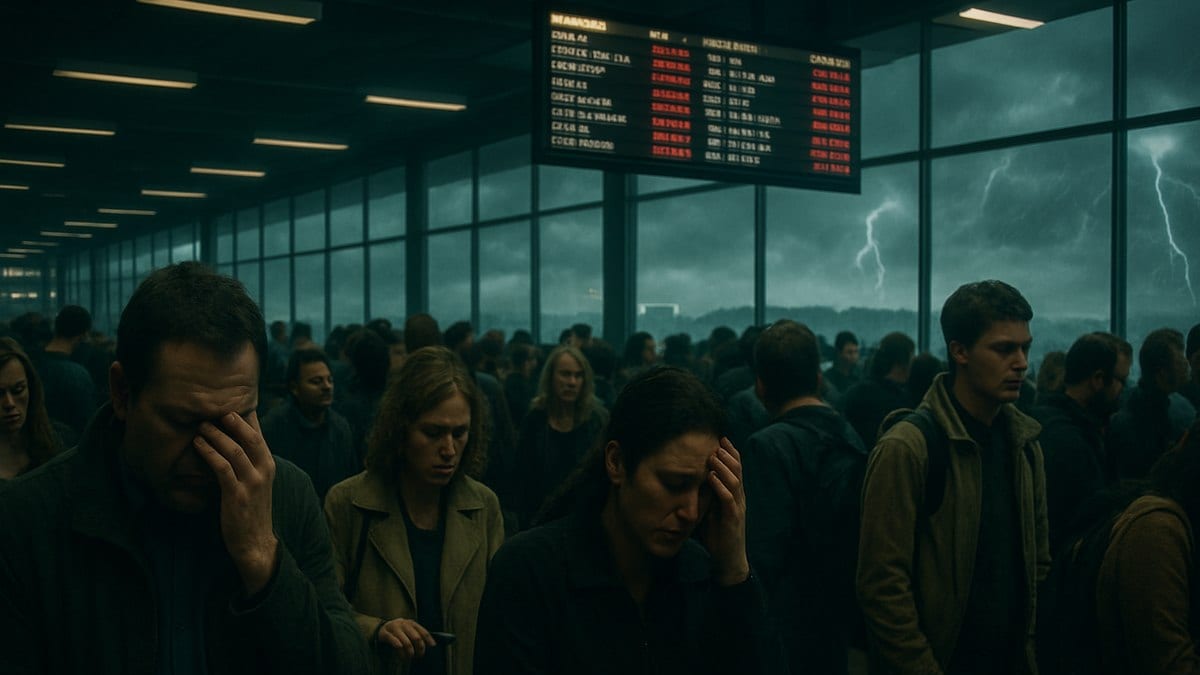
Storm Systems Drive New Waves of Cancellations
Publicly available tracking data and travel-industry reports indicate that a new severe weather system sweeping the central United States in mid-April 2026 has triggered another spike in cancellations and delays. A broad storm corridor affecting parts of Texas, Missouri, Illinois, Georgia and New York is disrupting flight schedules at major hubs and regional airports alike, extending turbulence for passengers who already faced an unsettled start to the month.
Coverage from travel news outlets on April 11 points to hundreds of disrupted flights as thunderstorms, heavy rain and low cloud ceilings move across the central and eastern states. The latest system follows an earlier burst of weather-related delays and cancellations tied to the busy Easter travel period in early April, when thousands of flights nationwide were delayed and more than a thousand were canceled in a single weekend.
Forecast discussions from meteorologists and regional weather services suggest the current storm band will remain active into the coming week, raising the risk of rolling disruptions as airlines attempt to reposition aircraft and crews. The result is a patchwork of local issues that collectively amount to a national slowdown in what is already a crowded spring travel calendar.
While the immediate trigger in many locations is convective weather, aviation analysts note that thin staffing, tight aircraft rotations and saturated schedules leave little margin to absorb even short-lived ground stops or spacing programs. Once storms trigger initial delays, the impact tends to cascade, stretching well beyond the affected airspace and pushing disruption into other regions hours later.
Texas and the Central U.S. Bear the Brunt
Texas appears to be at the center of the latest disruption wave. Travel-industry summaries from April 11 describe severe weather affecting central U.S. airports, with particular strain at large Texas hubs that connect domestic and international networks. Earlier in the month, George Bush Intercontinental Airport in Houston temporarily went under a ground stop because of severe thunderstorms, and fresh thunderstorms this weekend are again complicating departure and arrival banks.
Inland, convective storms and localized flooding risks across western and northern Texas are limiting departure windows and forcing extended ground handling times. These conditions are impacting both major carriers and low-cost airlines, creating bottlenecks for flights heading toward the Midwest, Southeast and Mountain West. As aircraft arrive late or remain out of position, knock-on delays are emerging at downline airports that are not directly under severe weather.
Beyond Texas, disruptions are spreading into neighboring states as the storm corridor shifts east and north. Airports in Missouri and Illinois are reporting elevated delay numbers, particularly in the late afternoon and evening hours when strong thunderstorms have been most frequent. With several of these airports serving as key connecting points, relatively short weather holds can translate into missed connections and overnight misalignments in airline schedules.
Operational data published by airline tracking services show that even when cancellations remain concentrated in a few hubs, the pattern of widespread minor delays across the central corridor is enough to push on-time performance noticeably lower. For travelers transiting the region, that can mean longer connection times, aircraft swaps and last-minute gate changes even when local skies appear relatively calm.
East Coast Hubs Struggle to Recover From Earlier Setbacks
While the newest storm system is focusing on the central states, major East Coast hubs are still recovering from significant disruptions earlier in April. According to consumer-rights and flight-compensation platforms that monitor airline performance, carriers serving New York, Boston, Washington and other northeastern cities canceled more than 200 flights and delayed several thousand more around April 6 as poor weather and congestion converged over the region.
LaGuardia and other New York-area airports experienced concentrated delays during the first week of April, with ground delays and spacing programs slowing arrivals into already capacity-constrained terminals. Reports describe a pattern in which even modest reductions in arrival rates quickly back up departure banks, leaving aircraft and crews out of position for later flights across the country.
Industry coverage notes that the Easter holiday travel rush, which peaked between April 4 and April 6, magnified the impact of each operational hiccup. With load factors running high and spare seats limited, rebooking options for disrupted passengers were often constrained, pushing some travelers into multi-stop routings or overnight stays. This backlog is still being worked through as new storms arrive, particularly for longer-haul itineraries linking the Northeast with Texas and the West Coast.
As a result, East Coast hubs remain sensitive to further disruptions originating in the central states. When severe weather or ground stops reduce capacity in Texas or the Midwest, ripple effects frequently appear hours later in the form of delayed inbound aircraft and compressed departure waves along the Atlantic seaboard.
Florida and the Southeast Face Their Own Weather Challenges
The Southeast, including parts of Florida and Georgia, has also seen fresh turbulence in April 2026. In the first week of the month, Miami International Airport experienced a short-lived ground stop for arriving flights as early-morning thunderstorms swept through South Florida. Local coverage described heavy rain, thunderstorms and a flood watch in parts of Miami-Dade and Broward counties, conditions that limited visibility and slowed operations.
Although the Miami ground stop was lifted quickly, its timing coincided with early departure banks, causing a ripple of delays through the rest of the day. These disruptions fed into the broader national pattern, especially for flights connecting through Miami to Latin America and the Caribbean. Travelers on multi-leg itineraries reported extended connection times and schedule changes as airlines recalibrated.
Farther north, Atlanta and other southeastern hubs have been contending with intermittent storms and lingering instability associated with the same broader weather regime affecting Texas and the central corridor. Operational summaries suggest that while outright cancellations have been lower here than in the hardest-hit central states, recurrent moderate delays have become common during peak travel times.
The combination of issues in Florida, Georgia, Texas and the Northeast effectively links four of the nation’s most important air travel regions. Even when individual ground stops are brief, the cumulative effect is a feeling of chronic unreliability for travelers trying to move between these areas during April.
Travelers Confront a Fragile Spring Aviation Network
Across these five affected states and the wider national network, April 2026 is highlighting how quickly the U.S. aviation system can move from smooth operations to widespread disruption. Publicly available data from the U.S. Department of Transportation notes that flight disruptions in general fall into a handful of categories, including carrier-related issues, national aviation system constraints and extreme weather. Recent events show how those categories often overlap, turning localized storms into broader operational stress.
Consumer-advocacy organizations point out that while airlines are not required to compensate passengers for weather-related disruptions, they are obligated to provide refunds when flights are canceled or significantly changed and the traveler chooses not to fly. The distinction between weather-driven and controllable disruptions remains a critical factor in what help passengers can expect at the airport versus later through customer-service channels.
Aviation experts also observe that the ongoing modernization of systems such as Notices to Air Missions, with a major federal system cutover scheduled for mid-April, is occurring against this backdrop of heightened spring volatility. While there is no indication that technical changes are driving the latest disruptions, the overlap of infrastructure upgrades with peak travel periods underscores the importance of resilience throughout the system.
For now, travel advisers generally recommend that passengers crossing the affected regions in April build extra time into their itineraries, monitor airline apps and airport status boards closely and be prepared for schedule changes on short notice. With more active weather in the forecast and little slack in airline operations, further ripples across multiple states remain likely as the month unfolds.