

More news on this day
A fresh round of April 2026 flight disruptions is rippling across multiple U.S. hubs, with weather, tight airline schedules and federal traffic management measures combining to slow or halt operations in at least five states.
Get the latest news straight to your inbox!
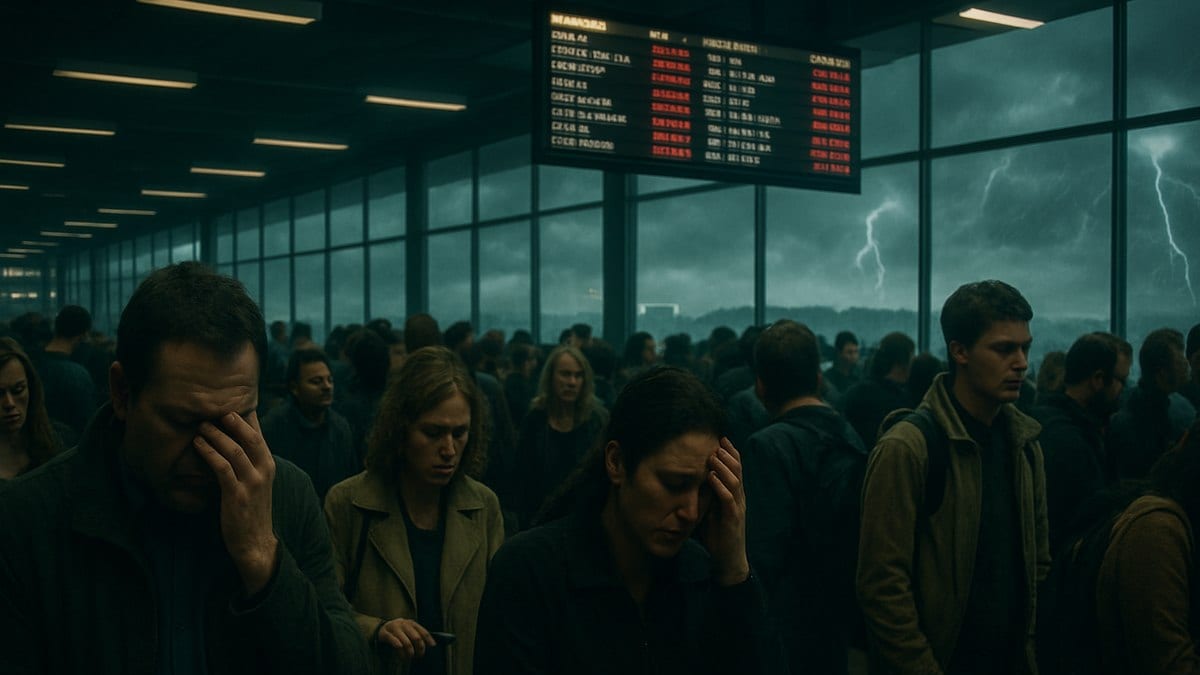
Storm Cells Stall Flights in Illinois and Michigan
Early April thunderstorm systems over the Midwest have triggered repeated interruptions at Chicago and Detroit, two of the country’s most important connecting hubs. In Illinois, ground stops and arrival holds at Chicago O’Hare International Airport and Midway International Airport on April 2 led to clusters of evening delays, particularly for inbound flights seeking safe arrival windows in fast-changing conditions. Publicly available information shows that some carriers temporarily paused departures to those airports while air traffic controllers reduced arrival rates.
Further east, Michigan’s busiest airport has faced its own operational squeeze. On April 11, spring storms and follow-on logistical issues at Detroit Metropolitan Wayne County Airport led to more than one hundred delays and over twenty cancellations, according to published coverage that compiled data from flight-tracking platforms. The disruption affected both domestic and regional services, underscoring how quickly schedules can unravel when storms intersect with already crowded weekend timetables.
These Midwest disruptions have had knock-on effects across the national network. Late inbound aircraft and crews from Illinois and Michigan have arrived out of position at secondary airports, forcing rolling delays on later departures even after local weather improved. Network performance data reviewed this week indicates that Detroit, in particular, has seen elevated delay levels each time storm bands have swept across the Great Lakes corridor.
Industry analyses suggest that the combination of convective spring weather and tight aircraft utilization is leaving little margin to absorb shocks. Airlines entered April expecting strong holiday demand, and the heavy use of each aircraft frame means that even short operational pauses in Illinois or Michigan can cascade into schedule changes across the rest of the day.
Traffic Management Programs Slow New York and Massachusetts
Along the Northeast corridor, aviation traffic management initiatives have become a defining feature of the April 2026 travel picture. On Easter weekend, low visibility and unsettled weather patterns contributed to a series of federal Ground Delay Programs and occasional ground stops at New York’s LaGuardia Airport, according to operational summaries released by aviation data services. Average arrival delays mounted as controllers slowed the flow of traffic into the dense New York airspace.
Additional reporting indicates that New York’s challenges are part of a broader regional pattern that also encompasses major airports in Massachusetts. Boston Logan International Airport has been included in recent federal weather delay summaries alongside New York, Philadelphia and Washington, D.C., reflecting the effect of thunderstorm forecasts and low cloud ceilings along the Atlantic seaboard. These measures do not necessarily close airports, but they restrict the number of aircraft allowed in the system at any one time, stretching flight times and crowding gate areas.
Passenger assistance platforms tracking disruption across the Northeast have highlighted a substantial spike in delayed departures from New York and Boston in the first week of April. On some days, thousands of flights across the United States have been reported late, with a notable concentration of those delays tied to East Coast hubs. The data points to a mixture of weather-driven restrictions and capacity limits in the crowded corridor between New England and the Mid-Atlantic.
For travelers, the effect has been a longer and less predictable journey through two of the nation’s most heavily used air travel gateways. While cancellations have remained lower than levels seen during major winter storms earlier in the year, the ongoing April pattern of rolling holdups in New York and Massachusetts underscores the fragility of schedules when both weather and traffic volume press against system limits.
Florida and Texas Feel Secondary Shockwaves
Farther south, airports in Florida and Texas are feeling the indirect shockwaves of the April disruptions. Federal traffic reports for this month list Orlando and Tampa among the airports subject to episodic weather-related flow controls, tying those restrictions to thunderstorm activity stretching from central Florida through parts of the Gulf region. When en route corridors into Florida become saturated, controllers have periodically slowed arrivals, creating pockets of congestion around major leisure destinations at the height of spring break season.
In Texas, airlines have been issuing travel flexibility notices around storm systems affecting Houston and the broader Gulf Coast during the early days of April. Public posts referenced by passenger communities show that at least one major carrier offered waiver periods for flights touching Houston around April 3 and 4, anticipating heavy rain and the potential for lightning holds. While individual disruptions have varied by carrier and route, the pattern reflects how convective weather over Texas can ripple into nationwide operations.
Operational summaries compiled by international news outlets for the Easter travel rush indicate that more than 1,000 flights across the United States were canceled and many thousands were delayed over the first weekend of April, with Texas and Florida among the states experiencing elevated disruption. These figures capture the cumulative impact of weather systems moving through multiple control centers, including those that manage high-altitude traffic into and out of southern hubs.
Because Florida and Texas serve as both origin points and through-hubs for cross-country itineraries, even moderate slowdowns can strand passengers far from the storm itself. Aircraft that arrive late into Orlando, Tampa, Dallas or Houston often depart late on their onward legs to the Midwest or West Coast, multiplying the disruption beyond the original weather cell.
Holiday Demand Magnifies April Strain
The timing of this latest disruption wave has also amplified its impact. Easter 2026 coincided with one of the busiest early spring travel periods in recent years, and carriers entered April with schedules calibrated for near-peak demand. Forecasts published in March projected that U.S. airlines would carry close to three million passengers per day through the late March and early April window, leaving minimal slack in aircraft and crew rotations.
Analysts tracking industry performance during the Easter weekend have pointed to the interaction between this heavy demand and the weather systems crossing the country. On April 4 and 5, publicly available statistics compiled by global news and data organizations showed thousands of delays and hundreds of cancellations across U.S. airlines. While no single airport accounted for the majority of these issues, the cumulative effect across hubs in Illinois, Michigan, New York, Massachusetts, Florida and Texas produced nationwide congestion that persisted into the following week.
Travel rights organizations have noted that the root causes of April’s holdups are varied, ranging from thunderstorms and low visibility to maintenance checks and staffing constraints. However, the timing has proven particularly challenging for airlines that rely on tight connections to maximize aircraft use. Late-arriving crews, in particular, have become a pressure point when early delays push pilots and flight attendants against duty-time limits in the evening.
Industry observers suggest that this April pattern is part of a broader shift in which even routine spring weather can trigger disproportionate disruption in a network operating close to capacity. The experience of 2026 is likely to fuel ongoing debate over how much additional buffer airlines and regulators should build into schedules during known peak periods.
What Travelers Can Expect Next
Looking ahead to the remainder of April 2026, forecasters and aviation analysts expect intermittent disruption to continue as storm systems move across the country and demand remains elevated. Federal air traffic initiatives are likely to remain a central tool in managing congestion over key states, particularly along the East Coast and across the Midwest. When those programs are activated, travelers in Illinois, Michigan, New York, Massachusetts, Florida and Texas may see longer ground waits, airborne holding patterns or revised routings.
Consumer advocates emphasize that the distinction between weather-related interruptions and airline-controlled problems remains important for passengers seeking compensation or rebooking options. Guidance published by transportation regulators explains that carriers are generally responsible for providing assistance when delays stem from issues within their control, such as crew or maintenance problems, but not when severe weather or air traffic restrictions are the primary cause. The mixed nature of April’s disruptions may complicate those assessments on a case-by-case basis.
Publicly available performance data suggests that airlines are attempting to recover schedules more quickly than in earlier disruption waves, in part through the use of waivers that allow passengers to reschedule trips around known storm periods. At the same time, there are indications that ground resources, including baggage handling and customer service staffing, remain under strain at some busy hubs during peak hours.
For now, the early April pattern points to an aviation system that is still highly sensitive to shocks, whether from thunderstorms over the Great Lakes and Gulf Coast, low ceilings along the Northeast corridor or localized operational bottlenecks. As the month progresses, travelers across the five most affected states may continue to face a less predictable journey, even on routes that appear routine on the schedule.