

More news on this day
A fresh wave of April 2026 flight disruptions is rippling across at least five U.S. states, as severe weather systems, air traffic constraints and ongoing staffing strains converge during one of the busiest spring travel periods.
Get the latest news straight to your inbox!
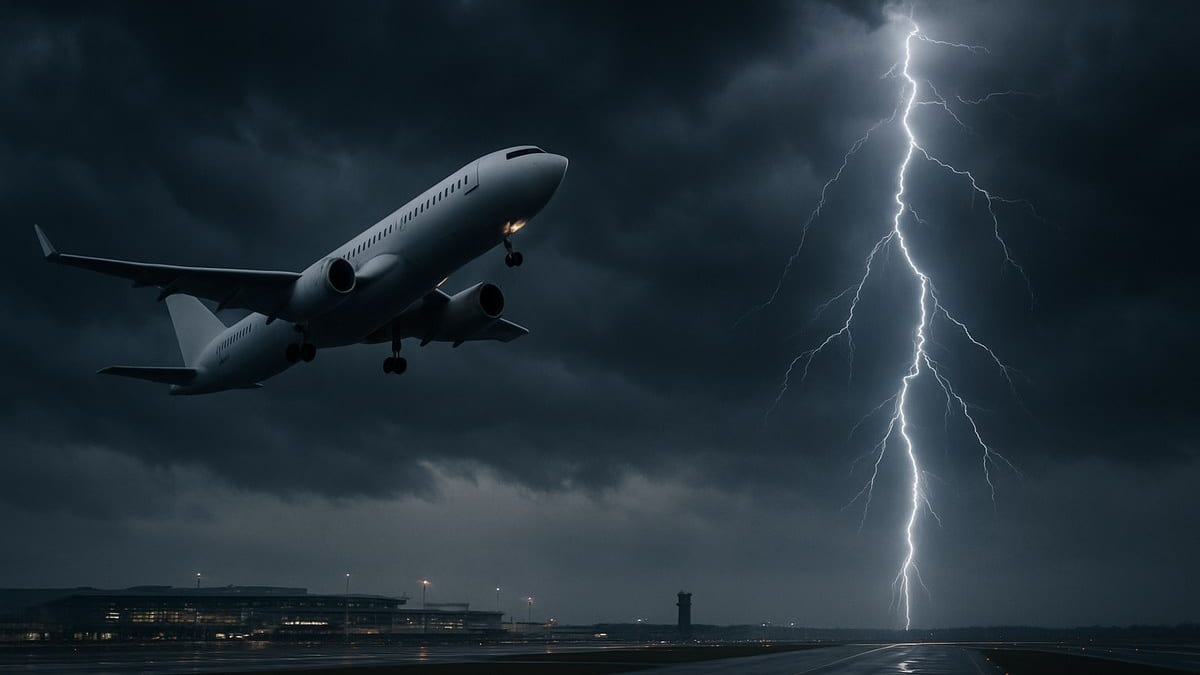
Storm Systems Hammer Texas and the Central U.S.
Storm activity in early April has been a primary driver of cancellations and delays from Texas through the central United States. On April 4, strong thunderstorms around Houston triggered a ground stop at George Bush Intercontinental Airport, temporarily pausing departures and arrivals and forcing airlines to reset schedules across their networks. Local coverage indicates that the ground stop was lifted earlier than initially expected, but the brief halt contributed to rolling delays into the evening.
The same storm system and related unstable conditions affected Austin, where reports highlight dozens of delays and a cluster of cancellations at Austin Bergstrom International Airport on April 4. Travel industry summaries describe airlines including United, Southwest and JetBlue adjusting operations as strong storms and heavy rain swept through central Texas and neighboring states, creating knock on impacts on flights to and from cities such as Dallas, New York and Boston.
By April 7, national travel outlets were tracking more than 2,000 delayed flights and close to 100 cancellations across the United States, with Atlanta, Miami and Chicago prominent among affected hubs. Data compiled by aviation focused publications show disruptions concentrated at large connecting airports, suggesting that weather centered in a handful of regions nonetheless produced a national ripple effect.
Further into the month, additional severe weather across the central United States continued to fuel large numbers of delays and cancellations. Coverage from airline and tourism analysts links these patterns to a broader spring storm regime producing high winds and isolated tornado risks, keeping operational buffers tight even on days when conditions briefly improve.
East Coast and Southeast Hubs Face Prolonged Pressure
The Northeast and Southeast have also experienced notable turbulence in April 2026. Around Easter weekend, the Federal Aviation Administration implemented nationwide delay programs in response to low visibility and active storm systems on both coasts. Publicly available summaries of FAA command center actions describe early morning ground stops at New York LaGuardia and flow control measures that slowed arrivals into other key East Coast gateways.
On April 6, passenger rights organizations reported that airlines including Delta, American, Southwest and Air Canada collectively canceled more than 200 flights and delayed roughly 3,000 across major East Coast airports. These disruptions were concentrated in the Northeast but spilled into the Mid Atlantic and Southeast as aircraft and crews fell out of position, underlining how quickly localized storms can expand into multi state problems.
In Atlanta, Chicago and other inland hubs, investor focused analyses describe heavy delays on April 5 tied to a mix of severe weather and elevated Easter travel demand. These accounts note that Dallas/Fort Worth, Chicago O’Hare and Hartsfield Jackson Atlanta International each saw substantial schedule disruption, magnifying the impact on connecting passengers bound for destinations across the country.
Taken together, this sequence of events has produced a corridor of instability running from Florida and Georgia through the Mid Atlantic and into the Northeast, with New York area airports regularly appearing among the nation’s most delayed. Even when storms move offshore, residual traffic management initiatives and crew duty time limits can keep operations strained for several subsequent days.
West Coast Airports Confront Flow Controls and Knock On Delays
While many of the most intense storms have targeted the central and eastern United States, West Coast travelers have not been spared. Around Easter Sunday, San Francisco International Airport recorded notable arrival delays as low ceilings and broader system congestion prompted traffic flow programs. Travel briefings on that day describe average arrival holds nearing half an hour, with the possibility of more severe restrictions if conditions deteriorated.
Subsequent updates from aviation observers indicate that new arrival procedures and separation rules at San Francisco have added additional friction, increasing the likelihood of slower traffic flows during marginal weather. Passenger accounts suggest travelers are seeing more frequent holding patterns and departure spacing as controllers adjust to the updated requirements.
In Nevada, Las Vegas experienced pronounced delays on April 11, despite generally benign local weather. Coverage from travel publications notes that these disruptions followed several days of weather and air traffic control related strain elsewhere in the network, demonstrating how schedule shocks in other states can surface later in desert hubs that appear calm on radar.
These West Coast and intermountain impacts, layered on top of Texas, Midwest and East Coast disruptions, help explain why national aviation dashboards have shown persistent elevation in both delay minutes and cancellation counts through the first half of April.
Staffing, Air Traffic Capacity and System Upgrades Add Strain
Operational challenges unrelated to weather are also complicating April’s picture. Industry reporting on air traffic control capacity describes ongoing staffing shortages at key facilities, particularly in high density corridors. Recent coverage of hearings in Washington notes that the Federal Aviation Administration is seeking budget approval for an expanded controller hiring plan and is exploring new training pathways to accelerate certification.
At the same time, the agency is preparing a mid April changeover to a modernized notice system, a long planned update intended to improve how safety critical information is shared with pilots and airlines. Aviation groups have highlighted this transition, scheduled for April 18, as a major technology milestone that nonetheless requires careful management to avoid adding friction during implementation.
On the airline side, trade press and passenger accounts point to lingering staffing imbalances, including pilot and cabin crew shortages at certain carriers following winter operations and recent schedule expansions. When storms hit or air traffic initiatives slow the system, these staffing gaps can turn minor disruptions into extensive rolling delays, particularly on regional routes that rely on tightly choreographed aircraft turns.
The combination of constrained controller staffing, technology transitions and airline resource pressures means that the U.S. air travel system is entering the heart of the spring and summer season with limited slack. April’s events across multiple states provide a clear illustration of how quickly these factors can intersect.
What April’s Turbulence Means for Spring Travelers
For travelers looking ahead to the remainder of April 2026, the pattern so far points to elevated risk of disruption in at least five states including Texas, Georgia, Florida, Illinois and California, with knock on effects likely in neighboring regions. Airlines have already issued multiple weather related flexibility policies this month, particularly around Houston and Chicago, offering some passengers the option to adjust plans in advance.
Consumer advocacy organizations advise that passengers build additional buffer time into itineraries, favor earlier departures where possible and monitor flight status closely via airline apps or text alerts. Published guidance stresses that even when takeoff and landing airports show clear skies, upstream storms or air traffic constraints elsewhere can still activate delay programs that cascade through the day.
Travel industry analysts add that connecting itineraries through major hubs such as Atlanta, Dallas/Fort Worth, Chicago O’Hare, New York area airports, Miami and key West Coast gateways carry heightened exposure when severe weather targets any one of those nodes. Choosing longer connection windows, especially on peak travel days, can reduce the risk of missed onward flights.
With more spring storms likely and system capacity still tight, the first half of April 2026 is shaping up as an early stress test for U.S. aviation. How airlines and federal agencies navigate the coming weeks will help set expectations for travelers heading into the busy summer season.