


More news on this day
Britons heading overseas for summer 2026 holidays are being urged to review official travel advice, insurance cover and new border rules, as updated warnings highlight higher risks in parts of the Middle East and Eastern Europe, the first major test of Europe’s new digital border checks, and growing disruption from extreme weather events.
Get the latest news straight to your inbox!
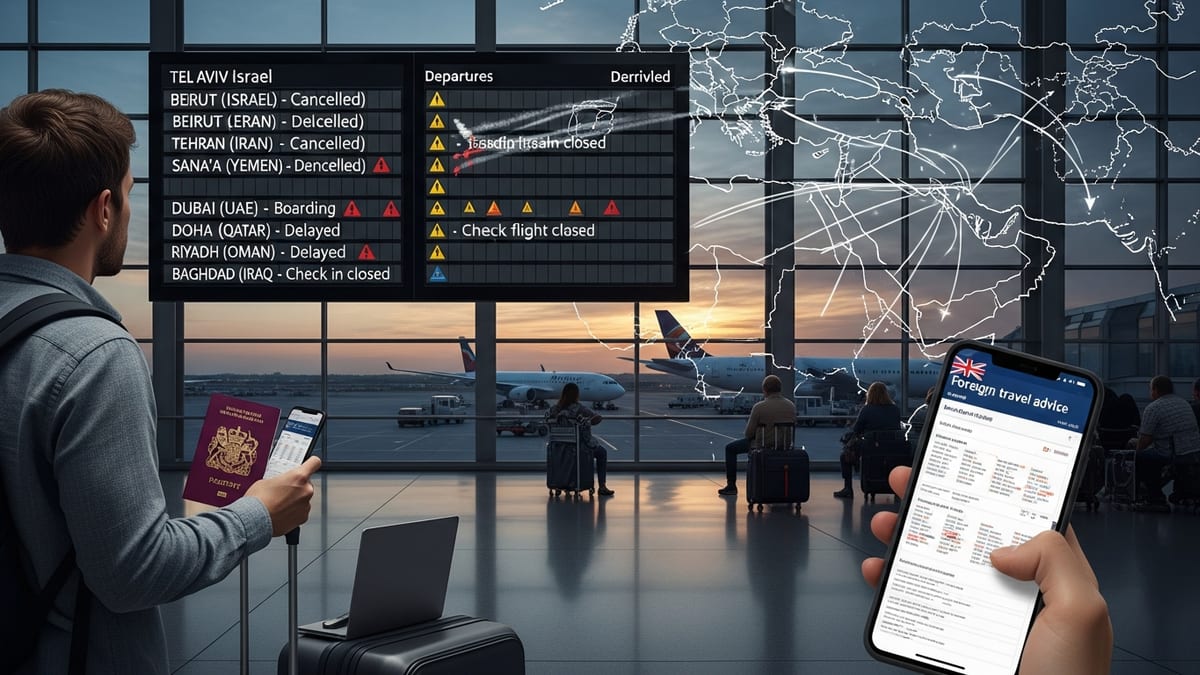
Expanded FCDO warnings on conflict and security risks
Publicly available information from the UK Foreign, Commonwealth and Development Office (FCDO) shows that the government has recently widened its list of locations where travel is advised against, particularly across parts of the Middle East and Eastern Europe. The latest updates emphasise areas affected by armed conflict, political instability and a heightened risk of detention for foreign nationals.
The strengthened advisories mean many Britons planning summer getaways could find that popular transit hubs or secondary destinations on multi-stop itineraries are now categorised as “all but essential travel” or “do not travel” zones. Travel trade bodies highlight that travelling against this advice can invalidate standard insurance policies, leaving holidaymakers exposed to large medical bills or repatriation costs.
Guidance aimed at British travellers also underlines that airlines and tour operators are not obliged to operate services into destinations where the security situation has deteriorated. Cancellations or rerouting caused by new restrictions may entitle passengers to refunds or alternative arrangements, but compensation rules vary depending on whether the disruption is within the carrier’s control.
Analysts note that maps of current FCDO advice now show extensive areas marked at the highest warning levels, particularly for regions bordering active conflict zones. Travellers are urged to re-check advice not just for their main destination but for any country that appears on their route, including short stopovers.
Europe’s new digital border checks set to test summer queues
Summer 2026 will be the first peak season under the European Union’s new Entry/Exit System (EES), which is now active at all Schengen external borders. The system records the biometric data and travel history of non-EU visitors, including UK passport holders, when they enter or leave the bloc.
Reports from recent months in specialist travel and migration coverage indicate that the rollout has already led to longer processing times at some airports, ports and land crossings, particularly where infrastructure is still being adapted. Industry observers expect additional pressure once school-holiday traffic begins in earnest, as large volumes of first-time users need to be enrolled in the system.
EU institutions have acknowledged that member states can apply limited, temporary relaxations of the rules at peak moments to ease congestion, but the baseline requirement for biometric registration remains. Travel consultants are advising British holidaymakers to build in extra time for border formalities, especially when connecting to onward flights or cruises.
In parallel, authorities in Brussels are progressing towards the launch of the separate European Travel Information and Authorisation System (ETIAS), a pre-travel permit for visa-exempt visitors such as Britons. Current official timelines suggest ETIAS will not be in force for most of the 2026 peak season, but observers expect increased communication around its late-2026 introduction, which may cause confusion among travellers researching their trips this summer.
Rising impact of extreme heat, wildfires and climate hazards
Recent summers in southern Europe and the Mediterranean have brought record-breaking temperatures, deadly wildfires and heat-related fatalities among tourists, according to widely reported data from European meteorological agencies and local authorities. These events have prompted a series of fresh warnings to holidaymakers about planning, timing and insurance for hot-weather destinations.
Updated risk assessments highlight that popular beach and island resorts in Greece, Spain, Italy and other Mediterranean countries can face sudden wildfire evacuations, smoke pollution and closures of hiking routes or archaeological sites during heatwaves. Travellers may also encounter restrictions on accessing forests, national parks or rural areas during periods of extreme fire danger.
Health guidance for UK nationals stresses that even those accustomed to warmer climates can underestimate the intensity and duration of European heatwaves, especially in urban centres and on walking or cycling holidays. Tour operators are increasingly advising customers to factor in heat exposure when scheduling activities, to prioritise shaded or indoor excursions at midday, and to ensure robust medical cover for heat-related illness.
Insurance specialists point out that some policies now include specific clauses related to natural catastrophes, evacuation and trip disruption caused by wildfires or extreme weather. British travellers are urged to check whether they would be protected if a resort closes, a region is placed under emergency orders, or local authorities restrict access to certain areas at short notice.
Insurance, financial protection and the risk of invalidated cover
Travel industry organisations and consumer bodies continue to warn that a significant number of Britons still travel without adequate insurance or misunderstand what their policies cover. According to analysis frequently cited by UK travel associations, travelling to destinations where the FCDO advises against all but essential travel can render many policies invalid.
Advisers recommend that holidaymakers buy insurance as soon as they book, rather than waiting until just before departure, so that cancellation, illness or redundancy before the trip is also covered. Travellers are urged to read policy wording carefully, paying particular attention to exclusions relating to pandemics, pre-existing medical conditions, adventure activities and the impact of official travel warnings.
Financial protection schemes such as those operated by the Civil Aviation Authority (CAA) and ABTA remain important safeguards if a tour operator, airline or cruise line collapses. Public information on these schemes explains that package holidays bought through approved providers can offer refunds or repatriation if a company fails, in addition to standard insurance.
Consumer advocates caution that dynamic packaging, where travellers piece together flights, hotels and car hire from multiple providers, may not qualify for the same level of statutory protection. Brits booking their own itineraries online are advised to pay by credit card where possible and keep detailed records of confirmations and terms.
Practical steps for Brits heading abroad this summer
Against this backdrop of evolving security, border and climate risks, UK-based travel advisers are encouraging holidaymakers to adopt a more cautious and better-informed approach to trips abroad. The core message is to check official travel advice, understand entry rules and ensure comprehensive insurance well before departure.
For those heading to the Schengen Area, experts suggest confirming passport validity, allowing extra time for EES checks, and keeping onward travel plans flexible on arrival days. Families travelling with older relatives or young children may wish to avoid very tight connections where possible, particularly at busy hubs serving multiple non-EU destinations.
Travellers planning itineraries that include higher-risk regions are urged to monitor developments closely and be prepared to adjust routes or dates if advice changes. Airlines and tour companies may update schedules at short notice in response to new restrictions or demand shifts, which can affect both direct and connecting services.
With the main school-holiday period approaching, British travellers are being reminded that the global risk landscape is more complex than in previous decades. The latest warnings do not aim to deter holidays altogether, but to ensure that those heading overseas this summer do so with a clear understanding of the potential challenges and the steps that can reduce them.