


More news on this day
An “endless” residential world cruise marketed as a chance to live permanently at sea has come to an abrupt stop in Cambodia, after soaring fuel costs forced the Villa Vie Odyssey to suspend operations and order more than 200 residents to disembark with only a few hours’ notice.
Get the latest news straight to your inbox!
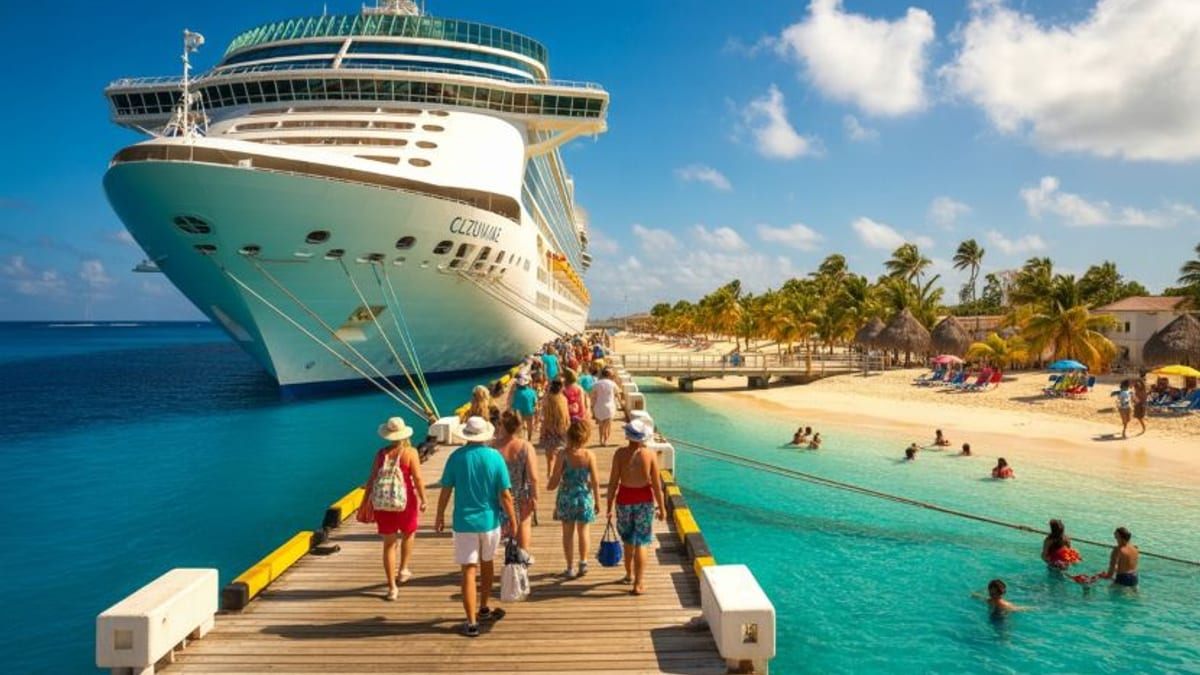
Around-the-world ‘life at sea’ dream cut short
The vessel, operated by U.S.-based company Villa Vie Residences and sailing under the name Villa Vie Odyssey, had been marketed as a long-term or even lifelong home for travelers seeking to combine global exploration with full-time shipboard living. Publicly available information describes the voyage as a multi-year, open-ended journey touching all seven continents, with some residents purchasing cabins outright for sums reported in the six-figure range, plus monthly fees.
The Odyssey’s residential concept followed a broader trend in the cruise industry toward long-duration and “live aboard” products, promising a community of like-minded travelers and a stable address at sea. Coverage in international outlets indicates that some passengers sold houses, ended leases, or reorganized their finances to fund cabins on the ship, expecting to remain aboard for years.
According to published coverage, the ship’s current global voyage began in 2024, following a refit in Belfast that prepared the former cruise liner for extended residential use. The itinerary envisioned continuous travel for at least three years, and in some marketing material the journey was framed as capable of continuing indefinitely as long as there was demand and the ship remained in service.
The promise proved fragile. Reports indicate that over the past year the project faced delays, itinerary changes, and mounting operational pressure before the sudden announcement in late October 2026 that the ship would halt in Cambodia and ask residents to leave.
Fuel price shock pushes operator to suspend operations
Publicly available statements from Villa Vie’s leadership, cited in recent news coverage, attribute the abrupt stop to dramatic increases in fuel costs along parts of the Odyssey’s Asian route. Reports indicate that the company had been paying several thousand dollars per ton of marine fuel, a significant jump from levels anticipated when the long-term voyage was first sold.
Industry data and recent reporting show that fuel remains one of the largest operating expenses for cruise ships, and residential voyages that spend more days at sea than traditional cruises are particularly exposed to price spikes. In this case, rising fuel costs appear to have undermined the company’s business model, which relied on fixed or semi-fixed payments from residents to cover ongoing expenses such as fuel, crew, provisions, and maintenance.
According to multiple news reports, Villa Vie Residences notified passengers that it could no longer reliably secure or pay for the fuel required to maintain the planned schedule. The ship diverted to Sihanoukville on Cambodia’s southern coast, where residents were informed via internal communications that operations were being suspended and that they had a limited number of hours to pack their belongings.
Subsequent coverage in business and broadcast outlets indicates that the company’s leadership is preparing to seek bankruptcy protection, with references to a restructuring process and an uncertain future for the ship and brand. As of late October 2026, no clear long-term rescue plan has been publicly detailed.
More than 200 residents suddenly disembarked in Cambodia
News organizations and social media posts from people on board describe a chaotic and emotional scene in Sihanoukville as more than 200 residents were instructed to leave what, for many, had become their primary home. The group includes a large number of U.S. and European nationals, along with passengers from other regions, some of whom had spent over a year living continuously on the vessel.
According to published accounts, residents received an early-morning message on the ship’s internal system explaining that fuel constraints meant the voyage could not continue, and that everyone needed to be off the ship by mid-afternoon. Passengers were asked to disembark with all personal belongings, effectively ending their time as residents and requiring them to find immediate accommodation on shore or arrange rapid travel home.
Reports indicate that the abrupt timeline created particular challenges for older travelers and those with limited mobility, as well as for residents who had structured their lives around long-term life at sea and had no fixed base on land. Some passengers told reporters they were unsure how they would manage onward flights, visas, and housing after investing heavily in the cruise.
Crew members remain in a more uncertain position. While passengers have broadly been told they must leave, news coverage notes that the status of some crew and onboard contractors is less clear, with decisions likely dependent on the outcome of any insolvency or restructuring proceedings and agreements with the ship’s technical manager.
Questions over refunds, protections, and future voyages
With the voyage halted, attention has shifted to what, if any, financial recourse residents may have. International reporting on the case notes that some passengers paid initial purchase prices equivalent to the cost of small apartments, along with ongoing monthly maintenance charges that were supposed to cover operational expenses over many years.
As of the latest public reports, Villa Vie Residences has not detailed a comprehensive refund plan. Any repayments are expected to depend on bankruptcy proceedings and the value of remaining assets, including rights to the Odyssey. Legal experts quoted in broader coverage of the residential cruise segment have previously highlighted the complexity of such arrangements, which may fall between traditional cruise package regulations and real estate or timeshare law, depending on jurisdiction and contract structure.
Travel law and consumer protection rules differ between countries, and long-duration residential products can test existing frameworks. Documentation filed with regulators in other cruise cases has emphasized the need for operators to demonstrate financial security sufficient to repatriate passengers or refund fares if a voyage is canceled. Observers are now watching to see how those principles will be applied to a ship whose residents intended to live on board for years rather than days or weeks.
The situation also comes on the heels of other high-profile attempts to launch multi-year “live at sea” products that struggled to secure suitable ships or adequate financing. Past cases, including a three-year world cruise that was canceled before departure, had already raised questions about how consumers can verify the financial stability of companies selling long-duration voyages.
Fuel volatility and the risks of ‘endless’ cruising
The collapse of the Villa Vie Odyssey experiment has highlighted how sensitive long-range, open-ended itineraries are to changes in the energy market. Industry disclosures and financial statements from major cruise groups routinely cite fuel price volatility as a key risk factor, and operators increasingly use fuel hedging strategies and itinerary adjustments to manage costs.
Residential and “endless” cruises, however, promise continuity and global routing over periods measured in years, leaving less flexibility to shorten itineraries or reduce sea days when fuel becomes more expensive. Without the scale of the largest mass-market brands or access to the same financing tools, smaller operators may find it significantly harder to absorb prolonged spikes in marine fuel prices.
Analysts and commentators following the industry have suggested that the Cambodia incident may make regulators and potential customers more cautious about multi-year residential concepts that are not backed by large, established cruise companies. The long-running success of ultra-luxury residential vessels with very high entry costs stands in contrast to newer projects aimed at a broader middle- or upper-middle-income audience that must keep ongoing fees relatively low to attract buyers.
For now, more than 200 former residents of the Villa Vie Odyssey are trying to piece together their next steps on shore, while the wider cruise sector weighs the implications of an “endless” voyage that ended not with a planned grand arrival, but at an unplanned stop dictated by the rising cost of fuel.