


More news on this day
The United Kingdom has tightened its official travel warnings for 13 countries, consolidating a series of recent Foreign, Commonwealth and Development Office (FCDO) updates into higher risk categories that may affect winter holiday plans, transit itineraries and travel insurance for British nationals.
Get the latest news straight to your inbox!
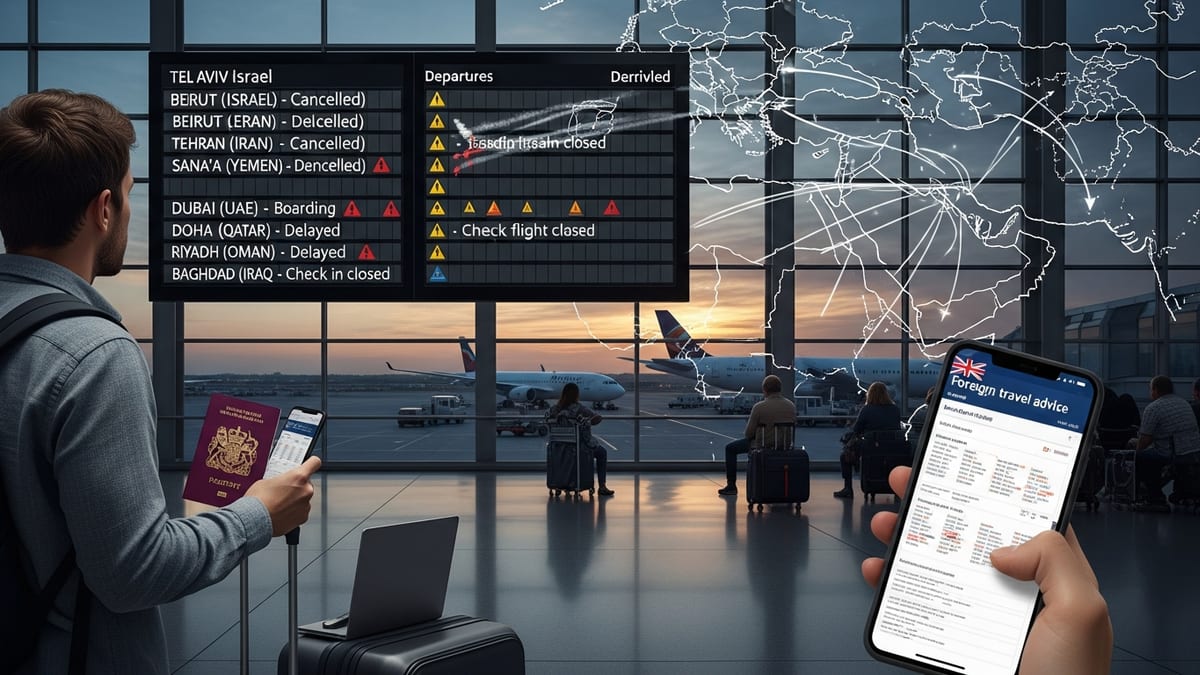
Latest FCDO Review Targets 13 Higher-Risk Destinations
Publicly available information from the UK government and advisory trackers shows that, as of late October 2026, the FCDO has grouped a set of 13 countries under significantly tightened warnings, reflecting concerns over conflict, regional tensions and limits on consular support. Several of these destinations are subject to whole-country guidance that either advises against all travel or against all but essential travel, while others carry upgraded regional cautions covering specific provinces, border areas or transit corridors.
Independent tools that monitor the FCDO database indicate that the latest round of revisions was consolidated around 27 October 2026, building on changes that had been rolled out earlier in the year. The current picture combines long-standing conflict zones with newer flashpoints affected by instability in parts of the Middle East and surrounding regions. For travellers, this means that a country which appeared relatively straightforward to visit a few months ago may now present more complex risk and insurance implications.
Media coverage in recent days has highlighted that some of the affected states are important hubs for connecting flights or traditional winter-sun getaways, making the changes particularly relevant in the run-up to the busy November to March travel season. The Foreign Office update therefore has potential consequences not only for leisure trips but also for religious journeys, business travel and overland routes that pass through higher-risk areas.
While the full list of 13 countries continues to be refined in real time on official portals, publicly available data and aggregator snapshots show that it includes a mix of destinations under blanket advice against travel and others where only certain governorates or border regions now carry stronger warnings.
From Whole-Country Bans to Regional Red Zones
Government data and independent trackers that mirror the FCDO feed suggest that part of the tightened posture involves countries already associated with active conflict or severe political instability. In several of these, the UK advises against all travel for the entire territory, citing the combined impact of armed violence, weak infrastructure, and limited capacity to assist British nationals in an emergency.
Alongside these are states where the FCDO distinguishes between relatively stable urban or coastal areas and zones close to borders, conflict frontlines or internal security operations. In such cases, the advice may be calibrated so that travel to major cities and resort regions remains possible with heightened awareness, while journeys to specified districts are classified as all but essential or are discouraged entirely. This tiered approach has been visible in previous advice for parts of Turkey and other large countries, and appears again in the latest round of 13 tightened profiles.
Observers tracking the changes note that some of the upgraded warnings reflect spillover risks from wider regional crises, particularly across parts of the Middle East. Airspace restrictions, missile and drone incidents, and disruptions to energy or transport infrastructure contribute to a more volatile operating environment even in locations that are not themselves at war. As a result, transit hubs and coastal cities that traditionally marketed themselves as safe gateways may now face more conditional assessments in FCDO text.
These gradations matter for travellers because the exact wording of the FCDO advice often shapes how airlines, tour operators and insurers interpret their own risk tolerance, even where basic commercial services such as flights and hotels continue to operate.
Practical Impact on Flights, Holidays and Insurance
For many British travellers, the most immediate effect of the tightened Foreign Office warnings will be in three areas: whether booked trips can go ahead, how insurance policies respond, and what flexibility airlines or tour companies provide if plans need to change. Published explanations from insurers and travel-industry briefings indicate that standard leisure policies frequently exclude cover for trips taken in direct contradiction of FCDO guidance that advises against all or all but essential travel.
In practice, this means that a holidaymaker who chooses to visit a country or region newly moved into a higher-risk category may find that medical cover, evacuation support or cancellation protection no longer applies, even if they were fully insured at the time of booking. Conversely, if the advice changes after a package holiday has been purchased, industry guidance suggests that travellers may be entitled to rebook or request refunds, particularly where tour operators judge that the trip can no longer be delivered safely or as advertised.
Airlines and cruise lines are also monitoring the evolving picture, especially for routes that traverse contested airspace or call at ports near areas of tension. While many carriers continue to serve major hubs under normal conditions, operational decisions such as rerouting flights, adjusting schedules or suspending particular legs can be influenced by the tenor of government advisories, insurance availability for aircraft and crews, and security assessments from aviation bodies.
For travellers planning complex itineraries that involve stopovers or multi-country journeys, the presence of any of the 13 countries on a route warrants a detailed check of ticket terms, insurance wording and the latest FCDO text. In some cases, simply changing a transit point or reconfiguring an overland segment may be enough to stay within both official guidance and policy conditions.
What Travellers Should Check Before Booking or Departing
Given how quickly advice can change in the current climate, publicly available information from both the FCDO and specialist advisory platforms stresses the importance of checking the exact wording of a country page immediately before booking and again shortly before departure. This applies not only to the final destination but also to any countries visited for transit, overland crossings or cruise calls, all of which can fall under specific regional cautions even if the national headline appears moderate.
Travel-advice trackers that compile snapshots of FCDO updates show that changes are sometimes made with limited notice, particularly when security incidents or diplomatic tensions escalate. As a result, alerts issued in late October 2026 may differ materially from guidance that was in place earlier in the month. Subscribing to email updates for individual destinations or monitoring official feeds can give prospective travellers a clearer sense of whether risk assessments are stable or trending in a more restrictive direction.
Experts in travel risk management also emphasise the need to cross-check Foreign Office advice with airline notifications, insurance policy clauses and, where relevant, employer travel policies. A destination flagged among the 13 tightened profiles may still be considered viable under certain controlled circumstances, for example for essential business, humanitarian work or family emergencies, but such journeys typically require more robust contingency planning and documentation.
Even where a country is not among those facing the strongest warnings, the current round of updates illustrates how secondary effects of regional crises can ripple outward, influencing aviation routes, border procedures and local attitudes to visitors far beyond the immediate conflict area.
Broader Shift in How Governments Signal Travel Risk
The UK adjustments form part of a wider global pattern in which governments are refining the way they communicate travel risk, moving from broad national labels to more granular, map-based or region-specific guidance. Publicly accessible trackers comparing advisories from the United Kingdom, United States, Canada and Australia show a growing emphasis on district-level warnings, thematic alerts on terrorism or civil unrest, and explicit explanations of how advice links to insurance and consular limitations.
In the UK context, the current list of 13 countries under tightened Foreign Office scrutiny sits within a much larger matrix of 200-plus destinations for which the FCDO publishes live advice. While only a small subset carry whole-country warnings, dozens more have partial cautions covering borderlands, remote provinces or areas with elevated crime or kidnap risk. The latest revisions highlight how that subset can expand or contract over time as conflicts flare, political settlements shift or security forces regain control of territory.
For the travel industry, these evolving signals have become a key input into route planning, product design and customer communication. Tour operators increasingly publish their own layered risk explanations that reference, but do not solely replicate, official notices, while airlines and cruise companies build advisory monitoring into their operational control centres. The Foreign Office tightening for 13 countries will feed into those private assessments over the coming weeks.
For travellers, the overarching message from publicly available government and industry information is that official advisories are no longer static background documents but live tools that shape how, where and on what terms trips can take place. The most recent UK update shows how quickly a change in security or diplomatic context can translate into concrete consequences for those planning to head abroad.