

More news on this day
Soaring fuel prices and mounting uncertainty in global oil markets are starting to ripple through Pattaya and Sattahip, two key coastal gateways in Thailand’s Eastern Seaboard, challenging operators that rely on marine transport and raising the prospect of higher costs for visitors in the months ahead.
Get the latest news straight to your inbox!
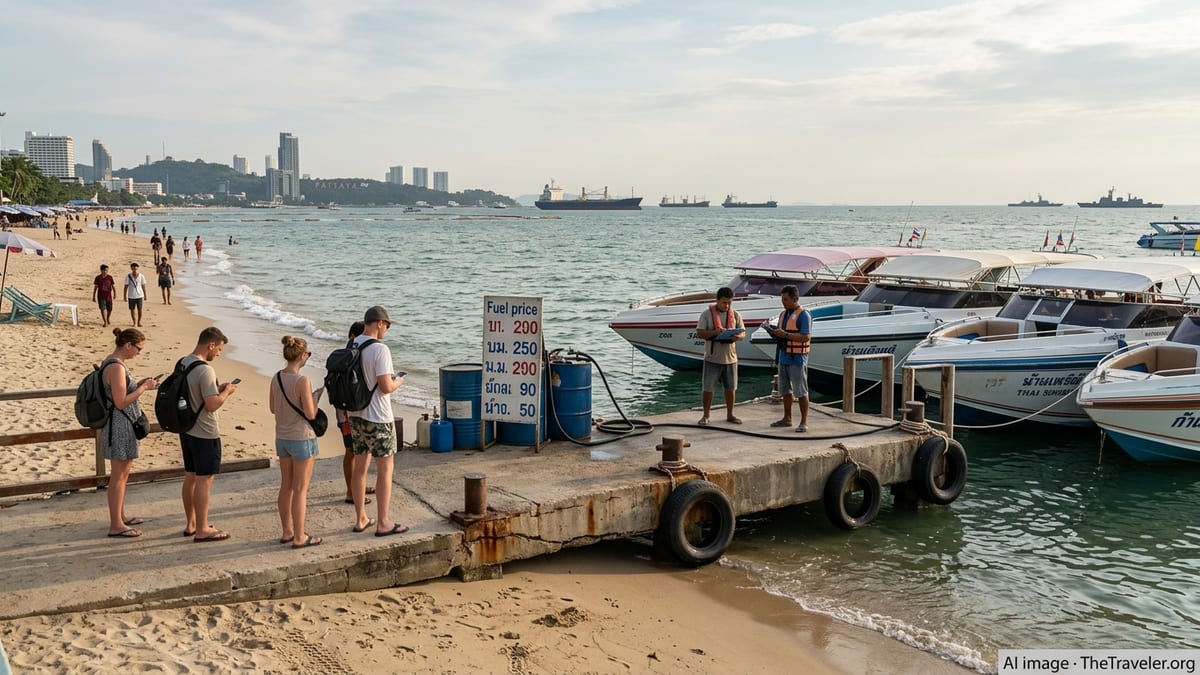
Global Oil Turbulence Meets Thailand’s Beach Belt
The latest spike in international oil prices, linked to conflict in the Middle East and concerns over shipping routes, is filtering into Thailand’s domestic fuel market and putting new pressure on an economy heavily dependent on imported energy. Publicly available data on Thailand’s energy mix shows that more than half of the country’s energy needs are met by imports, leaving local fuel costs sensitive to swings in global benchmarks and currency movements.
Recent coverage of Thailand’s tourism and energy outlook indicates that diesel and petrol prices had already risen through 2024 and 2025 in tandem with a sharp rebound in visitor numbers, higher aviation fuel demand and increased road transport linked to tourism recovery. Analysts now warn that if crude prices remain elevated, retail fuel in Thailand could move higher in 2026, eroding margins for transport providers from airlines and intercity buses to coastal ferries and speedboat tours.
National statistics show that fuel consumption tied to tourism, including jet fuel and gasoline, has been climbing as foreign arrivals recover toward pre pandemic levels. In this context, Pattaya and nearby Sattahip, which form part of the country’s Eastern Economic Corridor and serve as key hubs for both leisure travel and logistics, are particularly exposed to any sustained rise in energy costs.
Pattaya’s Marine Tours and Transfers Face Rising Operating Costs
Pattaya’s tourism economy is closely intertwined with marine transport, from speedboat transfers to Koh Larn and neighboring islands to day cruises, fishing charters and diving trips. Operators in similar coastal corridors elsewhere in eastern Thailand have reported that vessels can consume several thousand liters of fuel per day in high season, meaning even small per liter increases quickly add up across daily schedules.
Reports on ferry routes in eastern Thailand, including services to islands off Trat province, describe how one way trips can burn hundreds of liters of fuel, with operators warning that current price levels have pushed daily costs sharply higher. While Pattaya’s exact fuel bills differ by vessel size and route, industry observers see clear parallels, since many operators use comparable diesel powered boats and face similar maintenance, staffing and insurance expenses.
Travel coverage focused on Pattaya notes that demand for rooms and tours has remained relatively strong, even as hotel rates have climbed noticeably compared with 2023 and 2024. Online discussions by frequent visitors describe higher accommodation prices and a shift toward more commercially focused tourism, suggesting that some operators are already passing on part of their increased cost base to guests through room rates and excursion prices.
For now, most marine tour companies around Pattaya appear to be balancing higher fuel expenses with a combination of modest fare adjustments, tighter scheduling and cost controls. However, if diesel prices continue to rise, the pressure to increase ticket prices for island transfers, sunset cruises and private charters is likely to intensify, particularly during peak holiday periods when vessels are running at or near capacity.
Sattahip’s Naval Port Roots Complicate Tourism Development
South of Pattaya, Sattahip has been emerging as a quieter coastal alternative, known for beaches still used by the Royal Thai Navy and a growing number of small scale tourism businesses. Unlike Pattaya, where tourism dominates, Sattahip’s role as a strategic port means that fuel cost dynamics intersect with both military and civilian marine activity, from logistics and supply vessels to fishing boats and local ferries.
Publicly available information on Thailand’s fuel usage patterns highlights how diesel intensive sectors such as road freight and marine transport feel a disproportionate impact when prices rise. In Sattahip, where many local livelihoods are tied to the sea, increased fuel costs can simultaneously squeeze fishing income and raise the expense of operating small tour boats and shuttle services.
Local travel commentary notes that Sattahip has been trying to position itself as a family friendly and nature oriented destination, capitalizing on its bays, islands and access to the wider Eastern Seaboard. Yet higher fuel prices risk slowing investment in new routes, discouraging experimental excursions and pushing smaller operators to run fewer trips, especially on weekdays or during shoulder seasons when demand is more volatile.
Because Sattahip’s tourism base is smaller and less diversified than Pattaya’s, analysts caution that the town could feel the effects of sustained fuel cost pressures more acutely. Reduced trip frequencies, simplified itineraries and higher per head charges may gradually make it harder for Sattahip to compete with larger, better connected coastal destinations that can spread fuel expenses across higher volumes of visitors.
Government Price Controls Offer Only Temporary Relief
Thailand has a history of using the Oil Fuel Fund and related policy tools to stabilize retail prices, particularly for diesel, during periods of global volatility. Recent public announcements have described short term measures that cap diesel at a set price per liter for limited periods, effectively slowing the pass through of international market shocks to domestic consumers and transport firms.
Economic analysis suggests that while such interventions can buy time for tourism reliant regions like Pattaya and Sattahip, they do not fully shield operators from higher underlying costs. The fund eventually needs to be replenished, and once caps are eased, pent up price adjustments can emerge, especially if the baht weakens against the dollar or if tensions affecting key shipping routes persist.
Industry outlook reports from Thai financial institutions emphasize that transport and tourism growth in the medium term will continue to lift overall fuel demand. That trend implies that even with efficiency gains and some shift toward alternative fuels, exposure to oil price cycles will remain a structural feature of Thailand’s beach tourism economy, including the Eastern Seaboard.
For businesses along the Pattaya Sattahip corridor, this means planning beyond temporary subsidies and preparing for a scenario in which fuel constitutes a steadily larger share of operating costs. That preparation may include investments in more efficient vessels, route optimization software, or partnerships that allow operators to share capacity during quieter periods.
What Travelers Should Expect in Pattaya and Sattahip
Travelers heading to Pattaya and Sattahip in 2026 are unlikely to see abrupt disruptions, but they should be prepared for a gradual rise in prices linked to transport and marine activities. Travel industry reporting indicates that Thailand is still targeting higher overall arrivals, particularly from regional markets, and that demand for coastal getaways remains robust despite cost pressures.
Visitors may notice higher prices for airport transfers, private taxis and long distance buses feeding into Pattaya, reflecting cumulative increases in fuel and wage costs. On the water, the most visible changes are likely to be in the pricing of speedboat trips, snorkeling excursions, island hopping packages and small group charters, which are directly exposed to fluctuations in diesel costs.
Some operators are responding by adjusting itineraries to shorten cruising time, consolidating departures to run fuller boats, or bundling transport with food and activities to maintain perceived value even as underlying expenses rise. Travelers who are flexible with timing and willing to compare different providers may still find competitive deals, particularly during weekdays or outside major holiday peaks.
For Sattahip, where tourism is still developing, the key question is whether rising fuel prices will slow new product offerings or push visitors to better known hubs such as Pattaya or further afield to islands in the Gulf of Thailand and the Andaman Sea. For now, publicly available information suggests that both Pattaya and Sattahip remain firmly open for business, but the cost of keeping their marine based tourism afloat is clearly heading higher.