


More news on this day
A residential luxury cruise marketed as an endless global voyage has come to an abrupt halt in Cambodia, with about 200 passengers left suddenly disembarked after the ship’s operator suspended the three and a half year itinerary citing soaring fuel costs in Asia.
Get the latest news straight to your inbox!
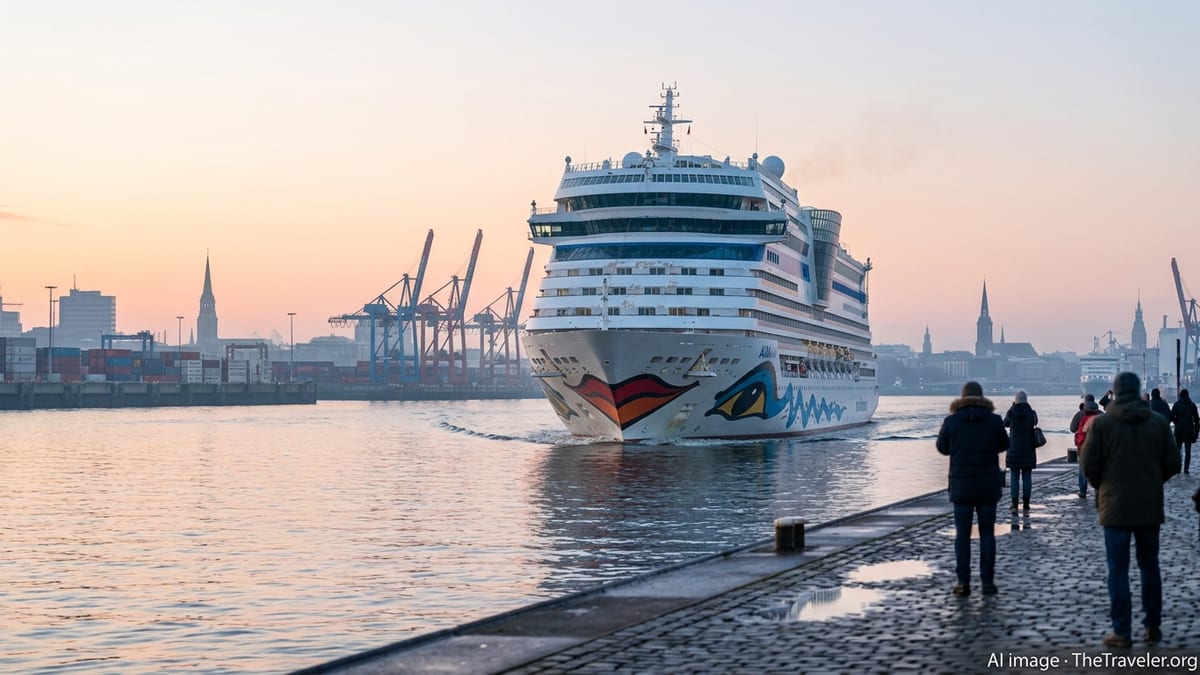
Residential “endless cruise” cut short in Cambodia
The Bahamas flagged Villa Vie Odyssey, a former traditional cruise ship converted into a floating apartment style residence, docked in the port of Sihanoukville on Cambodia’s southern coast earlier this week. Passengers had expected only a routine stop on a years long circuit that began in Belfast in October 2024 and was promoted as a continuous global journey where residents could live, work and retire at sea.
Instead, reports indicate that guests were told the voyage would end and that they would need to disembark with their belongings in Cambodia, after operator Villa Vie Residences announced it was suspending operations. Coverage from outlets including the Associated Press, Channel NewsAsia and The Guardian describes around 200 people being affected, a fraction of the roughly 650 passenger capacity for which the ship was redesigned but still a significant community suddenly left without their floating homes.
The company had marketed long term stays and even “cruise for life” style packages, pitching the Odyssey as an alternative to land based retirement and conventional condominium living. Many passengers had sold or rented out their homes to finance multi year contracts on board, expecting the ship to function as a stable base while circling the globe.
Publicly available information shows that the current voyage was timetabled to run for about three and a half years, with a subsequent world itinerary tentatively promoted through 2030. The sudden halt in Southeast Asia, roughly two years into the program, has left residents facing immediate practical questions over where to stay and how to continue their travels.
Soaring fuel prices and a fragile business model
In statements cited across international coverage, Florida based Villa Vie Residences pointed to a steep rise in fuel costs in parts of Asia as the key factor in halting the cruise. The company has said that per cabin monthly fuel expenses, which it historically estimated at about 1,800 US dollars, have recently climbed to between 6,000 and 8,000 dollars in the region.
Reports link that increase to the broader energy volatility and shipping disruptions associated with conflict around the Strait of Hormuz and in the wider Gulf. Higher marine fuel prices, combined with longer rerouted passages that avoid sensitive sea lanes, have increased costs for many operators sailing in and around Asia. For a residential ship operating on relatively slender margins and promising stable monthly fees to long term residents, those increases appear to have been decisive.
Specialist cruise media and mainstream outlets note that Villa Vie had already faced delays and operational hurdles earlier in the project, including a prolonged stay in Belfast during the vessel’s refit phase in 2024. Enthusiast forums and passenger blogs referenced in recent reports had raised questions over the sustainability of offering multi year, all inclusive living at sea at advertised price points even before the latest spike in fuel expenses.
According to published coverage of regulatory filings and company statements, Villa Vie Residences is now seeking to restructure and secure new financing while operations remain suspended. As of late October 2026, there is no confirmed timeline for when, or if, the Odyssey will resume sailing with residents aboard.
Passengers face housing, visa and travel scramble
The abrupt termination has immediate consequences for those still on board at the time of the announcement. Local and regional media report that approximately 200 passengers were asked to come ashore in Sihanoukville, leaving them responsible for finding hotels, arranging onward travel and navigating visa requirements in Cambodia and neighboring countries.
Accounts compiled by news outlets from social media posts and public commentary by residents describe a scramble for accommodation in the coastal city, with some passengers moving into nearby resorts while they weigh options for flights to Bangkok, Singapore, European hubs or the United States. Others are reported to be considering continuing their travels independently through Southeast Asia while they wait for clarity on any refunds or longer term arrangements.
Several reports highlight that many of those affected are retirees who had committed substantial savings to the voyage, sometimes selling property or long held assets to secure cabins on multi year contracts. For these travelers, the end of the cruise represents not only a disrupted trip but also the loss of what had effectively become their primary residence.
Coverage in outlets such as the Independent and Channel NewsAsia notes that the company has spoken publicly about working with passengers on temporary living arrangements and exploring charter options. However, as of October 30, 2026, there is limited detailed information available on the scale or duration of any assistance, and many residents appear to be funding hotels and flights out of pocket while potential compensation is assessed.
Questions for the residential cruising concept
The situation aboard Villa Vie Odyssey is prompting broader debate about the emerging niche of residential and “endless” cruising, in which cabins are sold or leased on multi year contracts rather than booked as short holidays. Several projects in this space, from ocean going apartment ships to converted former liners, have positioned themselves as innovative lifestyle products for digital nomads, remote workers and retirees seeking a community at sea.
Industry observers quoted across travel and business coverage suggest that the Cambodia incident illustrates how sensitive such models can be to operational shocks, including fuel price volatility, unexpected repair costs or geopolitical disruptions along planned routes. Unlike conventional cruises, where an itinerary change can be managed over days or weeks, a residential program ties residents’ long term housing and finances to the ship’s continuing viability.
Travel analysts interviewed in existing reporting point out that while residential cruising can offer appealing predictability in theory, contracts and financial structures need to be robust enough to handle extended periods of elevated operating expenses without requiring sudden termination. Prospective residents are being urged by consumer advocates to review cancellation clauses, escrow arrangements and financial disclosures closely before committing large upfront payments to multi year sea based housing schemes.
The Cambodia episode also underscores the practical challenges of being stranded mid itinerary on a vessel marketed as a home. Passengers currently in Sihanoukville must now address storage or shipment of belongings, continuity of medical care, digital connectivity for remote work and potential tax residency questions that may arise if they return unexpectedly to their countries of origin.
Implications for future long haul cruises in Asia
Beyond the specific case of Villa Vie Odyssey, the suspension highlights the pressure that fuel costs and regional instability can place on extended cruise operations in Asia. Since early 2026, a series of incidents in and around the Strait of Hormuz and the wider Middle East has led many cruise lines to adjust or cancel itineraries, increasing transit times and fuel usage for ships repositioning between Europe and Asia.
Larger mainstream operators have in many cases been able to absorb higher bunker prices or redeploy ships to alternative routes, spreading costs across global fleets. Smaller companies with single vessel operations and niche products have found it harder to adapt when faced with sustained cost spikes or unexpected detours.
Published schedules for the 2026 to 2027 winter season already show a greater concentration of big ship capacity in relatively sheltered parts of Asia, including coastal Japan, South Korea and Southeast Asian loops that avoid sensitive chokepoints. Analysts note that long, multi year continuous world itineraries like the one marketed for the Odyssey may become rarer until energy markets stabilize and insurance and security risks ease.
For travelers considering extended cruising in the region, the events in Cambodia are likely to reinforce the importance of flexible backup plans. Travel advisors and consumer organizations are emphasizing travel insurance that covers supplier default where available, maintaining access to emergency funds off ship and retaining at least one viable housing option on land in case a floating home suddenly ceases to sail.