


More news on this day
Germany has renewed attention to its long-standing travel warning for Syria, updating official guidance on October 30, 2026, as regional tensions, cross‑border attacks and volatile airspace conditions raise fresh concerns for travelers across the Middle East.
Get the latest news straight to your inbox!
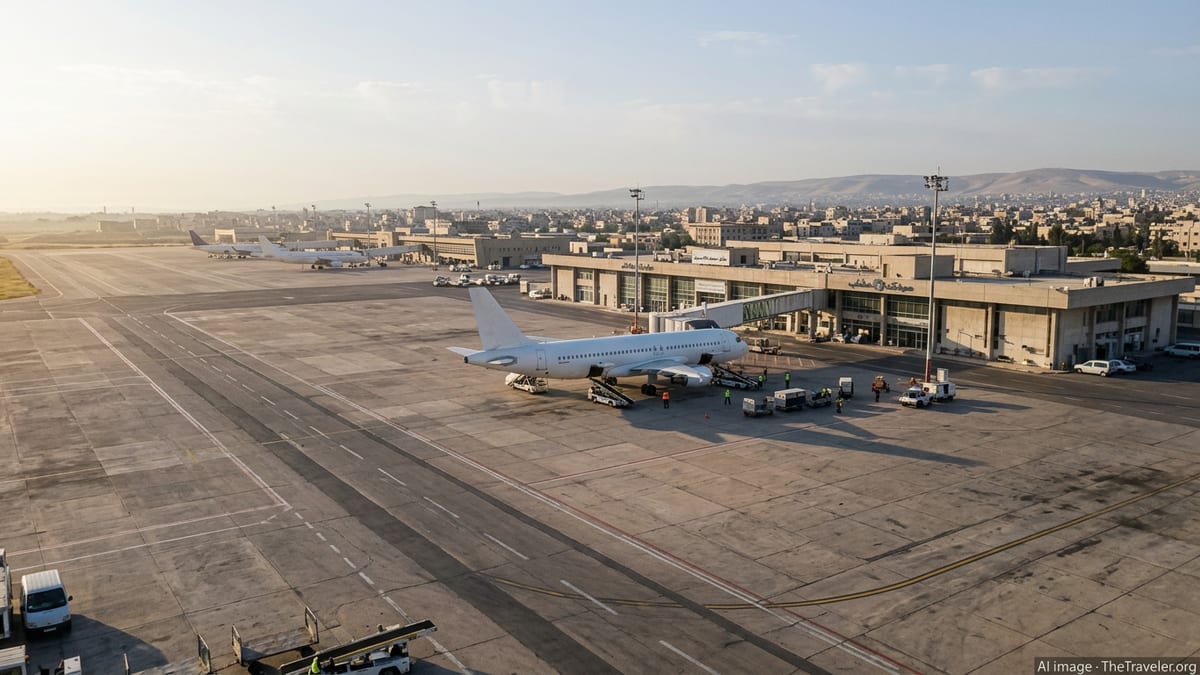
Travel Warning for Syria Remains at Highest Level
Publicly available information from the German Foreign Office shows that the existing blanket warning against all travel to Syria remains in force for the entire country, with the latest update to the advisory dated October 30, 2026. The advisory continues to classify Syria as a destination where travel is strongly discouraged due to armed conflict, terrorism, and the absence of functioning consular support on the ground.
The guidance notes that the German embassy in Damascus is closed to the general public, with responsibility for emergency assistance and other consular services for German nationals in Syria transferred to the German embassy in Beirut. The advisory stresses that, in acute emergencies, support for German citizens inside Syria is extremely limited, reflecting the broader collapse of basic state services and security in large parts of the country.
The country assessment highlights repeated security incidents in Damascus during the summer of 2026, including attacks with explosive devices that caused fatalities and injuries. It also points to an unstable security environment elsewhere in Syria, marked by localised clashes, criminal violence and the continued threat posed by underground cells of the so‑called Islamic State.
Travel information portals that track European government advisories mirror this picture, listing Syria under a full travel warning category and advising those still in the country to maintain a robust personal security plan and prepare for sudden changes in border access or domestic movement.
Regional Tensions Drive Fresh Update on Security Risks
The latest German update specifically references the broader security situation in the Middle East, underlining concerns about spillover from regional conflicts. The advisory points to ongoing risks linked to the confrontation involving Iran and to military engagements that have recently intensified between Houthi forces in Yemen and Saudi Arabia. These developments, according to the published guidance, have further increased the risk of sudden regional escalation.
The Foreign Office warns that renewed fighting and missile or drone attacks in the wider region could trigger rapid and extensive airspace restrictions, including full closures and flight cancellations. Government guidance highlights that, as seen earlier in 2026, such disruptions can affect not only direct services but also transit passengers who rely on Middle Eastern hubs for onward connections between Europe, Asia and Africa.
The updated section on regional security underscores that an elevated abstract risk of terrorist attacks persists across multiple countries. While the core of the German warning remains focused on Syria’s internal conflict and law‑and‑order breakdown, officials have widened the contextual framing to note that fast‑moving events elsewhere in the Middle East can directly affect travel planning, even for those not intending to enter Syrian territory.
European neighbours have issued similarly strict assessments. Austria’s Foreign Ministry, for instance, continues to apply its highest security level to Syria and strongly urges remaining citizens to leave, citing an “increased threat level” in the region and the potential for further deterioration in conditions on the ground.
Confusion Over ‘New’ Warning as Existing Guidance Reaffirmed
The fresh German update has prompted discussion inside Syria after national media there suggested that Berlin had issued a new travel warning targeting the country. Coverage from the state news agency Sana reports that the German chargé d’affaires in Damascus publicly rejected claims of an entirely new advisory, stating that Germany’s underlying Syria guidance remains unchanged and that only the section dealing with regional developments has been revised.
This clarification underscores a key nuance for travelers and local tourism operators. Germany has maintained a categorical warning against all travel to Syria for years, and the October 2026 revision does not introduce a new prohibition. Instead, it reiterates the existing stance and adds detail about heightened risks linked to regional power dynamics, cross‑border attacks and the potential for sudden disruption of international flights.
Despite periodic announcements from Syrian aviation authorities about expanding international routes, including new or resumed services to German cities, European consular information stresses that organized tours or commercial flight options do not reduce the security risks that underpin the travel warnings. Advisory texts circulated via official and commercial information platforms note that participation in group trips or charter packages offers no special protection from terrorism, arbitrary detention or criminal activity.
The episode illustrates how incremental updates to language on regional security can be interpreted locally as a shift in policy, even when the core travel classification for Syria remains unchanged. For travelers and diaspora communities, the distinction matters less than the practical effect: European governments continue to counsel against all non‑essential presence in the country.
Implications for Air Travel and Transit Through the Region
German guidance emphasizes that regional tensions can have rapid knock‑on effects for air travelers, even those not planning to enter Syria itself. Previous escalations in 2026 resulted in temporary closures of airspace, flight diversions and cancellations affecting major hubs on the Arabian Peninsula and in neighbouring states, leaving some passengers stranded or facing significant delays.
Travel safety information notes that any renewed escalation involving Iran or Houthi forces could again lead to last‑minute route alterations and rerouting of traffic away from contested areas. In this environment, passengers are advised by multiple national travel advisories to monitor airline communications closely, remain flexible with itineraries and be prepared for short‑notice changes to departure and arrival times.
Other governments have updated their own notices in similar language. The latest Syria advisory from the United States, dated October 23, 2026, maintains a “Do Not Travel” classification and highlights the heightened risk of armed attacks and terrorism in the region, including incidents attributed to Iranian‑aligned groups that have targeted airports and critical infrastructure in neighbouring countries.
For transit passengers, one practical consequence is the recommendation to consider alternative routings that avoid sensitive air corridors where possible, particularly for trips booked well in advance. While airlines retain primary responsibility for operational decisions, the alignment in official travel advice across European states and North America signals an expectation of continued volatility in regional aviation.
What the Warning Means for Prospective Travelers
For residents of Germany and other European countries planning trips that might intersect with Syria or its borders, the renewed focus on the travel warning carries several concrete implications. German guidance urges individuals to register in crisis‑preparedness systems before departure to the wider region, keep travel documents up to date and prepare contingency plans for extended stays in third countries should return routes be disrupted.
Information published by visa and consular advisory services reiterates that entry into Syria for German, Austrian and Swiss nationals requires a visa obtained in advance from a Syrian diplomatic mission, and that visas are not reliably issued at land borders or upon arrival. Those who attempt to cross without proper documentation risk lengthy detention and criminal penalties under Syrian law.
Travel notices also caution that individuals who, despite the warning, decide to enter Syria should be aware that consular help may not be available in cases of arrest, kidnapping or sudden border closures. Authorities recommend that anyone contemplating such travel consider detailed legal and family arrangements in advance, including powers of attorney and emergency contacts, due to the difficulty of organizing support once inside the country.
Against the backdrop of intensifying regional frictions, the renewed German advisory serves as a reminder that Syria remains one of the most hazardous destinations on the global travel map. For most leisure and business travelers, the practical takeaway remains straightforward: avoid all trips to Syria and build flexibility into any itinerary that relies on air routes passing through its neighbourhood.