


More news on this day
More than 200 passengers who bought into the dream of life at sea on a luxury residential cruise are stranded in Cambodia after the MV Odyssey halted its three-and-a-half-year global voyage, with the ship’s operator citing a dramatic surge in fuel costs that has rendered the business model unworkable.
Get the latest news straight to your inbox!
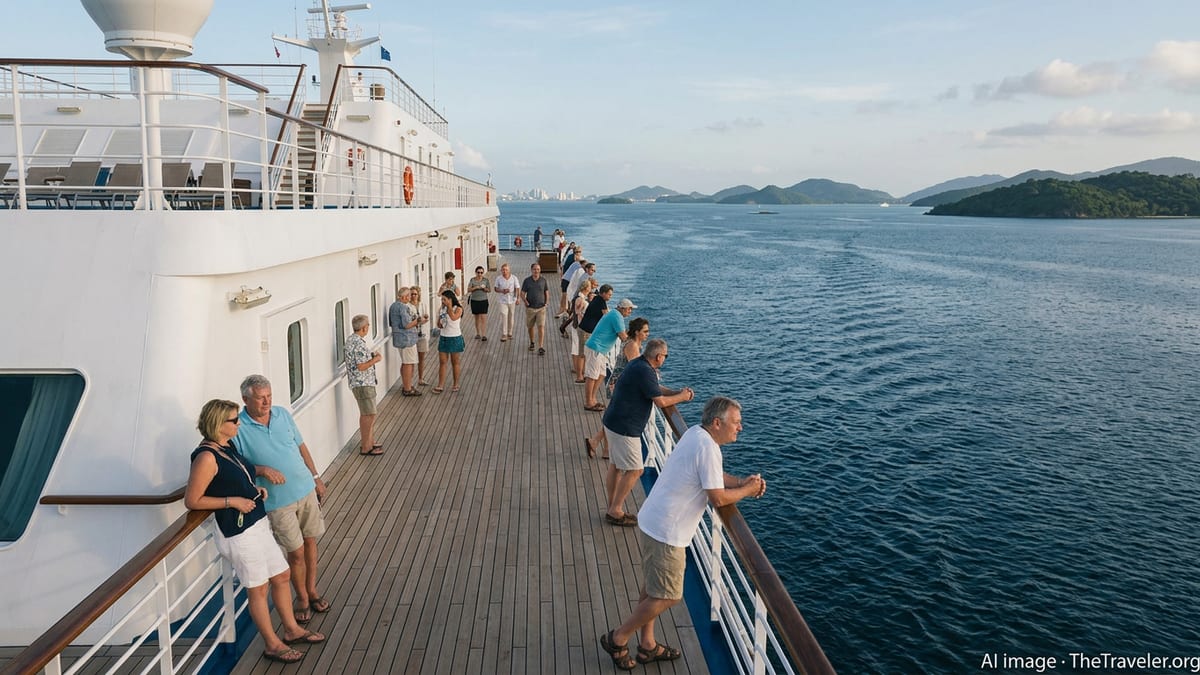
Residential cruise halted in Cambodian port
The MV Odyssey, a nearly 200-meter vessel marketed as a floating residential community, is currently docked in the port city of Sihanoukville on Cambodia’s Gulf of Thailand coast. The ship’s operator, Florida-based Villa Vie Residences, announced on Tuesday that it was suspending operations partway through what had been billed as a continuous voyage around the world.
Publicly available information indicates that around 200 to 203 passengers and more than 150 crew members were on board when the decision was made. The Odyssey has capacity for about 650 residents, but reports describe a much smaller community of long-term passengers who had either purchased or leased cabins as primary homes.
The voyage began in October 2024 from Belfast, Northern Ireland, with plans to spend three and a half years visiting close to 150 countries. Marketing materials invited would-be residents to “make the Odyssey your permanent home,” positioning the project as an alternative to land-based retirement, remote working and conventional cruising.
Instead, residents found their journey abruptly interrupted more than 750 days into the itinerary, with no clear timeline for the ship’s next move or a definitive plan for how, or if, the voyage might resume.
Fuel costs quadruple as geopolitical tensions ripple at sea
According to published coverage of the company’s statements, Villa Vie Residences attributed the suspension directly to what it described as “extraordinary increases” in marine fuel prices following the outbreak of war involving Iran earlier this year. The operator reported that its fuel costs had risen more than 300% since the start of the conflict, a level it said its original pricing structure could not absorb.
Before the latest surge, the company has said it was paying an average of about 700 dollars per ton for fuel. That figure reportedly jumped to between 2,000 and 3,000 dollars per ton in recent months. The Odyssey’s consumption, estimated in media interviews at 700 to 800 tons per month, translates into fuel bills that can now run into the low millions of dollars over the same period.
Per-cabin fuel costs tell a similar story. Information shared by the operator and cited in multiple reports shows monthly fuel expenses per cabin in parts of Asia rising from around 1,800 dollars to as much as 8,000 dollars. Even with efforts to slow the itinerary and extend port stays to reduce consumption, the company has said those steps were not enough to offset the jump in prices.
Marine gasoil, the fuel used by the Odyssey, has been particularly affected. Industry data referenced in business coverage indicates that benchmark prices in major bunkering hubs such as Singapore have roughly doubled compared with levels before the Iran conflict, putting pressure on cargo shipping, cruises and other sectors that rely on the same fuels.
Life and money tied up in a floating home
The Odyssey was not marketed as a traditional cruise so much as a movable neighborhood at sea. Passengers could buy cabins outright, enter rent-to-own agreements or lease them for extended periods. Brochures cited in news reports put the purchase price of permanent residences from about 120,000 to 440,000 dollars, depending on cabin size and location. Monthly service and lifestyle fees ranged from roughly 2,000 to 10,000 dollars, with some shorter-term rentals advertised from around 3,500 dollars a month.
On board, residents had access to multiple bars and restaurants, a pool deck and recreation spaces, including a pickleball court. The itinerary promised a rolling sequence of ports on all seven continents, with advertised stops this year in destinations from Tonga to Australia and plans to be in India toward the end of 2026.
Many of those on board reportedly rearranged their lives around the project, selling homes or possessions to fund cabin purchases and long-term stays at sea. Travel features and broadcasts in recent days have highlighted residents who saw the ship as a base for digital work, extended retirement or a years-long travel sabbatical, and who now face finding temporary accommodation in Cambodia or returning to home countries earlier than expected.
Residents had already experienced disruptions. Prior repairs and delays kept the ship in Belfast for months in the early stages of the voyage, with the operator acknowledging that those setbacks had cost millions. The latest halt comes after passengers were asked in recent weeks to consider additional contributions to help cover fuel bills, an appeal that appears to have met resistance.
Support ashore, but onward travel left to passengers
Statements from Villa Vie Residences, as reported by international media, indicate that the company is covering hotel costs and local transportation for disembarked residents in Sihanoukville. The operator has said it is “working with residents to coordinate disembarkation and temporary living arrangements,” in some cases arranging short-term stays in nearby accommodation while longer-term options are considered.
However, reports also note that the company is not funding passengers’ onward travel from Cambodia back to their home countries or to other destinations. That responsibility is falling to residents themselves, many of whom had expected to remain at sea for months or years and had not budgeted for sudden long-haul flights, interim housing and storage for possessions.
The Cambodian port city, a gateway to the Gulf of Thailand and nearby islands, is an established cruise stop but not a typical base for North American or European travelers planning extended stays. Travel industry observers say the combination of last-minute demand for accommodation, limited direct long-haul flight options and peak-season pricing in parts of Asia is likely to push up costs for those trying to rebook complex itineraries at short notice.
While some residents appear to be treating the interruption as an unexpected detour, others are publicly questioning what consumer protections apply when a residential cruise of this type is suspended mid-voyage and what recourse, if any, may exist for significant upfront investments.
Restructuring plans and questions for residential cruising
Villa Vie Residences has stated on its website that it will spend the next 60 days evaluating “restructuring and recapitalization alternatives,” emphasizing that no particular outcome is guaranteed. Coverage from financial and broadcast outlets indicates that the company is seeking new financing while also considering changes to its pricing model, including proposals for additional monthly fees of about 500 dollars per cabin on top of existing surcharges if fuel prices remain elevated.
In an interview cited by U.S. television news, the company’s chief executive said the operator is preparing to file for bankruptcy protection following the shutdown, underscoring how quickly the spike in fuel costs overwhelmed the venture. The timing and jurisdiction of any filing, as well as the implications for passengers who bought or leased cabins, have not yet been fully detailed in public documents.
The Odyssey’s difficulties highlight the exposure of residential cruising concepts to volatile operating costs. While conventional cruise lines may adjust itineraries, fares and fuel hedging strategies across large fleets, a single-ship residential project with fixed monthly pricing has less flexibility when expenses such as fuel suddenly surge.
Analysts tracking travel and maritime sectors note that the same fuel dynamics are affecting airlines and traditional cruise operators, but the impact on a small, niche brand can be more acute. The Odyssey had positioned itself as a more affordable entry into residential life at sea compared with earlier ultra-luxury concepts. The fuel shock has tested that premise, raising broader questions about whether multi-year, fixed-price world voyages can be insulated from geopolitical and commodity market swings.
Ripple effects for would-be residents and future projects
For travelers and retirees considering similar residential-at-sea offerings, the situation in Sihanoukville is likely to become a case study. Prospective passengers may scrutinize how operators handle reserves for fuel and maintenance, the legal structure of cabin ownership and what protections exist if a voyage is curtailed ahead of schedule.
Travel planners note that many of the Odyssey’s residents purchased cabins through installment plans, with contracts that framed their stay as long as 15 years in some cases. The sudden halt less than two years into the global circuit will likely influence how regulators and consumer advocates evaluate marketing for future residential cruise projects.
For now, passengers of the MV Odyssey are focused on immediate logistics: securing flights, arranging storage or shipping for belongings and deciding whether to wait in Cambodia in the hope that the ship might eventually sail again. As the fuel market remains volatile, the long-term future of the voyage, and of similar concepts promising life aboard a continuously traveling ship, remains uncertain.