

More news on this day
European budget carriers are racing to shield their summer schedules as a tightening jet fuel market, driven by the conflict in the Middle East and the partial closure of the Strait of Hormuz, raises the risk of shortages and targeted flight cuts across key holiday routes.
Get the latest news straight to your inbox!
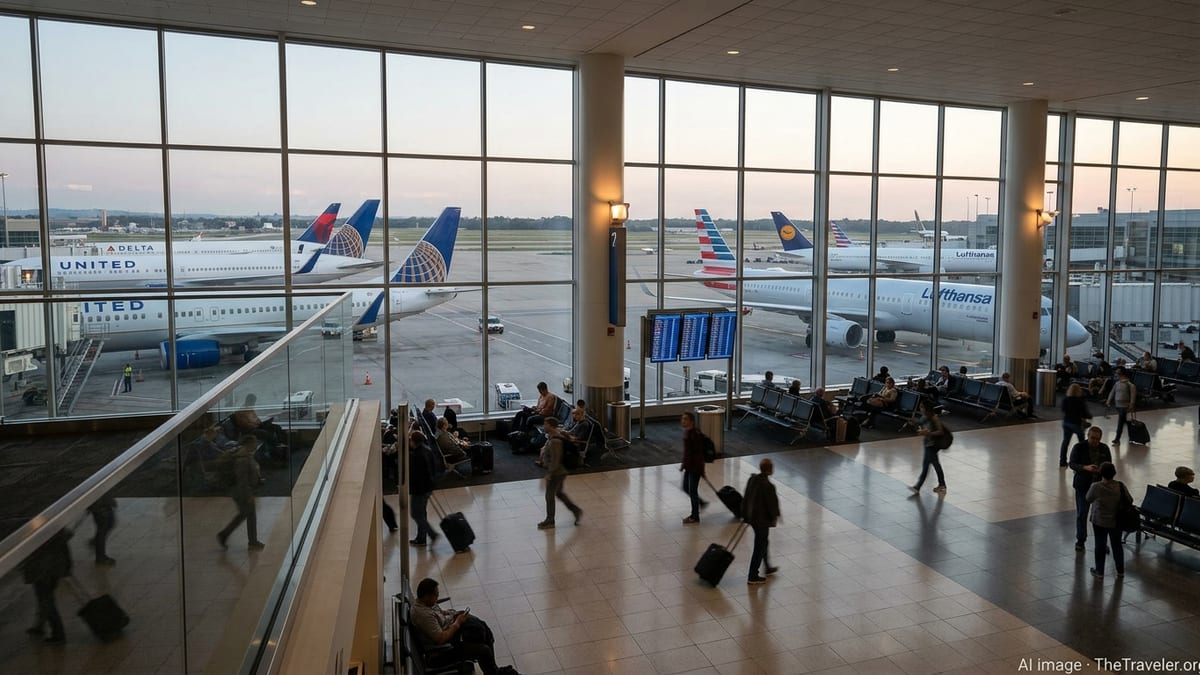
Middle East Conflict Pushes Jet Fuel Supply to the Brink
The latest warnings from analysts and industry reports indicate that Europe is entering the peak booking period with an unusually fragile fuel supply backdrop. The 2026 conflict involving Iran has disrupted crude and refined product flows through the Strait of Hormuz, a corridor that traditionally supplies a large share of Europe’s jet fuel via Gulf refineries. Benchmark oil prices have surged, but the immediate concern for airlines is not only cost, it is the physical availability of kerosene at major hubs.
European energy and aviation briefings describe the situation as a developing jet fuel crisis rather than a fully fledged shortage. Storage in some markets has cushioned the first weeks of disruption, yet refineries and distributors are already reallocating volumes, prioritising nearer markets in Asia and the Middle East. As a result, Europe is competing harder for every barrel, drawing more supplies from the United States and North Africa and putting pressure on logistics networks that were not designed to replace such a large volume of Gulf product at short notice.
Policy documents and corporate guidance issued in recent weeks highlight that the region entered this phase with limited room for manoeuvre after a harsh winter and several years of underinvestment in refining. Energy majors had warned that a prolonged shutdown of traffic through Hormuz could translate into outright fuel shortages in Europe by April, a timeline that is now being tested as airlines ramp up flying ahead of the summer season.
Ryanair Flags Risk of Fuel Gaps From Late Spring
Ryanair, Europe’s largest low cost airline by passenger numbers, has become a focal point in the emerging debate over how serious the fuel crunch could become for travellers. Public comments from its leadership and coverage in European financial media show that the carrier has locked in a significant portion of its fuel needs at hedged prices through early 2027. That financial protection, however, does not guarantee that airports will have enough jet fuel on the apron when its aircraft arrive.
In recent interviews summarised across business outlets, the airline has warned that if the Middle East conflict and shipping disruption persist, shortages of 10 to 20 percent at certain European airports from late May or June cannot be ruled out. Internal planning scenarios described in press reports suggest that Ryanair could respond by trimming 5 to 10 percent of capacity at the most constrained hubs, concentrating cuts on routes where passengers have alternative options and on frequencies rather than entire destinations.
For now, Ryanair continues to operate its planned spring schedule and continues to talk up demand for peak summer travel. But the company has started signalling to investors and travellers that its growth plans depend on the crisis easing before the height of the school holiday period. If supply tightens further, Ryanair is expected to prioritise flights to core leisure markets such as Spain, Italy, Greece and Portugal, even if that means temporarily reducing secondary city links.
EasyJet Balances Price Shock With Operational Flexibility
EasyJet, another major European budget carrier, is facing many of the same pressures but is taking a slightly different tack. Publicly available information from investor updates and aviation forums shows that the airline has emphasised its diversified intra European network and relatively high proportion of flights that do not rely on Gulf sourced fuel shipments. This gives the carrier some ability to rebalance capacity across its bases if specific airports start to experience rationing or delivery delays.
At the same time, easyJet has been hit hard by the spike in jet fuel prices that has accompanied the supply disruptions. Analysts quoted in European business coverage stress that the airline’s asset light model, which relies heavily on leased aircraft and tight cost control, leaves it sensitive to rapid increases in operating costs. Fuel now represents a larger share of each ticket sold, putting upward pressure on fares even before any outright shortages translate into cancellations.
Executives speaking at recent industry events, as reported by Spanish and UK media, have argued that the combined effect of higher fuel prices and looming blending mandates for sustainable aviation fuel could undermine the economics of short haul travel if not phased carefully. For travellers, that debate may remain largely invisible, but the near term consequence is that easyJet is reviewing its schedule and yield management more frequently, reallocating aircraft to routes where demand can absorb higher prices and keeping more slack in the system to cope with localised fuel constraints.
Airports and Regulators Prepare for Possible Rationing
While airlines work on their own contingency plans, airport operators and national authorities are quietly drawing up playbooks for managing a potential fuel squeeze. Aviation focused outlets have reported on recent letters from European airport associations warning that, without a resumption of stable flows through the Strait of Hormuz, systemic jet fuel shortages in the European Union could emerge within weeks. Some hubs have already introduced caps on uplift or requested that airlines carry extra fuel from origin airports when possible.
In Italy, for example, capacity restrictions and fuel caps at airports such as Bologna, Milan Linate, Treviso and Venice have served as an early warning of what a broader shortage might look like. Reports from pilots and passenger advocacy groups describe airlines accepting payload limitations, last minute refuelling changes and occasional diversions to ensure that safety margins are preserved even when local storage is under pressure.
European institutions, according to recent policy briefings, are monitoring the situation but have so far stopped short of coordinating a bloc wide emergency response specific to aviation fuel. Member states control their own strategic reserves, which typically mix gasoline, diesel and kerosene, and any move to tap those stocks for airlines would need to be balanced against wider energy security concerns. That leaves airports and carriers to manage the first phase of the crisis largely through commercial arrangements and ad hoc operational measures.
What Travellers Can Expect in the Months Ahead
For passengers planning summer holidays, the picture remains fluid. Industry data trackers show that seat capacity across Europe is still scheduled to grow compared with last year, with Ryanair, easyJet and other low cost carriers leading the expansion. At the same time, warnings about potential cuts mean that these schedules should be viewed as provisional if the conflict in the Middle East and the associated shipping constraints drag on into May and June.
Reports across travel and business media suggest that, in a sustained fuel squeeze, airlines are more likely to trim frequencies or reduce marginal routes than to abandon major holiday destinations altogether. That would translate into fewer daily options, more crowded flights and higher average fares rather than mass cancellations, at least in the early stages. Carriers can also respond by increasing fuel surcharges or tightening fare classes, measures that spread the cost impact without rewriting the timetable overnight.
Travel experts cited in recent coverage recommend that passengers build extra flexibility into their plans in case of last minute changes, choose earlier flights in the day where possible and keep a close eye on airline notifications in the weeks before departure. With both Ryanair and easyJet signalling that they are prepared to adjust schedules quickly if supply conditions deteriorate, the coming months are likely to test how resilient Europe’s low cost model can be when confronted not just with expensive fuel, but with the risk that there may not be enough of it at all key airports exactly when it is needed most.