

More news on this day
Caribbean destinations from Aruba to Cuba are confronting deepening fuel and energy shortages just as the region heads into peak summer travel season, creating a patchwork of flight disruptions, power cuts, and cost pressures that threaten to upend vacation plans across one of the world’s most tourism‑dependent regions.
Get the latest news straight to your inbox!
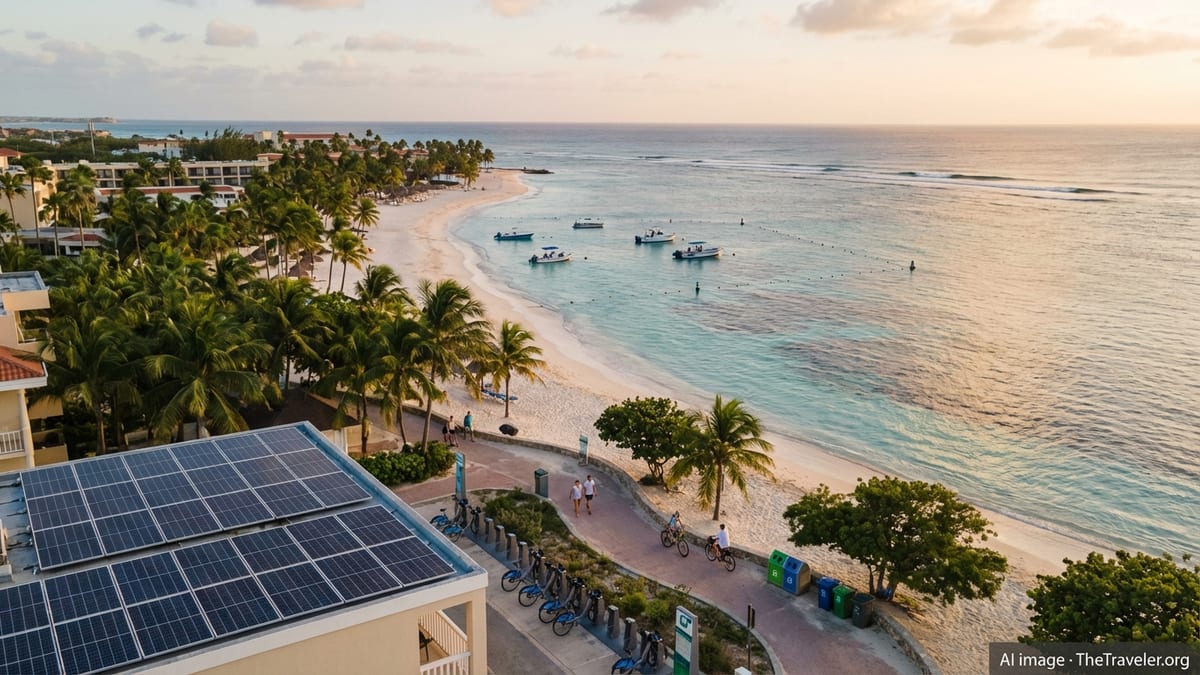
Aruba’s Refinery Turmoil Adds New Uncertainty
Aruba, long marketed as a reliably sunny escape with comparatively stable infrastructure, is now facing fresh questions over its energy future. Publicly available information shows that the island’s historic refinery complex in San Nicolas is being moved toward dismantling, after years of stalled restart efforts and environmental concerns. Local coverage indicates that authorities are weighing new uses for the site, including fuel storage and logistics, but clear replacement capacity has yet to emerge.
Reports from residents and visitors over recent months describe scattered power outages and growing anxiety about the island’s dependence on imported fuels and aging generation assets. While Aruba has not declared an outright fuel emergency, the refinery’s uncertain status removes a key strategic asset from the island’s energy landscape at a sensitive moment for regional supply. For a tourism economy built around air‑conditioned resorts, desalinated water, and cruise calls, even localized disruptions can ripple quickly through visitor experience.
Travel industry analysts note that Aruba’s situation is distinct from the acute crisis unfolding in Cuba, but argue that it underscores a shared vulnerability. Many Caribbean islands must import almost all of the fuel that powers their grids and airports, leaving them exposed to price shocks, geopolitical disputes, and logistical bottlenecks. Aruba’s refinery chapter, they say, illustrates how difficult and time‑consuming it can be to replace or modernize legacy fossil‑fuel infrastructure just as demand for reliable power is climbing.
For travelers eyeing Aruba this summer, the immediate impacts are more about risk than certainty. Hotels and operators are investing in backup generators and contingency plans, yet they remain dependent on steady diesel and fuel oil deliveries. Any regional shipping disruption or price spike could quickly translate into higher operating costs, surcharges, or service reductions.
Cuba’s Fuel Blockade Reverberates Across the Region
The most dramatic example of the Caribbean’s energy fragility is Cuba, where an American fuel blockade and the loss of key suppliers have triggered the island’s worst energy crisis in decades. United Nations reporting and international coverage describe fuel shortages so severe that long blackouts, idled transport, and widespread supply chain breakdowns have become part of daily life. Analysts warn that electricity generation remains well below what is required to meet basic demand.
One visible consequence for visitors has been the collapse of commercial air connectivity. Aviation advisories reported earlier this year that airlines could no longer rely on refueling in Cuba, while subsequent coverage from North American travel companies indicates that some tour operators and vacation brands have suspended package operations to the island until at least the autumn. With jet fuel scarce and power cuts frequent, Cuba’s already fragile tourism sector has seen arrivals plunge.
Tourism statistics released by Havana’s national data office and summarized by international media point to a sharp fall in foreign visitors in early 2026 compared with the previous year, even before the full impact of the fuel blockade was felt. Industry observers note that hotels and resorts have struggled to keep basic services running during extended outages, and that domestic transport disruptions make multi‑city itineraries increasingly difficult to execute.
The crisis is reshaping regional travel patterns. Some Caribbean carriers have rerouted aircraft to avoid Cuban airspace or added refueling stops in neighboring islands, increasing operating costs that can ultimately flow through to ticket prices. Travelers who once paired Cuba with nearby destinations in multi‑stop itineraries are reconsidering plans as scheduling grows less predictable.
Pressure Mounts in Puerto Rico, Bahamas, Jamaica and Beyond
Beyond Cuba and Aruba, a series of quieter but still significant energy strains is building across other popular Caribbean destinations. Economic assessments from regional development banks and independent think tanks highlight how islands such as Puerto Rico, Jamaica, Barbados, the Bahamas, and Trinidad and Tobago remain heavily dependent on imported petroleum products for electricity generation and transport.
In Puerto Rico, the 2026 travel season is unfolding against a contentious debate over how to rebuild the island’s grid. Recent analysis from energy policy institutes warns that new investments in fossil‑fuel generation could lock in higher fuel costs and increase exposure to global supply shocks, even as the territory struggles with aging infrastructure and recurring outages. Consumer advocates argue that price volatility and intermittent power threaten both residents and the tourism sector, which competes directly with other Caribbean and U.S. destinations.
Jamaica, Barbados, and the Bahamas are also wrestling with high fuel import bills and the challenge of keeping generation assets online during peak demand. Public reports from regional utilities and financial institutions describe occasional load‑shedding, tight reserve margins, and the need for emergency fuel purchases when supply chains falter. In Trinidad and Tobago, where natural gas production supports both domestic power and exports, recent commentary has focused on the risk that industrial demand and export commitments could squeeze local electricity availability if supply dips.
For travelers, these pressures often show up less as dramatic crises and more as a pattern of rolling inconveniences. Hotels may rely heavily on diesel generators during grid failures, raising operating costs and local pollution. Some ferry routes and inter‑island flights have seen schedule adjustments tied in part to fuel management. In the background, governments face the difficult task of shielding residents from rising tariffs while preserving the competitiveness of their tourism industries.
Summer Flight Schedules, Cruises and Hotels Face New Risks
The cumulative effect of these fuel and power constraints is to inject a new layer of uncertainty into Caribbean travel planning for summer 2026. Airline route planners must weigh both the direct impact of Cuba’s fuel blockade and the indirect risks that sudden refinery outages, shipping snarls, or price spikes could pose to other island hubs. Aviation trade press coverage already notes a cautious approach to scheduling in parts of the region, with some carriers opting for conservative capacity growth or building in longer ground times to manage operational risk.
Cruise lines, which depend on predictable fuel bunkering and reliable port infrastructure, are also adjusting. Publicly available itineraries show subtle but notable shifts away from certain ports facing energy or political turbulence, with more emphasis on islands that can guarantee stable port services, water supplies, and shore power where available. Industry analysts suggest that even minor concerns about blackouts or fuel shortages can prompt cruise planners to favor alternative destinations rather than risk service disruptions or negative passenger experiences.
On land, Caribbean hotels are bracing for higher energy bills during a season when air conditioning demand and desalination loads typically peak. Trade publications covering the hospitality sector report that many properties are refurbishing or expanding generator capacity and exploring on‑site solar or battery storage systems. While these measures can improve resilience, they also require capital at a time when many operators are still recovering from the pandemic era’s financial hit and subsequent inflation.
Travel agents and online platforms are beginning to incorporate these risks into their advice, encouraging clients to pay closer attention to change policies, travel insurance coverage, and the reliability of local infrastructure. For some visitors, that may mean favoring islands with more diversified energy systems or closer logistical ties to North American fuel supplies.
Energy Transition and Traveler Expectations Converge
The current wave of fuel and energy shortages is reinforcing a message that regional economists and climate advocates have been delivering for years: the Caribbean’s dependence on imported fossil fuels is not only an environmental liability but also a direct threat to economic stability and tourism. Studies from international organizations highlight that small island economies pay some of the world’s highest electricity costs, in part because they must ship in every barrel of oil and gallon of diesel that powers their grids.
At the same time, traveler expectations are shifting. Surveys of North American and European tourists show rising interest in both reliability and sustainability, with many respondents indicating they are more likely to book destinations that demonstrate resilience to climate impacts and energy shocks. In practice, that can translate into a preference for resorts advertising on‑site renewables, islands promoting grid modernization, or itineraries that minimize the risk of disruption from fuel shortages.
Some Caribbean governments are accelerating renewable energy initiatives in response. Recent policy documents and investment announcements point to expanded solar farms in Jamaica and Barbados, grid‑scale battery projects in Puerto Rico, and pilot programs for wind and geothermal in other islands. While these efforts will take years to meaningfully reduce dependence on imported fuels, they signal a recognition that energy security and tourism competitiveness are now inseparable.
For travelers planning Caribbean trips this summer, the picture is not one of blanket shutdowns, but of heightened complexity. Conditions vary sharply from one island to the next, and many destinations are functioning close to normal. Yet the overlapping crises in Cuba, the refinery uncertainty in Aruba, and the structural vulnerabilities in neighboring countries serve as a warning that the region’s energy challenges are no longer a distant policy debate, but an immediate factor in where, when, and how people choose to travel.