


More news on this day
Doha’s fragile aviation recovery is facing renewed turbulence as fresh cancellations by Qatar Airways and India’s Akasa Air disrupt operations at Hamad International Airport, trimming key Dubai and Mumbai connections just as travelers were regaining confidence in the hub.
Get the latest news straight to your inbox!
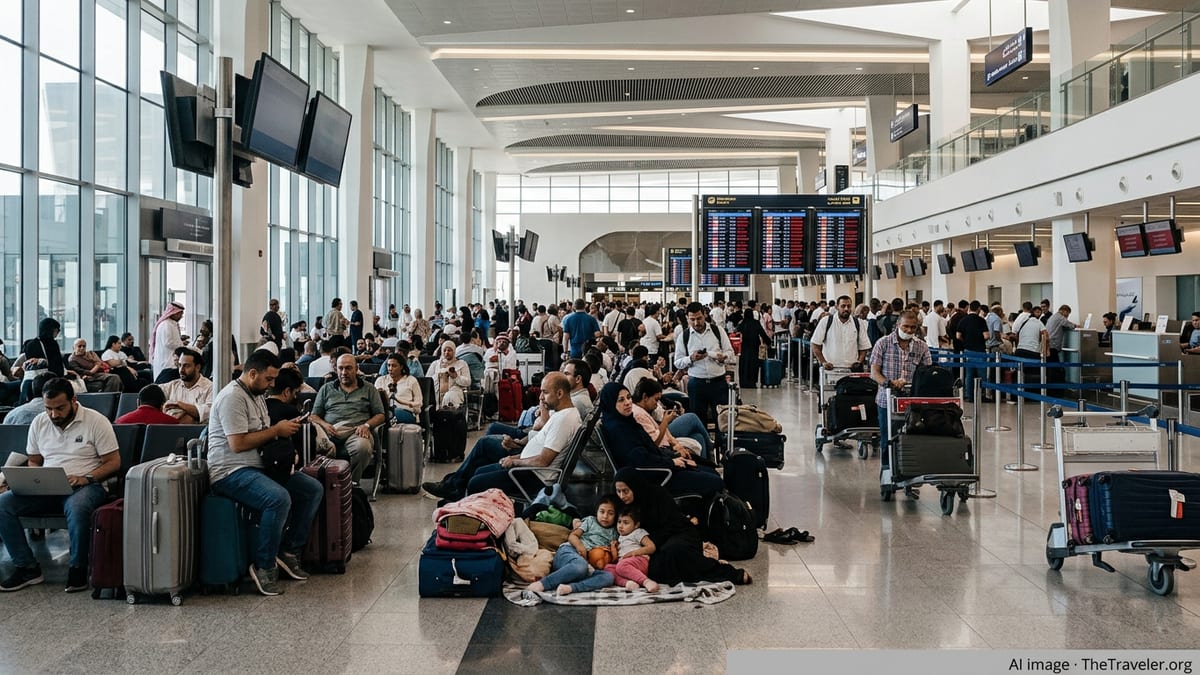
Fresh Cancellations Hit a Rebuilding Hub
Hamad International Airport has been operating through a prolonged period of disruption following the late February closure of Qatari airspace and subsequent phased reopening. Publicly available schedules and recent traveler reports indicate that, although overall activity at the Doha hub has rebounded to a substantial portion of pre-crisis levels, selected regional and short-haul routes remain particularly vulnerable to short-notice changes.
Within this unstable backdrop, three notable cancellations involving Qatar Airways and Akasa Air have drawn attention because they affect heavily used links between Doha and both Dubai and Mumbai. Operational data and online flight trackers show that targeted cuts on these sectors are occurring even as other intercontinental services are gradually restored, underlining how airlines are prioritizing long-haul connectivity while trimming or consolidating shorter regional flights.
The latest changes form part of a wider recalibration of schedules that airlines describe in published material as subject to ongoing review. Industry observers note that constrained airspace corridors, crew and aircraft positioning issues, and fluctuating demand patterns are all making it harder to guarantee day-to-day reliability on specific routes, especially where multiple carriers compete on similar city pairs.
For Hamad International, the selective cancellations are a reminder that a full return to normal operations is still a work in progress. Even limited disruptions on high-profile corridors can quickly ripple across the network, affecting transit passengers whose onward connections depend on tight coordination between regional spokes and long-haul departures.
Impact on Doha–Dubai Traffic
Among the routes drawing the closest scrutiny is the short but strategically significant link between Doha and Dubai. The corridor connects two of the Gulf’s largest hubs and feeds long-haul traffic on both ends, making it a bellwether for the region’s broader aviation recovery. Recent timetable adjustments show that some Qatar Airways services between Doha and Dubai have been withdrawn or consolidated on certain days, reducing frequency compared with schedules that were in place before the February airspace closure.
Travel forums and passenger accounts describe a pattern in which flights that had reappeared in booking systems were later removed or re-timed, creating uncertainty for travelers planning tightly scheduled connections at either end. While the total number of seats available between the cities has not collapsed, the loss of specific departures has narrowed options for same-day transfers, particularly for passengers connecting from Europe and North America through Doha.
Disruptions on the Doha–Dubai route have also highlighted the complexity of coordinating with other Gulf carriers, some of which are themselves managing residual scheduling challenges linked to regional airspace constraints. Analysts point out that even when both airports are open and functioning, circuitous routings to avoid restricted zones can reduce operational flexibility and leave little room to absorb further shocks when demand spikes or weather delays occur.
For travelers, the practical effect is a greater need to monitor booking details in the days leading up to departure. Airline advisories continue to emphasize the importance of checking real-time flight status and being prepared for rerouting through alternative hubs if a short-haul sector such as Doha–Dubai is withdrawn at short notice.
Mumbai Links Squeezed as Akasa Adjusts
Mumbai, one of Doha’s most important South Asian gateways, has also felt the impact of selective schedule changes. Qatar Airways has flagged Mumbai as a key market in several recent operational updates, but capacity remains fluid as the carrier balances demand from Indian cities against available corridors and aircraft. Published schedules show a reduced but still substantial Doha–Mumbai operation, with some services operating as planned and others removed from sale or reassigned to different time slots.
Akasa Air, which only entered the international market in 2024 and later added Qatar to its network, is navigating the same volatile conditions from a much smaller fleet base. Industry coverage of the airline’s developing international footprint notes that Akasa’s Doha services are particularly sensitive to shifts in demand and operational constraints, making it more likely that individual flights may be cancelled or consolidated during periods of disruption.
In the most recent wave of changes at Hamad International, one of the three headline cancellations has involved an Akasa-operated Mumbai sector, according to publicly accessible schedule snapshots and airport departure boards. While the airline continues to promote its India–Gulf connectivity, passengers on affected flights have reported being rebooked on later departures or rerouted through alternative Indian or Gulf hubs, depending on seat availability.
The strain on Doha–Mumbai connectivity underscores how crucial India remains to Gulf carriers, even amid network turbulence. Analysts suggest that, in the short term, airlines are likely to protect peak-time departures linking major Indian metros to Doha while trimming off-peak or overlapping services that are harder to sustain under current operating constraints.
What the Latest Disruptions Mean for Travelers
For passengers using Doha as a connecting hub to or from Dubai and Mumbai, the latest cancellations translate into a higher likelihood of itinerary changes, even for tickets that were confirmed weeks in advance. Travel advisories and airline communications urge customers to treat flight times as provisional until close to departure, reflecting a reality in which schedules remain more dynamic than many travelers are used to.
According to published guidance from carriers serving Doha, the most reliable source of truth remains the airline’s own flight-status tools and direct notifications via email, app, or text message. Because some cancellations are being finalized less than 24 hours before departure, passengers are being encouraged to enable alerts, reconfirm their itineraries regularly, and allow additional buffer time between connecting flights wherever possible.
Where flights on the Doha–Dubai or Doha–Mumbai routes are cancelled, current practice described in publicly available policies generally involves complimentary rebooking on the next available service, or rerouting via other hubs within the same alliance or partner network when capacity allows. In situations where no reasonable alternative exists, airlines outline options for refunds or travel credits, although processing times can vary, particularly during periods of heavy disruption.
Travelers who booked separate tickets for different legs of their journey may face added complications if a cancelled regional sector causes them to miss a long-haul departure on another carrier. Consumer advocates recommend, where possible, booking complex itineraries on a single ticket and retaining documentation of all cancellations and delays, as this can be helpful when seeking assistance or compensation under applicable regulations.
Outlook for Qatar Operations in the Coming Weeks
Despite the headline-grabbing nature of the most recent cancellations, available data indicates that Qatar’s aviation sector is steadily rebuilding capacity, with more long-haul and regional services being reintroduced each week. Qatar Airways has outlined plans in its published updates to restore a broad international network through the summer travel period, although it continues to warn that all schedules remain subject to change amid evolving airspace and security conditions.
For short-haul sectors like Doha–Dubai and Doha–Mumbai, the near-term outlook is one of gradual normalization tempered by the possibility of further tactical adjustments. Industry analysts expect airlines to keep refining frequencies and timings as they gain clarity on which corridors remain available and how demand patterns evolve, particularly from key source markets in Europe, India, and Southeast Asia.
Travel professionals suggest that passengers planning trips through Doha over the next few weeks should factor flexibility into their arrangements. Booking slightly longer connection windows, considering travel insurance products that include disruption cover, and staying informed about regional developments can help mitigate the impact of any additional schedule changes.
While Hamad International Airport continues to function as a major global hub, the experience of the past two months indicates that operations are still in a transitional phase. The targeted cancellations affecting Qatar Airways and Akasa Air services to Dubai and Mumbai highlight both the progress made since the height of the crisis and the lingering fragility of a network that is still adapting to a new operating landscape.