


More news on this day
Germany’s rail network returned largely to normal operations on Wednesday after a nationwide communications failure in the digital radio system forced trains to a standstill, stranding passengers across the country late Tuesday night.
Get the latest news straight to your inbox!
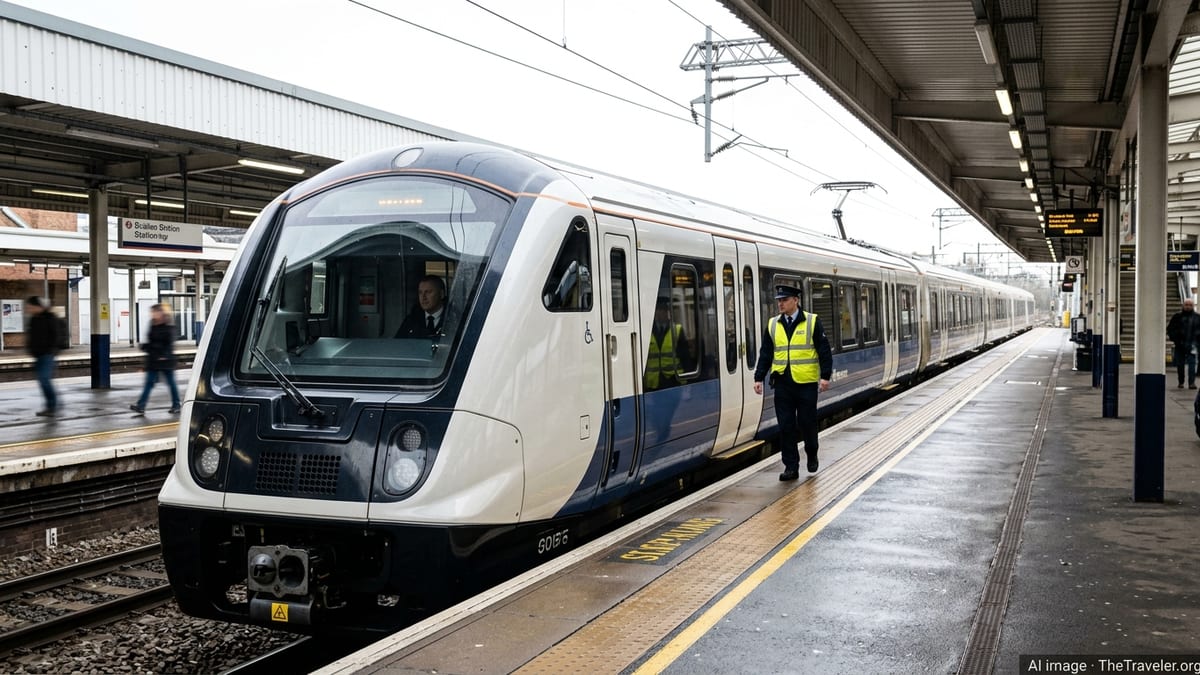
Services Restart After Late-Night Standstill
Long-distance and regional services operated by Deutsche Bahn and other carriers were halted across Germany on the evening of June 23 after a disruption in the GSM-R digital communication system, according to multiple news reports. Trains were held at stations and on open tracks while dispatchers lost reliable contact with drivers, a core safety requirement on the network.
Publicly available information indicates that the outage began around late evening local time and lasted for roughly two to two and a half hours before technicians stabilized the system using emergency procedures. Deutsche Bahn reported that services began ramping up again shortly after midnight, with trains resuming “step by step” during the night.
By Wednesday morning, reports from German and international outlets described rail operations as largely restored, with most scheduled services running but with residual delays and isolated cancellations. Passengers were advised to expect continued disruptions throughout the day as rolling stock and crews were repositioned after the overnight standstill.
The stoppage affected mainline long-distance trains, regional services and many S-Bahn commuter networks, creating a rare, near-total halt across one of Europe’s busiest rail systems.
Digital Radio Failure at Heart of Disruption
At the center of the incident was the GSM-R system, a specialized digital radio standard used by European railways for secure voice and data communications. It connects train drivers with traffic control centers, providing instructions, route clearances and safety-critical messages that enable trains to move along the network.
Reports from German media and international news agencies describe the problem as a nationwide failure of this communication backbone. Without a functioning GSM-R link, trains are generally not allowed to proceed, since controllers cannot reliably issue movement authorities or respond quickly in case of emergencies.
Initial coverage suggests that an information technology or software malfunction is the most likely cause, rather than physical damage to infrastructure. Some outlets noted that a faulty software update was being examined as a possible trigger, though at the time of reporting no detailed technical explanation had been made public.
The outage underlined how dependent modern rail networks have become on digital signaling and communication layers. While such systems are designed with redundancies, a fault at the core of the network can still cascade rapidly, as shown by Tuesday night’s halt.
Passengers Stranded, Compensation Measures Rolled Out
As trains stopped across Germany, passengers found themselves stranded in stations and on platforms in cities such as Berlin, Munich and Hamburg, as well as smaller hubs and junctions. Images and social media posts shared with news organizations showed long queues at information counters and crowded concourses as travelers sought updates and alternative routes.
According to published coverage, Deutsche Bahn responded by activating standard disruption protocols, including issuing taxi and hotel vouchers for affected travelers and, where possible, positioning trains at stations so passengers could at least remain on board under shelter. Some regional operators also encouraged travelers to postpone nonessential journeys until services stabilized.
However, public reaction highlighted familiar frustrations over communication and real-time information during major disruptions. Reports indicate that many passengers complained about unclear announcements, long waits for assistance and difficulty rebooking on later services, particularly late at night when onward connections were limited.
Consumer advocacy groups and regional officials have frequently criticized the reliability and customer information standards of Germany’s rail system in recent years. The latest incident is likely to spur renewed calls for better contingency planning and clearer passenger rights when nationwide failures occur.
Fresh Scrutiny of a Strained Rail Network
The communications collapse comes at a sensitive moment for German rail. The state-owned operator has faced mounting criticism for chronic delays, congested infrastructure and frequent engineering works, even as policymakers urge travelers to shift from cars and planes to trains for climate and capacity reasons.
Government-backed investment programs are already underway to modernize tracks, signaling equipment and stations on key corridors. These overhauls, while intended to improve long-term performance, have themselves generated short-term disruption, with heavily used routes subject to extended closures or reduced capacity.
Reports indicate that regional transport leaders and passenger associations are now pressing for a full technical review of the GSM-R incident, including how a single fault could disable services nationwide and whether more robust backup systems are needed. Some commentators have described the outage as a “new low” in operational reliability for a network long regarded as a backbone of European mobility.
Industry observers note that Germany is far from alone in grappling with the risks that come with complex, digitally controlled railways. Comparable communication and signaling issues have caused serious slowdowns or stoppages in other major systems in recent years, prompting broader debates about cybersecurity, redundancy and the resilience of transport infrastructure.
What Travelers Can Expect in the Coming Days
With trains back on the move, focus is shifting from the immediate emergency response to medium-term consequences for travelers. Publicly available timetables show that most scheduled services are now operating, but rail companies have warned that residual delays, missed connections and occasional cancellations may persist while the system fully resets.
Travel organizations advise passengers planning journeys in Germany over the next few days to build in extra connection time, especially when linking long-distance trains with regional services or international routes. They also recommend checking departure information repeatedly on the day of travel, as knock-on effects from the disruption may lead to last-minute platform changes or rolling stock substitutions.
For international visitors, the incident serves as a reminder that even advanced rail networks can experience sudden, large-scale failures. Travel planners suggest considering flexible tickets where possible and familiarizing oneself with refund and compensation rules in cases of major delay or cancellation.
As investigations proceed and technical details emerge, the outage is expected to intensify debate within Germany about how to modernize critical rail technologies while maintaining reliability. For now, though, trains are once again crossing the country’s 33,000-kilometer network, and the immediate priority for many travelers is simply reaching long-delayed destinations.