


More news on this day
In the days following the fatal train collision near Bedford on 19 June, attention is increasingly turning from emergency response to practical questions about how hundreds of affected passengers can reclaim personal belongings left behind on the damaged carriages.
Get the latest news straight to your inbox!
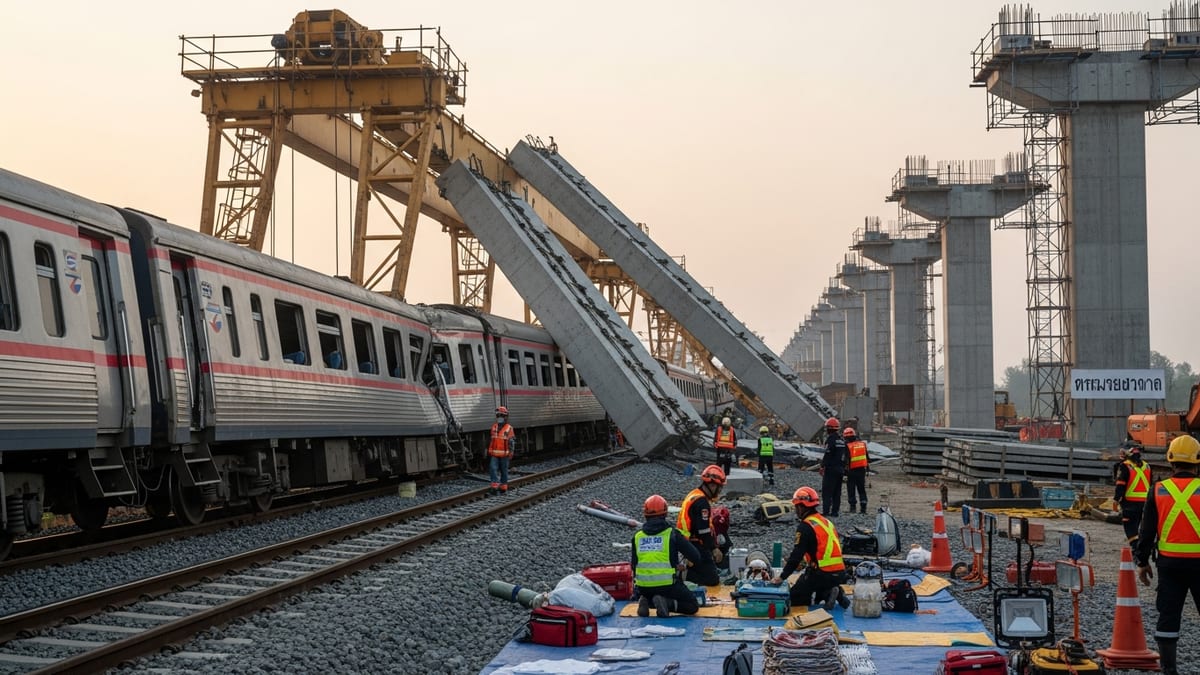
Focus Shifts From Rescue To Recovery
Published coverage shows that the collision south of Bedford involved two London-bound East Midlands Railway services and left one person dead and scores injured. As rail engineers work to clear the site and restore services, many travelers are now preoccupied with recovering bags, documents, and electronic devices that were abandoned during the evacuation.
Reports indicate that the extent of the damage, coupled with the complexity of the recovery operation, has delayed access to the carriages. Specialist cranes and a temporary access road across nearby farmland are being used so teams can safely move the trains and begin detailed inspections of the wreckage.
Rail industry updates describe a phased approach: stabilizing and removing the trains, documenting the scene for investigators, and only then sorting and cataloguing passenger property. This staged process is designed to protect both safety and evidence, but it means that items left on board are unlikely to be returned immediately.
For travelers whose passports, tickets, work equipment, or medication were left behind, the uncertainty around timelines has become a pressing concern. Many are now turning to publicly available information from the operator and rail industry outlets to understand what happens next.
How Lost Property Is Being Handled
According to rail sector statements, East Midlands Railway has established dedicated support channels for customers affected by the Bedford collision, including help with queries about personal possessions. These arrangements are similar to those used after significant incidents elsewhere on the network, where belongings are collected from the site, logged, and transferred to a central point for reconciliation with passengers.
Once investigators permit access, staff typically move through each carriage to gather any remaining items, from small valuables to larger suitcases. Items are then sorted, photographed where necessary, and tagged with details such as the carriage number and approximate seat location, helping match them later to owner descriptions.
Public information suggests that unclaimed property will not be discarded quickly. In previous large-scale incidents, rail operators have held items for extended periods to allow for claims from passengers who may still be in hospital or recovering at home. Similar retention practices are expected following the Bedford crash, particularly for identification documents and high-value items.
However, there is also recognition that not everything will be salvageable. Fire, water used during the emergency response, and physical damage from the collision may render some belongings irrecoverable. In those cases, passengers are being advised through media reports to explore insurance options once they have completed the operator’s reporting process.
What Affected Passengers Are Advised To Do
Guidance reported by travel and consumer outlets stresses the importance of documenting losses as clearly as possible. Passengers are encouraged to note their train and coach number if known, seat location, a description of each missing item, and any distinguishing features such as serial numbers, engravings, or unique markings.
Where dedicated helplines or online forms have been set up, travelers are being asked to submit this information as early as they can. Doing so allows lost-property teams to cross-reference claims against the catalogued items once recovery from the crash site is complete. In some cases, rail companies also coordinate with the British Red Cross or similar organizations to support those dealing with trauma or displacement as well as lost possessions.
Insurance specialists quoted in public reports recommend that passengers also keep copies of tickets, booking confirmations, and any correspondence with the operator. These records can support claims under travel insurance policies or, where applicable, under broader home or contents insurance that covers items taken outside the home.
For travelers who urgently need replacement passports, bank cards, or travel documents, information from government and financial institution websites is being highlighted in media coverage, directing people to emergency replacement procedures while they await the outcome of property recovery efforts.
Ongoing Investigations And Their Impact On Timelines
The Rail Accident Investigation Branch and other agencies have launched a detailed inquiry into the Bedford collision, and this work has a direct bearing on when passengers can expect their belongings to be processed. Until investigators complete key stages of their examination, substantial parts of the wreckage must remain undisturbed, including areas where luggage and personal items may still be stored.
Reports from rail industry publications explain that investigators typically photograph interiors extensively, record the position of bags and other objects, and analyze data from on-board systems before authorizing large-scale removal. This approach aims to clarify the sequence of events leading up to the collision and to identify any potential technical or operational failures.
As a result, the line between Bedford and Luton has faced extended disruption, with operators warning of several days of closure while recovery and investigative work continues. Only once the main forensic tasks are complete can teams devote full attention to sorting and returning property.
Passengers are being advised through news reports to anticipate a staggered process, in which some easily identifiable items may be returned sooner while others take weeks to trace. Those who do not immediately hear back after filing a property report are being urged to stay in contact with the designated support channels rather than assuming their belongings are permanently lost.
Support For Travelers Moving Forward
Beyond the immediate question of possessions, the Bedford collision has raised broader concerns about passenger welfare after major rail incidents. Publicly available information shows that East Midlands Railway and partner organizations are offering emotional and practical support alongside property recovery, including assistance with travel rearrangements and signposting to counseling services.
Travel commentators note that, for many passengers, recovering a familiar bag, phone, or piece of clothing can carry significant emotional weight after a distressing event. The return of everyday items is often seen as a small but meaningful step toward normality, especially for those still coping with injuries or shock.
The response to the Bedford crash is also being watched closely within the wider rail industry, where lessons from property handling and passenger communication may inform future contingency planning. Analysts suggest that clearer, more visible guidance on what happens to belongings after a serious incident could help reassure travelers and reduce confusion in the critical days that follow.
As engineers continue the demanding work of clearing and repairing the line near Bedford, the parallel effort to reunite passengers with their property remains a quieter but important part of the recovery story, shaping how many will remember both the day of the collision and the support they received afterward.