

More news on this day
Hundreds of passengers were left stranded across Germany on March 2 as cascading cancellations and delays at Berlin, Düsseldorf, Frankfurt and Munich rippled through airline networks already strained by continuing Gulf airport shutdowns.
Gulf Airspace Crisis Spills Over Into German Hubs
What began as a regional security crisis in the Middle East has now sharply disrupted travel across Germany. With Dubai, Abu Dhabi and Doha remaining closed for a third consecutive day, long haul schedules linking Europe with key Gulf hubs have been thrown into disarray. Airlines have been forced to ground aircraft, reroute services and thin out timetables, triggering a chain reaction of missed connections and operational bottlenecks in Germany’s busiest airports.
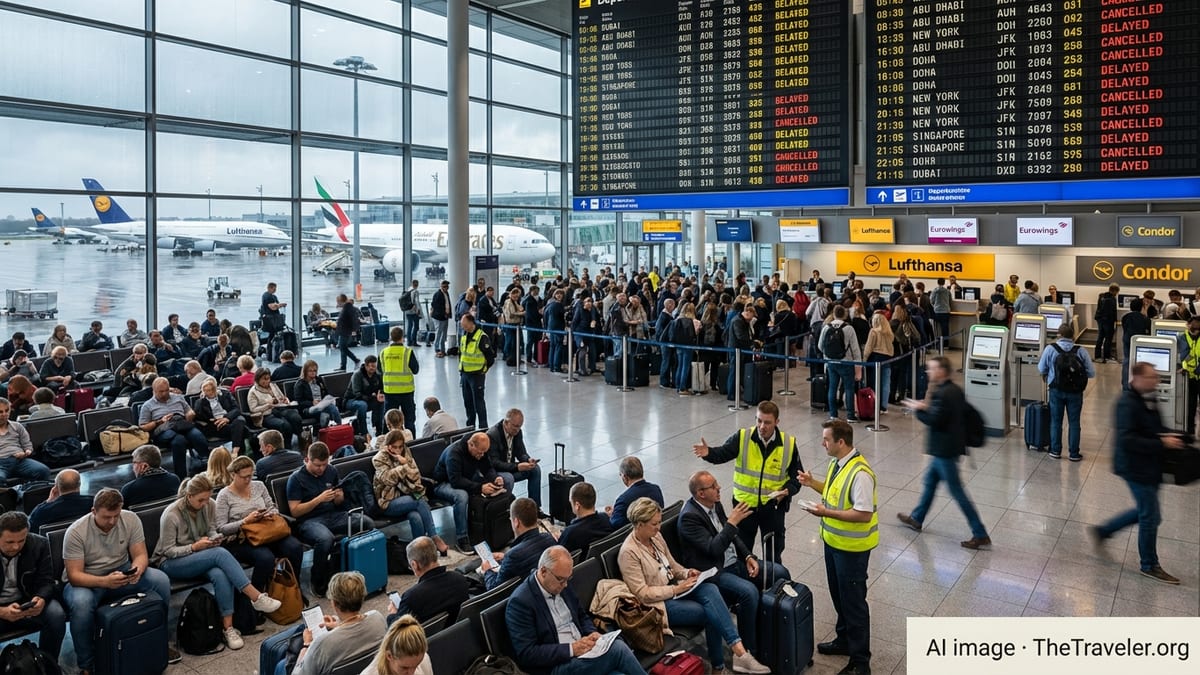
According to operational tallies on Monday, Frankfurt, Munich and Berlin together reported more than 70 outright cancellations and over 260 delayed departures and arrivals, largely tied to suspended flows through the Gulf. Passengers at Berlin and Düsseldorf reported aircraft at gates with no clear departure times as crews and aircraft went out of position. Airport information boards displayed rows of delayed flights to major intercontinental destinations, while customer service desks quickly filled with long queues.
Airport authorities in Frankfurt activated irregular operations plans to cope with the backlog, including reallocating remote stands, reprioritising arrival slots and increasing staffing at information points. Ground teams were tasked with managing both the immediate disruption and the knock on effect on European feeder services connecting to long haul flights that no longer had viable onward links through the Middle East.
Frankfurt and Munich Bear the Brunt
Frankfurt and Munich, Lufthansa’s twin long haul gateways, have emerged as the focal points of today’s disruption. At Frankfurt alone, more than 140 flights were delayed and 19 cancelled, reflecting the airport’s role as a primary European gateway for traffic to and from the Gulf and wider Asia. Lufthansa and its subsidiaries recorded dozens of delayed departures as aircraft were held on the ground while planners reworked routings around closed airspace and halted Gulf hubs.
Carrier data from Frankfurt show widebody operations particularly hard hit. Emirates, Qatar Airways, Etihad Airways, El Al and Air India all saw a high share of their Frankfurt services cancelled or retimed, severing normal connections onward to South Asia, East Asia and Africa. German leisure operator Condor also reported a rising number of delays, its long haul network entangled in the same airspace restrictions and aircraft positioning issues.
In Munich, Germany’s second largest long haul hub, at least 16 flights were cancelled and more than 80 delayed. Emirates, Qatar Airways and El Al suspended all listed departures from the Bavarian capital on Monday, while Etihad and Gulf Air also cancelled multiple services. Lufthansa and its regional units faced knock on delays across European routes, as aircraft and crews became misaligned with the original schedule.
Operational managers in Munich focused on keeping short haul and domestic traffic moving, even if on revised timings, to prevent further crowding in terminals. However, passengers heading to Asia, Africa and Australasia via Gulf hubs were frequently told that rebooking options were limited and could extend several days, reflecting the depth of the worldwide disruption.
Berlin, Düsseldorf and the Wider German Network Disrupted
While Frankfurt and Munich saw the highest raw numbers of affected flights, Berlin Brandenburg and Düsseldorf experienced acute passenger frustration relative to their size. Berlin reported at least nine cancellations and nearly 40 delays, with several departures to Middle Eastern and Eastern Mediterranean destinations scrubbed entirely. Affected carriers at the capital’s main airport included Qatar Airways and El Al, alongside schedule changes for Lufthansa, Eurowings and Condor.
Delays at Berlin quickly spread to intra European services. Eurowings, which uses the airport as a key base for point to point travel, recorded a string of late departures as aircraft returning from disrupted international rotations arrived hours behind schedule. Low cost and regional carriers serving Scandinavia, Eastern Europe and the Balkans also encountered slot restrictions and ground holds as air traffic control attempted to smooth surges in traffic.
In Düsseldorf, Germany’s third major international gateway, passengers faced a similar pattern of rolling delays and short notice schedule changes. While the airport’s direct links to the Gulf are more limited than Frankfurt’s or Munich’s, its role as a busy base for Eurowings and leisure carriers meant that knock on disruption still filtered through the system. Some passengers reported being bussed to alternative airports or offered rail vouchers when onward flights were no longer operationally viable.
The combined effect across the German network was a patchwork of disrupted itineraries. Even airports without direct Gulf links, such as Hamburg and smaller regional gateways, felt the strain as diversions and aircraft reassignments reshaped normal traffic flows. Rail operators and long distance coach companies saw a spike in last minute bookings as stranded travelers sought overland alternatives.
Flag Carriers and Gulf Airlines Scramble to Rebuild Schedules
Lufthansa Group entered the new week already under pressure, after earlier announcing sweeping cancellations and suspensions on routes touching Middle Eastern conflict zones and nearby airspace. With key corridors to Tehran, Tel Aviv, Beirut and Amman already closed or heavily restricted, the extension of shutdowns at Dubai, Abu Dhabi and Doha further narrowed the options for long haul connectivity. Monday’s figures showed more than 60 Lufthansa operated flights delayed in Frankfurt alone, alongside additional disruptions impacting CityLine, Air Dolomiti and Lufthansa Cargo.
Eurowings, the group’s low cost arm, juggled its point to point European network from bases including Düsseldorf, Berlin and Hamburg, using aircraft and crew swaps to plug the worst operational gaps. While the airline sought to prioritise flights with high volumes of connecting passengers, many leisure routes to Mediterranean destinations departed significantly behind schedule, or were consolidated onto fewer frequencies.
Gulf carriers also grappled with the unprecedented situation. Emirates and Etihad, with their main hubs shuttered, cancelled the majority of their planned flights to Germany, including all listed services to Munich and most to Frankfurt. Qatar Airways faced similar constraints with Doha closed, wiping out Berlin flights and heavily curtailing services elsewhere in the country. Other long haul operators, from Air India to El Al, adjusted timetables or pulled flights altogether rather than attempt complex, fuel intensive diversions around restricted zones.
Industry analysts noted that the extensive network interdependence between European flag carriers and their Gulf partners is magnifying the impact. Codeshare agreements and coordinated timetables that normally offer seamless connections have, under the current circumstances, turned into a dense web of simultaneous disruption.
Stranded Passengers Face Long Queues and Limited Options
For travelers on the ground, today’s disruption has been measured in hours spent in queues and uncertainty at departure gates. At Frankfurt’s Terminal 1, passengers for cancelled Emirates and Qatar Airways flights formed long lines at rebooking counters, with staff warning some customers that the next available seats to their destinations could be several days away. Similar scenes played out near Lufthansa service desks, where travelers with missed connections sought hotel vouchers or alternative routings via North America or other European hubs.
In Munich, families returning from winter holidays reported receiving overnight accommodation while airlines worked through backlogs. Others chose to abandon air travel altogether, booking long distance trains to other European cities in the hope of finding more reliable onward connections. Berlin’s Brandenburg airport saw clusters of passengers attempting to rebook online while seated on terminal floors near power outlets, as limited staff and high call volumes slowed telephone support.
Passenger rights organisations reminded affected travelers that, under European air passenger regulations, airlines may owe compensation or at least duty of care provisions such as meals and accommodation, depending on the specific cause and classification of each cancellation. However, with security driven airspace closures at the root of the crisis, compensation entitlements are likely to vary flight by flight, adding another layer of complexity to an already fraught situation.
With no immediate timeline for the full reopening of Gulf hubs, German airports and airlines are preparing for several more days of volatile operations. Travelers booked on long haul itineraries through the region are being urged to monitor their flights closely, remain flexible with routing and dates, and allow extra time at airports as the aviation system works through yet another major shock.