


More news on this day
Morning commuters at Glasgow Central Station faced fresh disruption on Tuesday after a platform signalling fault led to delays, cancellations and short-notice changes across several routes serving Scotland’s busiest rail hub.
Get the latest news straight to your inbox!
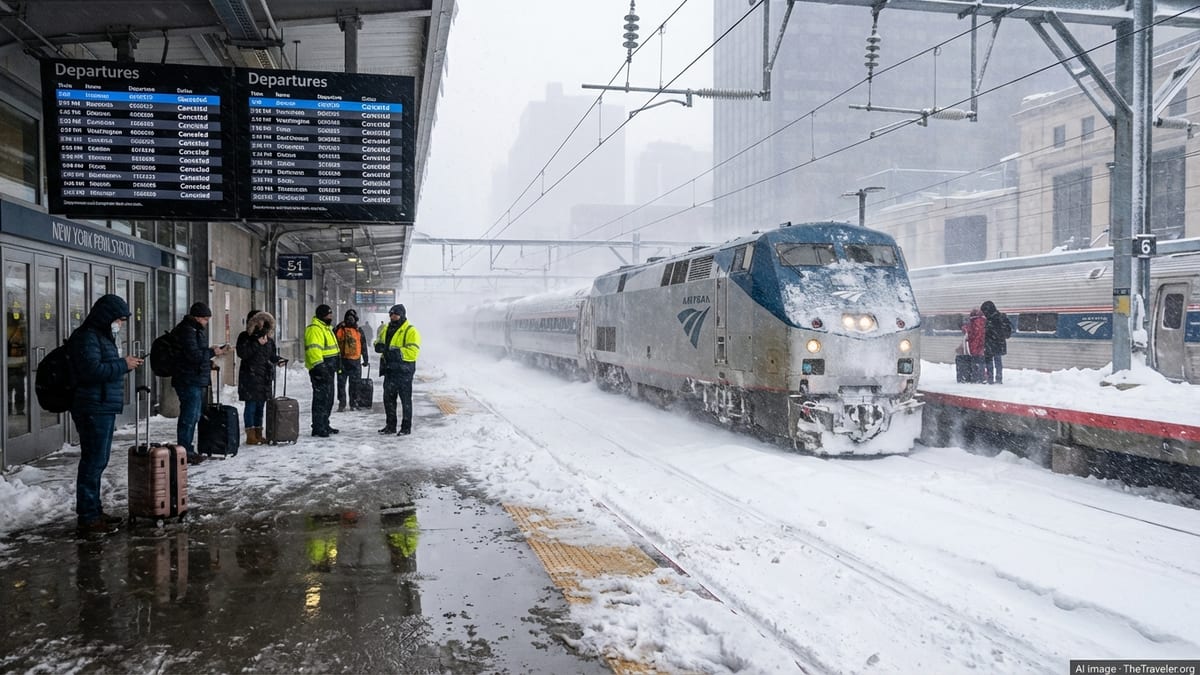
Signalling problem at Glasgow Central disrupts peak services
According to live disruption updates, a fault affecting signalling equipment on one of Glasgow Central’s high-level platforms triggered a cascade of morning delays. Reports indicate that services arriving at and departing from the affected platform were being cancelled, held outside the station or revised at short notice as rail staff worked to manage train movements through a reduced number of usable lines.
Information published by real-time journey monitoring services on 1 July 2026 described a signalling fault at platform 9, with warnings that trains could be delayed by up to around 10 minutes or altered before departure. Some services were turned short of their intended destination, while others were re-platformed to keep trains moving through the station where possible.
The disruption affected a range of commuter and regional routes that rely on Glasgow Central’s high-level platforms. Publicly available information shows that the most acute impact fell on early peak-time travellers heading in and out of the city, when the station typically handles a dense flow of departures towards Ayrshire, Inverclyde, the south-west and cross-border connections.
Operators advised passengers via online journey planners and station departure boards to check the latest information before setting out and to allow extra time for their journeys. Delay-repay schemes were expected to apply for customers whose journeys were significantly extended by the disruption.
Recent history of disruption at Scotland’s busiest station
The latest signalling fault comes only a few months after a major fire next to Glasgow Central forced the temporary closure of the station’s high-level platforms. In early March 2026, a blaze in an adjoining Victorian building on Union Street led to partial building collapse and an extended safety cordon around the station, significantly limiting train movements for several days.
Coverage at the time described Glasgow Central as operating with a heavily reduced platform layout, with many long-distance and regional services diverted, curtailed or replaced by alternative arrangements. For a period, no trains could run to or from some of the main concourse platforms, and cross-border operators adjusted timetables while repair and safety work continued.
Subsequent updates from industry news outlets reported a phased reopening of the high-level station, with some ScotRail services returning first, followed by a full restoration of all platforms later in March once engineers and safety inspectors signed off on the structure. Even after the doors reopened, published reports noted that service patterns remained altered on some routes while operators recalibrated timetables.
For regular users, the combination of the spring closure, ongoing timetable adjustments and now the latest platform signalling fault has contributed to a perception of fragile reliability at one of the UK’s key rail hubs. Performance statistics released earlier in the year showed that just over half of ScotRail services terminating at Glasgow Central arrived on time within 59 seconds of their scheduled arrival, underlining the operational pressures on the station.
Impact on commuters and regional routes
Early morning disruption at Glasgow Central typically ripples through a broad swathe of Scotland’s rail network, and the latest incident was no exception. Many commuter services between the city and surrounding towns are tightly timed, meaning that even short signalling-related delays can result in missed connections and crowding on subsequent trains.
Reports from real-time journey tools on 1 July indicated that some services were being held outside the station while signallers managed access to the affected platform, pushing back departure times for onward trains. On routes with limited alternative services, even modest delays can translate into significantly longer overall journeys for passengers attempting to reach workplaces, schools or appointments on schedule.
Regional links towards the south and south-west were also affected where diagrams rely on quick turnarounds at Glasgow Central. In some cases, trains were revised to start or end at intermediate stations instead of the city centre, with passengers advised to transfer to alternative services or wait for later departures once capacity through the station improved.
Passenger groups have previously highlighted how closely timetables around Glasgow Central are interlinked, pointing out that infrastructure issues on a single platform can have network-wide consequences. The latest signalling fault illustrates those concerns, with knock-on effects visible on arrival and departure boards well beyond the immediate area of the problem.
Resilience and investment in signalling infrastructure
The incident has renewed attention on the resilience of signalling and control systems that underpin operations at Glasgow Central. While the historic station has undergone significant modernisation, published background information notes that the wider area is now controlled from the West of Scotland Signalling Centre, which oversees complex train movements through the city’s dense rail corridors.
Across the UK rail network, signalling failures remain a common cause of disruption, prompting ongoing investment programmes aimed at upgrading equipment and introducing more modern digital systems. Recent incidents at other major hubs, including radio and signalling faults in southern England and at junction stations such as Crewe, have similarly led to widespread delays and cancellations when key pieces of infrastructure failed.
Industry briefings frequently emphasise that even minor technical glitches can trigger safety protocols that halt or restrict train movements until engineers are satisfied it is safe to proceed. Any irregularity in trackside signals or the systems that feed information to drivers must be investigated, resulting in unavoidable disruption while diagnostics and repairs take place.
At Glasgow Central, the latest platform-specific fault appeared to be contained to one part of the station, limiting its duration and scope compared with the earlier fire-related closure. However, the frequency of recent incidents affecting the station has sharpened debate over how quickly planned upgrades and maintenance can be delivered to improve reliability for passengers.
Advice for travellers using Glasgow Central
Publicly available passenger information on 1 July urged anyone travelling via Glasgow Central to check live departure and arrival boards before setting out, as service patterns were subject to short-notice changes while the signalling fault was managed. Journey-planning tools and operator apps were updated throughout the morning to reflect cancellations, re-platforming and revised stopping patterns.
Travellers whose journeys were significantly delayed were reminded through published guidance that they may be eligible for compensation under existing delay-repay schemes. Eligibility and claim processes vary by operator, but typically allow passengers to apply for partial or full refunds when delays exceed specified thresholds.
Rail users have also been encouraged by transport watchdogs and consumer groups to retain tickets or digital booking confirmations and to keep records of actual arrival times when incidents occur. Such documentation can support any subsequent claim and contributes to the data used by operators and regulators to monitor performance at busy hubs such as Glasgow Central.
With the station having recently come through the challenges posed by the Union Street fire, rail industry commentary suggests that restoring passenger confidence in the reliability of services will remain a key focus. Ensuring that signalling faults and other technical issues are resolved quickly, and that information flows to passengers in a timely and transparent way, is viewed as central to that effort.