


More news on this day
Dubai International Airport is issuing a fresh travel warning ahead of the busy summer peak, cautioning passengers that crowding, longer queues and traffic congestion are expected around key July travel dates.
Get the latest news straight to your inbox!
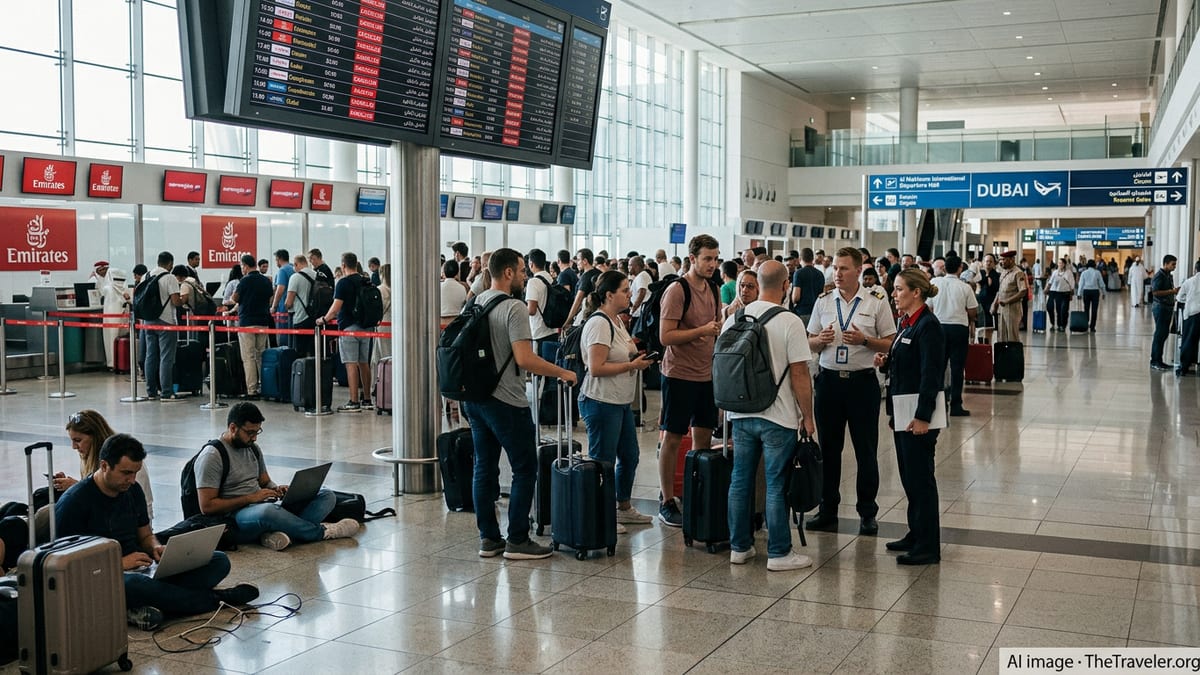
Advisory targets busiest July departure days at DXB
Publicly available information from Dubai and airline channels indicates that Dubai International Airport is preparing for one of its heaviest summer travel periods, with passenger numbers expected to surge from early July. Forecasts point to particularly busy departure waves from July 3 to 5, coinciding with school holidays and regional breaks that traditionally send traffic through the hub.
Reports describe a formal travel advisory focusing on Emirates operations at Terminal 3, where the majority of long haul and connecting flights are concentrated. The warning highlights that check in, security screening and immigration processing will likely take longer than usual, and that departure halls and forecourts are expected to be crowded throughout the main holiday window.
Dubai has repeatedly seen record traffic during recent peak periods, with earlier summers bringing single day passenger totals in the hundreds of thousands. Current projections suggest that this pattern will continue, reinforcing DXB’s status as one of the world’s busiest international airports and prompting a renewed push to spread passengers more evenly through the day and encourage early arrivals.
Travel industry commentary notes that this year’s advisory comes against a backdrop of wider regional disruption in recent months, after which airlines have been gradually rebuilding schedules and rerouting services. The latest warning is framed as part of efforts to keep flows stable as capacity returns.
Passengers urged to arrive early and allow extra time
The core message of the DXB travel warning is for passengers to build additional time into their journey. Emirates guidance for the current peak period reiterates that travelers should arrive at the airport at least three hours before departure as a baseline, with some advisories recommending up to four hours during the busiest summer weekends.
Check in and bag drop desks are expected to open well ahead of departure times to help spread demand. Travelers are being encouraged to complete online check in before leaving home, use self service kiosks where available and proceed to security as soon as formalities are complete rather than waiting in the departure hall until close to boarding.
Airport focused analysis notes that even under normal conditions Dubai International can see short surges at security and immigration when banked flights depart within a narrow time window. With holiday travel adding families and larger groups to the mix, airport operations specialists report that small disruptions can have a rapid knock on effect if passengers do not arrive with sufficient buffer time.
Travel planners advise that passengers connecting through Dubai should also pay close attention to minimum connection times on their itineraries, particularly if they are changing terminals or moving between distant gates. The latest advisory underscores that boarding gates may close earlier than some travelers expect, particularly for long haul flights to North America, Europe and Australasia.
Ground access, drop off rules and metro use highlighted
Alongside the airport specific advice, the current warning places renewed emphasis on getting to DXB itself. Publicly available guidance notes that road congestion around the terminals typically increases before major departure banks, especially on Thursday evenings and at the start of regional holiday periods when both residents and transit passengers converge on the airport.
Recent advisories from Dubai airport stakeholders have reminded residents that access to terminal forecourts can be restricted during peak summer travel, with private vehicle access sometimes limited and priority given to public transport and authorized airport vehicles. These measures are intended to prevent gridlock at the curbside and to keep emergency and service routes clear.
Passengers are being encouraged to factor in motorway delays and to consider the Dubai Metro for direct access to Terminal 3, particularly for those staying along the Red Line corridor. Using the metro can offer more predictable travel times when surface traffic is heavy and helps to reduce pressure on short stay car parks and drop off lanes.
Taxi operators and ride hailing services are also expected to be in high demand throughout the peak period. Local travel blogs and advisory sites recommend pre booking pick up where possible and avoiding last minute calls from congested areas, while also reminding travelers to confirm the correct terminal before setting off.
Digital tools and premium services promoted to ease queues
In line with past peak season campaigns, DXB related travel information this summer highlights a growing list of digital and premium services designed to reduce airport stress. Emirates, which dominates Terminal 3 operations, continues to promote its mobile app for check in, seat selection and digital boarding passes, allowing passengers to bypass traditional desks where airlines support this functionality.
Passengers enrolled in airline loyalty programs are being reminded that they may have access to biometric gates in selected areas, enabling faster identity checks at dedicated e gates and boarding points. Airport guidance also points to smart gates run by local immigration authorities for eligible passport holders, which can materially reduce time spent in manual queues during busy hours.
Third party concierge and fast track services at DXB are also receiving increased attention in travel coverage. These services, which may include personal meet and assist, dedicated immigration lanes, and assistance with baggage and transfers, are being marketed as a way to smooth the journey for families, elderly travelers and those on tight connections during the peak season.
Observers note that DXB’s sustained investment in automation and smart processing is aimed at handling rising volumes without proportionate increases in staffing. The latest travel warning frames these tools not only as conveniences but as practical measures that can help keep operations flowing during compressed travel windows.
Airlines and travelers remain alert to regional context
The timing of DXB’s summer warning is also being seen in the context of wider regional conditions. Earlier in 2026, several carriers operating to and from Dubai temporarily adjusted or suspended some services in response to security and airspace considerations, and portfolios of travel advisories from airlines and risk consultancies continue to urge passengers to monitor updates closely.
While current operational summaries indicate that Dubai International is functioning at or near normal capacity for many carriers, schedules remain subject to change on some routes. Travelers are being urged by airlines, travel insurers and advisory platforms to check their flight status repeatedly in the days and hours before departure, and to ensure contact details are up to date in booking records so that rebooking or disruption notifications can be delivered promptly.
Insurance specialists continue to highlight the importance of comprehensive travel cover that addresses both medical and disruption risks, including missed connections, schedule changes and extended delays. Policy reviews before departure are being presented as a key step for those transiting through major hubs such as DXB during a period of lingering regional uncertainty.
Industry analysts suggest that the current warning may be one of several rolling advisories through the summer as passenger demand, regional dynamics and airline schedules evolve. For now, the consistent message to passengers flying through Dubai is to plan ahead, arrive early, use available digital tools and remain flexible as the peak travel season gathers pace.