

More news on this day
Glasgow Central Station has returned to full operation following weeks of disruption caused by a devastating blaze in the adjoining Union Street block, a milestone that is being hailed as a turning point for Scotland’s busiest rail hub and the wider city centre economy.
Get the latest news straight to your inbox!
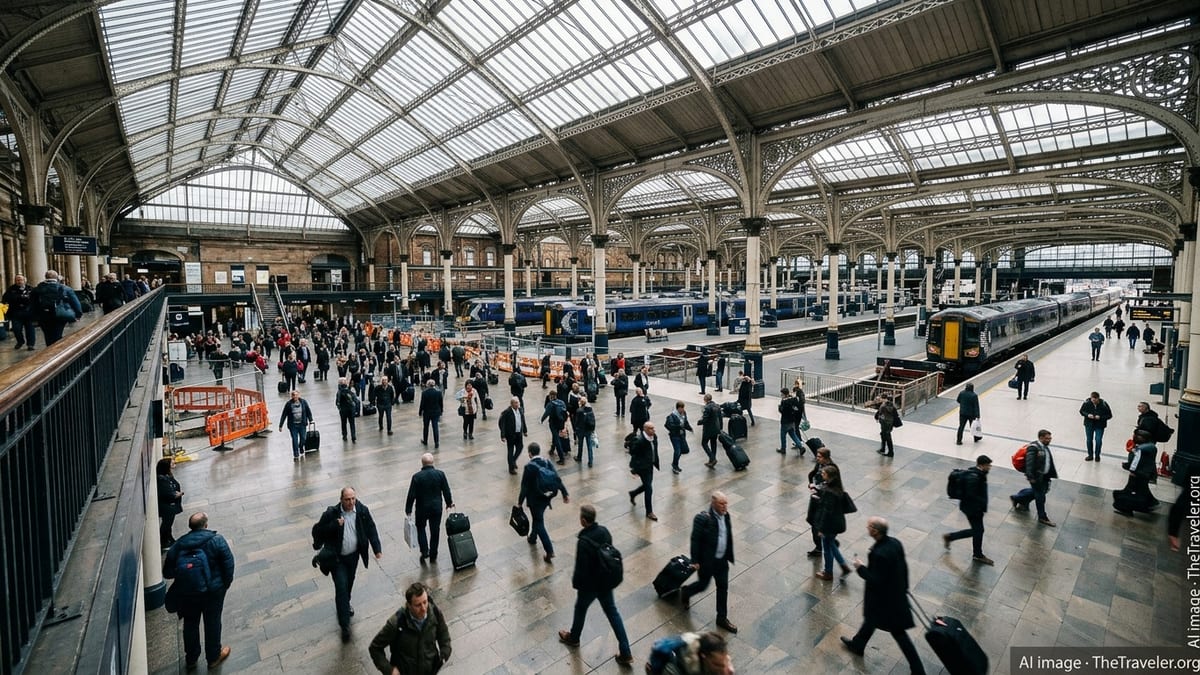
Full Timetable Restored After Weeks of Disruption
The complete reopening of Glasgow Central on 25 March follows intense safety work and phased service resumptions after the Union Street fire on 8 March, when a blaze tore through the Victorian Union Corner building beside the station. Publicly available information shows that low-level services beneath the main concourse were the first to resume, with trains calling again from 11 March after initial safety checks.
High-level operations, which handle most intercity and regional routes, came back in stages as engineers assessed the stability of the fire-damaged structure. Platforms serving some ScotRail and long-distance operators reopened from 18 March as restrictions on the concourse were gradually eased.
Network updates now indicate that all platforms are available and a normal timetable is being restored across operators including ScotRail, Avanti West Coast, TransPennine Express, CrossCountry and Caledonian Sleeper. Passenger movements, retail trade and connecting bus and taxi flows are reported to be returning to pre-fire patterns, bringing an essential sense of normality back to the heart of Glasgow’s transport network.
From Inferno Beside the Tracks to a Stabilised Site
The crisis began on the afternoon of 8 March when a serious fire broke out in a vape shop within the Union Corner block at the junction of Union Street and Gordon Street, directly attached to the station complex. Published coverage describes flames rapidly spreading through the upper floors of the B-listed building, with smoke visible across the city centre and debris falling close to rail infrastructure.
In the hours that followed, large parts of Glasgow Central’s high-level concourse were closed, with all mainline services halted amid concerns over structural collapse and falling masonry. The incident severely affected journeys on the West Coast Main Line and on commuter routes radiating from the city.
By 11 March, fire crews had handed control of the site to Glasgow City Council and a programme of demolition was launched to remove unstable sections of the historic block. According to official statements and local reporting, this incremental dismantling was critical in allowing engineers to shrink the exclusion zone around the station and progressively reopen platforms without compromising passenger safety.
Commuters Welcome Return of Scotland’s Busiest Hub
The reopening is being widely viewed as a significant relief for commuters who had endured diversions, reduced timetables and longer journey times throughout March. Rail users travelling from Ayrshire, Inverclyde, Lanarkshire and the wider Central Belt had been relying on alternative routes, temporary terminations at other stations and replacement services during the closure of high-level platforms.
Public comments on social channels and forums highlight both frustration at the scale of disruption and recognition that the precautionary shutdown likely prevented more serious consequences. Many passengers are now reporting markedly smoother morning and evening peaks, with regular cross-city and intercity links once again converging on Glasgow Central’s main concourse.
Railway commentators note that the station’s rapid return to full capacity underscores its role as a critical node in Scotland’s transport system. The restoration of normal operations is expected to ease pressure on other Glasgow terminals and on key diversionary routes that had been heavily used during the closure period.
Tourism and City Centre Businesses Look to Rebound
Beyond daily commuting, the full reopening is being interpreted as a positive signal for Glasgow’s visitor economy. Glasgow Central is a primary gateway for leisure travellers arriving from across the UK and beyond, including on overnight Caledonian Sleeper services and frequent intercity trains from London, northern England and other Scottish cities.
Tourism bodies and business groups have previously highlighted the importance of reliable direct access to the city centre for hotel occupancy, major events and cultural attractions. With train frequencies and through services now returning to normal, operators expect a recovery in weekend trips, short breaks and conference travel that had been constrained by uncertainty over rail connections.
Retailers, cafes and bars in and around the station concourse are also anticipating improved trade after weeks of reduced footfall. While the Gordon Street and Union Street entrances remain shut as part of the remaining exclusion zone, the reopening of all platforms and key access points on Hope Street is already bringing higher flows of passengers back through surrounding streets.
Heritage Loss Raises Longer-Term Questions
Even as services resume, the aftermath of the Union Street fire is prompting wider debate about the protection of historic urban buildings adjoining major transport hubs. The destroyed Union Corner block, dating from the mid-nineteenth century, had been regarded as a distinctive element of the streetscape framing the station and the Grand Central Hotel.
Commentary from heritage advocates and urban observers indicates a growing discussion over how future redevelopment of the cleared site might balance commercial needs with architectural character and resilience. Attention is also focusing on issues such as fire safety, regulation of high-risk retail uses and the maintenance of older properties located close to critical infrastructure.
For now, however, the priority for travellers is the restored continuity of Scotland’s busiest station. With tracks fully operational and concourse activity building once again, the reopening marks a significant milestone in Glasgow’s response to one of its most disruptive city centre incidents in recent years.