

More news on this day
From spring storms in the United States to geopolitical flashpoints in the Middle East and cascading delays across Europe and Asia, a new wave of flight disruptions is exposing how fragile the global aviation system remains in 2026.
Get the latest news straight to your inbox!
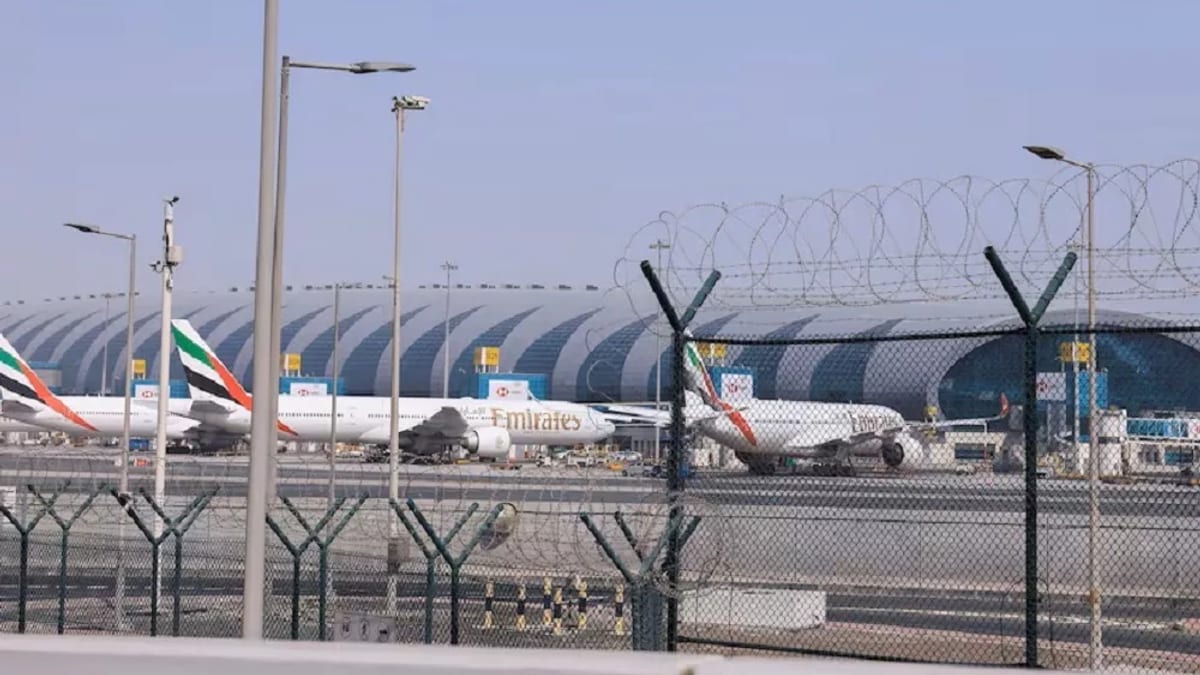
Fresh disruption waves hit key regions in 2026
Recent weeks have brought a sharp reminder of how quickly airline operations can unravel. Travel coverage in the United States describes major disruption events in spring 2026, with large carriers such as Southwest experiencing hundreds of delays in a single day at hubs including Chicago Midway, New York LaGuardia and Los Angeles International. The reports point to localized weather, airport congestion and tight crew scheduling as factors that combined to snarl traffic and strand passengers nationwide.
Across the Atlantic, Europe has continued to grapple with persistent bottlenecks. Eurocontrol’s latest briefings on the 2025 summer season highlighted millions of minutes of air traffic flow management delays and warned that severe weather and capacity constraints remain key risks heading into 2026. Network data shows that when storms, strikes or ATC restrictions hit a central hub, reactionary delays quickly ripple throughout the continent.
The Asia Pacific region has faced its own acute crises. Data compiled by industry monitoring sites show that on 11 March 2026 alone, 774 flights were canceled and more than 2,100 were delayed across Asia Pacific, as heavy monsoon rains, early-season typhoon activity and congestion at major hubs converged. Analysts tracking that event estimated more than 2,300 cancellations and 18,000 delays worldwide that day, underlining the global reach of a disruption that began as a regional weather and capacity problem.
At the same time, financial and aviation commentators have drawn attention to late March 2026 disruption events in Asia that affected more than 3,000 flights in a single day. These reports characterize the situation not as a one-off shock but as the visible result of years of post-pandemic underinvestment in maintenance pipelines, technical staffing and spare aircraft capacity.
Weather, wars and workforce shortages collide
Multiple strands of publicly available data indicate that the current turbulence in air travel is rooted in overlapping structural pressures. In Europe, Eurocontrol assessments of the 2024 and 2025 summer seasons attribute a large share of en route delays to adverse weather, particularly convective storms that force aircraft onto longer routes and reduce capacity in busy sectors for hours at a time. Industry briefings show weather-related air traffic flow management delays accounting for nearly half of all network delay minutes in peak months.
Staffing and industrial relations are amplifying these pressures. In July 2025, a nationwide strike by French air traffic controllers led to the cancellation of around 40 percent of flights to and from Paris in a single day, with low-cost carriers reporting hundreds of additional cancellations affecting tens of thousands of passengers. Subsequent analysis by European aviation groups concluded that the impact radiated far beyond French borders because of the country’s central role in the region’s airspace, forcing large-scale rerouting and slot restrictions in neighboring states.
Geopolitics has further complicated global routing patterns. Aviation and economic analysis of the 2026 conflict involving Iran describes significant disruption to long-haul traffic between Europe, Asia and Africa following the closure of critical Middle East airspace corridors and temporary shutdowns or damage at major Gulf hubs. Airlines have been forced to divert flights along longer paths that skirt closed regions, adding to flight times, fuel burn and congestion over alternate routes.
In North America, capacity is constrained not only by weather but also by staffing challenges. Reports from late 2025 detailed more than 2,000 U.S. flight delays in a single day attributed to air traffic control staffing shortfalls during a federal government shutdown. Parallel coverage has highlighted chronic controller shortages at major airports such as Newark Liberty, where airlines have voluntarily reduced schedules to ease gridlock.
IT outages and cyber risks deepen operational fragility
Alongside physical and human constraints, digital vulnerability has emerged as a critical weak point. Over the past two years, airlines and aviation technology providers have suffered a series of high-profile IT failures and cyber incidents that quickly cascaded into mass cancellations.
In July and October 2025, Alaska Airlines experienced separate technology outages that led to hours-long ground stops and the cancellation of hundreds of flights. Public statements from the carrier at the time warned passengers to expect residual delays for days as aircraft and crews were repositioned across the network. Earlier, in 2024, a major outage linked to a third-party software issue contributed to a widespread operational crisis at Delta Air Lines, with reports describing repeated delays and cancellations as crews hit their legal duty limits and aircraft fell out of position.
The risk is not limited to individual airlines. A significant cyberattack in 2025 against a major aviation software provider exposed how disruptions to core flight planning and operations tools can affect multiple carriers simultaneously. Industry analyses of that event noted that even when safety is not compromised, restoring synchronized schedules across fleets and regions can take several days, especially when airports and air traffic control units are already operating near capacity.
As more airlines rely on interconnected cloud-based systems for crew management, maintenance tracking and passenger handling, experts warn that any failure or breach in a shared platform could trigger a multi-region disruption. The pattern of recent outages suggests that resilience planning for IT infrastructure has become as important to reliability as spare aircraft or additional crew.
Regional flashpoints reveal global knock-on effects
Some of the most striking examples of the system’s fragility have come from regional incidents that quickly propagated far beyond their immediate locations. In February 2026, temporary flight restrictions over parts of Texas and New Mexico, imposed for security reasons, briefly shut down operations at El Paso International Airport and disrupted routes across the U.S. Southwest. That closure, described in aviation records as the first sudden security-driven U.S. airspace shutdown since 2001, required widespread rerouting and contributed to missed connections throughout the domestic network.
In India, a scheduling crisis at IndiGo in late 2025 led to the cancellation of thousands of domestic flights during a peak travel period. Official documentation from India’s aviation regulator linked the disruption to the airline’s difficulties in adapting to new pilot duty time rules that increased required rest, compounded by technology issues, airport congestion and adverse weather. The episode demonstrated how regulatory changes, if not matched by robust planning and staffing, can tip a large carrier into operational instability.
These flashpoints have often collided with already stressed networks. When Middle East airspace closures in mid-2025 forced hundreds of Europe-bound flights to reroute through alternative corridors, Eurocontrol’s crisis briefings described a sharp rise in average delay per flight across affected days. Similarly, regional storms in Asia that might once have been absorbed by spare capacity now translate into large day-of-travel disruption numbers, as leaner post-pandemic fleets leave less margin for recovery.
The cumulative effect is visible to travelers as full departure boards of delayed flights and rolling cancellations that persist long after the original trigger has passed. Each local shock interacts with tight schedules, high load factors and uneven staffing to produce global consequences.
Airlines and regulators race to rebuild resilience
Industry bodies, regulators and carriers are responding with a mix of tactical fixes and long-term reforms, though progress appears uneven. Eurocontrol reporting on 2025 performance notes that, despite high traffic levels, some regions succeeded in reducing delays through better coordination of flight plans, more realistic scheduling and prioritizing first rotations to prevent early-morning issues from snowballing.
In the United States, the Federal Aviation Administration has emphasized that most delays are still driven by weather and high demand rather than staffing alone, while also acknowledging the need for targeted measures at congested hubs. Recent public statements outline efforts to convene delay-reduction meetings for airports such as Newark, refine flow management tools and expand controller hiring and training pipelines.
Airlines in several regions are also recalibrating their operations. In Europe and North America, some carriers have trimmed schedules at constrained airports, built longer turnaround times into peak-season timetables and invested in additional spare aircraft to reduce reactionary delays. In Asia and the Middle East, network restructuring has focused on creating more flexible routings that can adapt to shifting airspace restrictions.
Yet the scale and frequency of recent disruption events suggest that passengers should expect continued volatility, particularly during holiday peaks and in regions exposed to severe weather or geopolitical risk. Industry analysts increasingly describe reliability as the next competitive battleground in global aviation, with investment in resilient IT systems, robust staffing models and realistic scheduling emerging as central tests of how quickly the sector can move from crisis management to sustainable recovery.